

I’ve been doing at-home neurofeedback training for years. I’ve tested most of the consumer headsets you can buy, including Muse, Mendi and the Sens.ai, and I review them in my guide to home neurofeedback devices.
As an entrepreneur, focus has been my biggest struggle for most of my career. Running several businesses at once means constant context switching, and for years I’d sit down to do deep work and lose the thread within minutes. [KYLE: add one concrete detail here, like what a bad focus day looked like for you.]
Home neurofeedback, and the Muse in particular, has been instrumental in improving my focus. [KYLE: add how you use it, e.g. how often you train, for how long, and what changed.]
Because attention was my reason for starting, I dug hardest into the ADHD research. Attention problems are also the most common reason people look into neurofeedback. I wanted to know whether what I’ve felt matches what the best trials show, and I share what I found below.
When I went back and read the research properly, I found that much of what gets written about the benefits of neurofeedback is oversold. Clinic websites lean on small studies with no placebo group. Device companies quote their own data. The best-designed trials often tell a more mixed story.
So this guide works differently. For each benefit I link straight to the study, say what kind of study it was, and give it a grade. Some benefits are well supported. Some look real but may be driven mostly by placebo. A few popular claims haven’t held up, and I cover those too.
This is not medical advice. If you’re dealing with epilepsy, PTSD, depression, ADHD or addiction, work with a licensed clinician and don’t stop any treatment you’re on.
What is neurofeedback training?
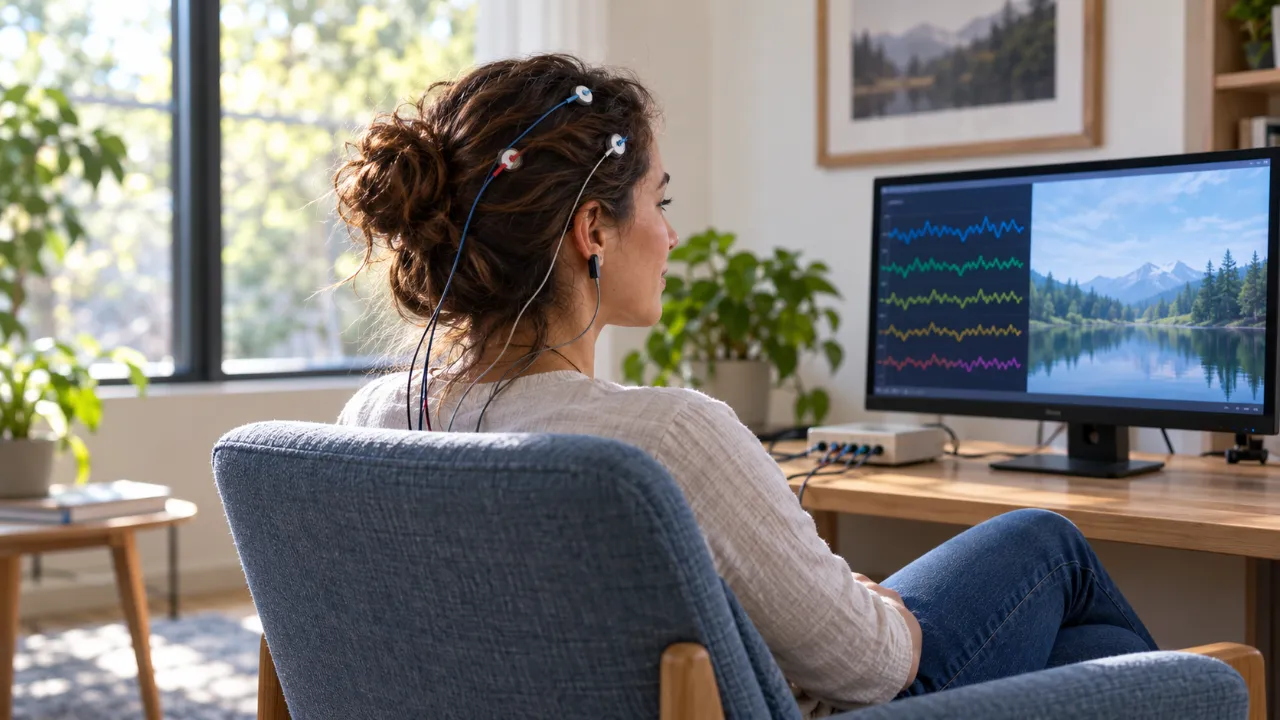
Neurofeedback is biofeedback for your brain. Sensors read your brain activity in real time and turn it into a sound, a game or a video. When your brain moves toward a target pattern, you get rewarded. Over many sessions, you learn to produce that pattern on your own.
Most systems use EEG, which measures electrical activity through the scalp. Some home devices, like Mendi, use fNIRS, which measures blood oxygen in the front of the brain. Research labs also use fMRI neurofeedback inside a scanner, which you can’t do at home.
If you want the deeper version, I’ve written about alpha-theta training and SMR training for focus.
How I graded the scientific evidence
The biggest issue in neurofeedback research is the control group. If you compare neurofeedback to a waitlist, you learn that people improved. If you compare it to sham neurofeedback, where people get fake feedback that looks real, you learn whether the brain training itself did the work. Each benefit below gets one of these grades:
| Grade | What it means |
|---|---|
| Strong | Several controlled trials and meta-analyses, with a benefit that holds up beyond placebo |
| Moderate | Meta-analyses of randomized trials show a benefit, but few trials used a sham control |
| Early | Small trials, or the effect shrinks or disappears against sham feedback or blinded raters |
15 benefits of neurofeedback training
Here’s the short version, ordered from strongest evidence to weakest.
| # | Benefit | Grade | Where it’s done |
|---|---|---|---|
| 1 | Fewer seizures in drug-resistant epilepsy | Strong | Clinic |
| 2 | Better arm and hand recovery after stroke | Moderate | Clinic or rehab lab |
| 3 | Better memory, including in older adults | Moderate | Lab, some home |
| 4 | Fewer depression symptoms | Moderate | Clinic |
| 5 | Less anxiety | Moderate | Clinic, some home |
| 6 | Fewer PTSD symptoms | Early | Clinic |
| 7 | Less day-to-day stress | Early | Home |
| 8 | Better creative and musical performance | Early | Lab |
| 9 | Fewer cravings in addiction recovery | Early | Clinic |
| 10 | Better attention and focus, including ADHD | Early | Clinic or home |
| 11 | Faster reaction time in sport | Early | Lab |
| 12 | Less chronic pain | Early | Clinic |
| 13 | Less tinnitus distress | Early | Clinic |
| 14 | Better thinking after brain injury | Early | Clinic |
| 15 | Gains that can last after training stops | Early | Clinic |
1. Fewer seizures in drug-resistant epilepsy
This is the oldest and best-supported use of neurofeedback. It goes back to Barry Sterman’s sensorimotor rhythm (SMR) research in the 1970s.
A meta-analysis by Tan and colleagues (2009) screened 63 published studies and kept 10 that met its standards. In those, 79% of patients trained with SMR neurofeedback had a significant drop in seizures, even though their medication had failed. An earlier review by Sterman covered 24 studies and 243 patients and found 82% cut their seizures by at least half (summary in the Cleveland Clinic Journal of Medicine).
The effect can last. A 10-year follow-up by Strehl and colleagues (2014) found patients trained to control slow cortical potentials still had fewer seizures a decade after treatment ended.
The catch: these are patients with medication-resistant epilepsy, trained by clinicians, alongside their medication. Nobody should try this with a consumer headband.
Grade: Strong.
2. Better arm and hand recovery after stroke
Here the neurofeedback is a brain-computer interface (BCI). A stroke patient imagines moving their arm, the EEG picks up that intent, and a robot or electrical stimulation moves the limb. The closed loop seems to help the brain rewire.
A 2018 meta-analysis by Cervera and colleagues pooled 9 randomized trials with 235 stroke survivors and found better motor recovery with BCI training. A 2022 meta-analysis of 13 randomized trials with 258 patients found a moderate effect on upper-limb function (SMD 0.56). A 2026 meta-analysis in chronic stroke rated the evidence low to moderate certainty, with BCI paired with electrical muscle stimulation doing best.
The catch: this happens in rehab clinics with specialist equipment. It has nothing to do with the headbands sold for focus or meditation.
Grade: Moderate.
3. Better memory
This is one of the more interesting findings for healthy people. A 2021 meta-analysis by Yeh and colleagues pooled 16 randomized trials of alpha neurofeedback in healthy adults, with 427 participants in total. It found a positive effect on working memory and episodic memory, with an effect size of 0.77 for episodic memory.
A 2023 meta-analysis in Healthcare found that combining brain-training games with fNIRS neurofeedback improved memory more than the games alone. That’s the same sensor type Mendi uses.
Older adults may benefit too. A 2024 meta-analysis in Medicina pooled 14 trials with 284 healthy older adults and people with mild cognitive impairment. EEG neurofeedback improved working memory (g = 0.67) and episodic memory (g = 0.73), and the gains showed up mainly in people who trained for more than 300 minutes in total.
The catch: the studies are small and the results vary a lot from one to the next. The fNIRS meta-analysis rested on only three studies with 166 people.
Grade: Moderate.
4. Fewer depression symptoms
A 2024 meta-analysis in Cerebral Cortex by Xia and colleagues covered 22 studies of people with major depression. Neurofeedback reduced depression symptoms with a moderate effect size (Hedges’ g of −0.60) and also improved some cognitive measures.
The catch: a recent scoping review of EEG neurofeedback for depression pointed to small samples, few sham-controlled trials and short follow-up. It concluded that the short-term gains can’t yet be separated from placebo and expectation.
Grade: Moderate.
5. Less anxiety
A meta-analysis of neurofeedback for anxiety-spectrum disorders covered 26 trials. Self-reported anxiety dropped by close to one standard deviation, which is a large change on paper.
A 2025 randomized trial in generalized anxiety disorder compared SMR training with alpha-theta training. Both reduced anxiety, with SMR giving a slightly faster drop in state anxiety.
The catch: almost all of this is self-report, and most trials had no sham group. Anxiety responds strongly to expectation and attention from a practitioner, so the real effect of the neurofeedback itself is probably smaller than these numbers.
Grade: Moderate.
6. Fewer PTSD symptoms
PTSD is where the gap between headline results and careful results is widest.
A 2024 meta-analysis by Voigt and colleagues pooled 10 randomized trials and reported a clinically meaningful drop in PTSD symptoms. A 2025 meta-analysis from the US Defense Health Agency then split the trials by control group. Against waitlists and usual care, EEG neurofeedback had a large effect (−1.32 across 5 trials). Against sham neurofeedback, the effect shrank to a small, inconclusive −0.21.
That second team rated its confidence in the findings as low to very low and flagged conflicts of interest in earlier reviews. The US VA/DoD PTSD guideline says there isn’t enough evidence to recommend for or against neurofeedback.
The catch: people with PTSD do get better during neurofeedback programs. What’s unclear is how much of that comes from the feedback rather than the structure, the clinician and the expectation of getting better.
Grade: Early.
7. Less day-to-day stress
This is the benefit that matters most for home headbands like Muse, so I read this research closely.
A 2025 meta-analysis in the Journal of Medical Internet Research by Treves and colleagues pooled 16 randomized trials of consumer neurofeedback during mindfulness meditation, with 763 people. Eleven of the trials used Muse. Compared with a regular meditation app, the headband gave a small extra drop in psychological distress (Hedges’ g between −0.16 and −0.29 depending on the correction).
It found no extra gain in mindfulness, cognition or heart rate measures. It also found no sign that people learned to change the brain signal the headband was tracking. The authors suggest part of the benefit may be “neurosuggestion,” a placebo effect from using brain tech.
An earlier randomized trial by Acabchuk and colleagues (2020) had 53 novice meditators use either an app or an app plus Muse for a month. Both groups felt less distressed and more mindful, but Muse’s own calm scores didn’t improve.
The catch: the effect is real but small. In my experience the bigger win from a headband is that it gets me to sit down and practice. [KYLE: confirm this matches your experience or swap in your own take.]
Grade: Early.
8. Better creative and musical performance
In a 2003 study by Egner and Gruzelier, students at a London music conservatoire did alpha-theta neurofeedback before performing under pressure. Expert judges, who didn’t know who had trained, rated their performances higher. The gain didn’t show up with SMR or beta training, physical exercise, mental skills training or the Alexander technique.
Gruzelier’s team repeated the finding in 11-year-old school children (2013), where alpha-theta training improved rehearsed performance and both protocols helped improvisation.
The catch: these are small studies, mostly from one research group. It’s an encouraging line of work, not settled science.
Grade: Early.
9. Fewer cravings in addiction recovery
The alpha-theta “Peniston protocol” was developed for alcohol use disorder in the late 1980s. Patients drift into a deeply relaxed state while rehearsing images of staying sober.
A 2020 review by Dousset and colleagues in Addictive Behaviors argues it’s worth using as an add-on, given that 70 to 80% of people with alcohol use disorder relapse within a year. A 2025 review in Frontiers in Psychiatry found reductions in craving, anxiety and relapse across EEG studies.
The catch: the same review notes that most studies are small and at moderate risk of bias. Neurofeedback here is an add-on to standard treatment, never a replacement.
Grade: Early.
10. Better attention and focus
This is the benefit I’ve felt most myself, and it’s also where the evidence is messiest.
People do improve. In the first large double-blind ADHD trial, children getting real neurofeedback and children getting sham feedback both improved by a large amount on inattention. But the two groups were not significantly different at the end of treatment. At 13 months the real neurofeedback group had twice the remission rate, which hints at a delayed effect.
For healthy adults, a 2021 systematic review found attention effects ranging from low to large, and not all studies showed brain changes that matched the behavior changes.
The catch: focus improves for many people, but much of that improvement seems to come from the training routine rather than the brainwave target. I cover the ADHD findings in more detail below.
Grade: Early.
11. Faster reaction time in sport
A 2018 meta-analysis by Xiang and colleagues in Psychology of Sport and Exercise found neurofeedback improved athletes’ performance (SMD 0.65). A 2022 meta-analysis of 7 randomized trials with 173 athletes found faster reaction times and better decision-making. I’ve also written about a golf putting study using SMR training.
The catch: in the 2018 analysis, when only trials with an active or placebo control were counted, the effect (0.51) was no longer statistically significant.
Grade: Early.
12. Less chronic pain
A 2020 meta-analysis in the European Journal of Pain covered 21 studies and called the evidence for neurofeedback in chronic pain promising but largely low quality. A 2020 systematic review by Roy and colleagues looked at 24 studies, mostly in headaches and fibromyalgia, and found generally positive results but no clear answer on which protocols work.
The catch: a 2026 review of fibromyalgia trials found that sham-controlled EEG neurofeedback trials showed no consistent advantage over sham for pain.
Grade: Early.
13. Less tinnitus distress
In a 2023 randomized trial in Brain Communications, 94 people with chronic tinnitus did 10 sessions of alpha/delta neurofeedback, 10 sessions of beta/theta neurofeedback, or kept a diary. Both neurofeedback groups reported their tinnitus as less intense.
The catch: the alpha/delta pattern thought to matter for tinnitus wasn’t needed. The other protocol worked about as well, which points to general effects of training rather than the specific brainwave target.
Grade: Early.
14. Better thinking after brain injury
A 2023 randomized trial in people with traumatic brain injury, published in Neurorehabilitation and Neural Repair, found two neurofeedback protocols improved memory and attention, and one also improved day-to-day productive activity.
The catch: a 2020 systematic review by Ali and colleagues found only 4 studies good enough to include, with inconsistent results. A 2022 double-blind trial in frontal brain injury found no overall difference from sham after 20 sessions, though a subgroup with mainly frontal lesions did better.
Grade: Early.
15. Gains that can last after training stops
Medication works while you take it. The idea behind neurofeedback is that you learn a skill, so the benefit should outlast the training. There’s some support for that.
In epilepsy, the 10-year follow-up by Strehl and colleagues found fewer seizures a decade later. In ADHD, a 2019 meta-analysis by Van Doren and colleagues pooled 10 randomized trials and found the effect on inattention grew from medium (SMD 0.64) right after training to large (0.80) two to twelve months later. Gains in groups with no active treatment faded over the same period.
The catch: the ADHD follow-up ratings mostly came from parents who knew their child had trained. Lasting gains may also reflect habits built during training rather than the brainwave target itself.
Grade: Early.
Does neurofeedback help ADHD? What the evidence says
People with ADHD usually feel and function better after a neurofeedback program. But the best-controlled trials haven’t shown that real neurofeedback beats sham training, or that it can replace medication or therapy. Here’s both sides.
The case for it
- The Van Doren meta-analysis (2019) found neurofeedback beat non-active controls on inattention, and at follow-up the gap with medication had closed.
- In the Neurofeedback Collaborative Group trial, children who got real neurofeedback had twice the remission rate of the sham group 13 months later.
- Within-group improvements are large in nearly every trial. People do get better.
The case against it
- The 2025 JAMA Psychiatry meta-analysis by Westwood and colleagues pooled 38 randomized trials with 2,472 participants. When raters didn’t know who got neurofeedback, there was no meaningful improvement (SMD 0.04 across 20 trials).
- In the Neurofeedback Collaborative Group trial, real and sham neurofeedback improved children by the same large amount. At 25 months, the authors concluded most of the benefit was non-specific.
- In adults, a 2017 triple-blind trial in The Lancet Psychiatry by Schönenberg and colleagues gave 118 adults real neurofeedback, sham neurofeedback or group cognitive behavioral therapy. Real neurofeedback wasn’t better than sham, and 12 group CBT sessions cut symptoms about as much as 30 neurofeedback sessions.
- In the NEWROFEED trial (2022), at-home neurofeedback cut children’s symptoms by 26.7% on clinician ratings, against 46.9% for methylphenidate.
- A 2019 meta-analysis by Bussalb and colleagues found parents, who know their child is training, reported a significant benefit, while teachers, who mostly don’t, did not.
How I read it
The Muse has helped my focus a lot. But I can’t separate how much came from the brainwave feedback and how much came from the routine around it: sitting down at the same time, closing everything else, and practicing attention every day. The ADHD research lands in the same place. The package works for many people, but the specific ingredient hasn’t been proven.
For an entrepreneur who struggles with focus, I think a home headband is a reasonable, low-cost experiment, as long as you see it as one part of a focus routine. If you have diagnosed ADHD, use it as an add-on to what your doctor recommends, not a replacement for medication or therapy.
A claim that hasn’t held up
Better sleep is one of the most common reasons people try neurofeedback. It also failed one of the cleanest tests the field has run.
Insomnia
In a 2017 double-blind study in the journal Brain, Schabus and colleagues gave people with primary insomnia 12 sessions of real SMR neurofeedback and 12 sessions of sham feedback, with nine nights of lab sleep recordings. People felt they slept better after both. Real neurofeedback did no better than sham, didn’t change the trained brainwaves and didn’t change sleep structure. The authors concluded it can’t be recommended over cognitive behavioral therapy for insomnia.
The placebo problem and the non-learners
Two issues run through almost every result above. You should know about both before you spend money.
Placebo
In a 2017 paper in American Psychologist, McGill researchers Robert Thibault and Amir Raz argued that placebo factors likely explain most of the clinical results from EEG neurofeedback. Their view is that neurofeedback works, but mostly through expectation, motivation, attention from a practitioner and the ritual of training.
Many clinicians push back on this. Their argument is that placebo is part of every treatment, and that adverse effects from badly chosen protocols show the training does something to the brain. A 2018 response by Micoulaud-Franchi and Fovet in the same journal laid out how to separate the placebo part from the specific part in future research.
My take: a placebo effect is still an effect, and I’ve felt the value of a training ritual myself. But it changes the math. If much of the benefit comes from showing up and practicing, a $300 headband and a consistent habit may get you a good share of what a $6,000 clinic program does.
Non-learners
Not everyone can learn to control the signal. A 2018 review by Alkoby and colleagues looked at this “inefficacy problem.” Across studies, between 16% and 57% of people don’t achieve stable control over the trained brain pattern, according to a 2020 systematic review in NeuroImage: Clinical that built on that work.
This matters at home. A clinician can see you’re not learning and switch protocols. A consumer app usually can’t. If you’ve trained for a month and your scores aren’t moving, that’s useful information, not a reason to train harder.
Home neurofeedback vs clinic neurofeedback
A full clinic program usually costs $2,000 to $8,000 or more. A home headband costs $188 to $1,500 once. The clinic gives you better sensors, a personalized protocol and a trained person watching. Home gives you convenience, privacy and more practice for far less money.
One thing to keep in mind: nearly all the benefits above come from clinic or lab studies. You can’t assume a $249 headband delivers the same results as a clinician-run program with gel electrodes.
| Factor | Clinic or lab | Home headband |
|---|---|---|
| Price | $2,000 to $8,000+ for a full program | $188 to $1,500 one-time, plus optional app fees |
| Sensors | 19 or more gel electrodes, plus a qEEG brain map | 1 to 8 dry sensors, or fNIRS light sensors |
| Protocol | Chosen by a clinician from your brain map | Set by the app, with a short calibration |
| Supervision | A clinician watches each session | None, or a remote clinician on some programs |
| Time | 30 to 40 sessions, often 2 or 3 visits a week | 5 to 30 minutes at home, several times a week |
| Best evidence | Epilepsy, stroke rehab, depression, anxiety | A small drop in stress during meditation |
| Best for | A diagnosed condition | Meditation, stress and focus habits |
Price
Clinics usually charge $100 to $200 per session, plus $300 to $1,000 for a qEEG brain map, according to Thervo’s cost guide. Most programs run 20 to 40 sessions. A 2022 study in JMIR Formative Research put in-clinic sessions at $150 to $200, with 30 to 40 sessions typically recommended. Muse puts traditional programs at $6,000 to $8,000.
At home, the costs look like this (prices from my device guide):
| Option | Upfront | Ongoing |
|---|---|---|
| Flowtime | $188 | $99 per year after 3 months |
| Muse 2 / Muse S | $249 / $399 | $50 per year for the full app |
| Mendi | $299 | None required |
| Sens.ai | $1,500 | Varies |
| Clinician-guided home training (Myndlift with a Muse) | Headband | About $150 per month |
| NeurOptimal home system | $7,495+ | $89 per month after 3 months |
The clinician-guided option sits in the middle. Muse and Myndlift say an average remote program costs about $1,500, roughly 81% less than a traditional clinic program.
Commitment
Clinic training is a real time commitment. The Neurofeedback Collaborative Group trial gave children up to 38 sessions over 14 weeks. Add travel, and that’s several hours a week for three or four months.
Home training trades travel for self-discipline. In the NEWROFEED trial, children did two phases of 16 to 20 sessions at home. A Myndlift trial in adults with ADHD asked for four 21 to 30 minute sessions a week for 10 weeks. Mendi suggests 5 to 10 minutes, three times a week. Sens.ai’s structured programs run 8 to 12 weeks.
In my experience, the home schedule is easier to keep because there’s no drive. The hard part is that nobody checks whether you showed up.
How home devices compare to lab equipment
The hardware gap is real. A clinic qEEG uses 19 or more electrodes with conductive gel. The Muse 2 uses four dry sensors, two on the forehead and two behind the ears. The JMIR meta-analysis notes that dry electrodes limit signal quality, and muscle movement can contaminate the reading.
I’ve seen this firsthand. On the Muse, a yawn or a quick head turn can loosen the sensors, and you need to wipe them down to keep a clean signal. The Neurosity Crown has eight sensors, but I found it uncomfortable, and getting all eight to connect was fiddly.
Validation of home devices is thin. Mendi’s own early validation study with 19 people found its headband tracked a lab fNIRS device closely (a group-level correlation of 0.81), and the team said bigger studies were still needed. Myndlift’s real-world study of 593 users found 69% of people with high anxiety scores moved into the healthy range, but it had no control group and was co-authored by the company.
The biggest difference is personalization. In NEWROFEED, each child’s protocol was picked from their brain map, either SMR training or theta/beta training. Consumer apps use one algorithm for everyone, and the companies don’t publish how it works.
Is neurofeedback safe?
For most people, yes, but it isn’t side-effect free. A 2023 meta-analysis of 17 studies in ADHD and epilepsy put the rate of side effects at about 5%. The common ones were headaches, fatigue, irritability and anxiety, and most faded soon after a session.
The field’s own practitioners have warned about this for years. In a 2008 paper titled “First, Do No Harm”, Corydon Hammond and Lynda Kirk documented negative effects from poorly chosen training and argued that anyone treating a clinical condition should be licensed to do so.
At home, side effects are mostly unknown because nobody measures them. The JMIR meta-analysis found that 19 of 21 consumer neurofeedback studies didn’t check for adverse effects at all.
My rules for home training: stop if you get headaches or your sleep gets worse, keep sessions short at first, and never use a consumer device to manage epilepsy or a serious mental health condition on your own.
How I’d approach neurofeedback training today
If you have a diagnosed condition, start with a licensed clinician. The benefits with the best evidence, like fewer seizures and better stroke recovery, all come from supervised clinical programs. If cost or travel is the barrier, ask whether the clinic offers supervised home training. Myndlift, for example, works with hundreds of clinics that guide clients remotely.
If you’re after calmer days, better meditation or sharper focus, home training is a sensible, low-cost experiment. Here’s how I’d run it:
- Pick one device and one goal. My guide to the best home neurofeedback devices compares 10 of them on price, sensors and app quality.
- Track something outside the app. The research shows app scores don’t always reflect real change, so track sleep, mood, or how long you can focus on deep work.
- Commit to 8 to 12 weeks of short, regular sessions before you judge it.
- If your scores haven’t moved after a month, you may be a non-learner on that protocol. Try a different one or a different device rather than forcing it.
- Pair it with the basics. Neurofeedback works best on top of good sleep, exercise and a meditation habit, not instead of them.
[KYLE: optional line on your current setup, e.g. which device you use now and how often.]
Frequently asked questions
What are the benefits of neurofeedback?
The best-supported benefit is fewer seizures in people with drug-resistant epilepsy. There’s moderate evidence for better stroke recovery, memory, depression and anxiety. Benefits for PTSD, stress, focus, creativity, cravings, sport, pain, tinnitus and brain injury recovery are promising but not yet separated from placebo.
Does neurofeedback help ADHD?
People with ADHD usually improve during neurofeedback programs. But in the best-blinded trials, real neurofeedback hasn’t beaten sham training, and in adults group CBT worked about as well. It’s a reasonable add-on, not a replacement for medication or therapy.
Is neurofeedback scientifically proven?
For epilepsy, the evidence is strong. For most other uses, it’s mixed. Many positive studies had no sham control, and the best-blinded ADHD and insomnia trials found real neurofeedback did no better than sham.
How many sessions of neurofeedback do you need?
Clinical programs usually run 20 to 40 sessions. Home programs in research used 30 to 40 sessions over about 10 to 13 weeks. Most home devices suggest short sessions several times a week for 8 to 12 weeks.
Does home neurofeedback work?
Home headbands gave a small extra drop in stress over a meditation app alone in a 2025 meta-analysis of 16 trials. Supervised at-home programs with clinical-grade protocols have been tested for ADHD, but in the NEWROFEED trial they did worse than medication.
How much does neurofeedback cost?
In a clinic, expect $100 to $200 per session and $2,000 to $8,000 or more for a full program. Home headbands cost $188 to $1,500, and clinician-guided home programs run about $150 per month.
Are the benefits of neurofeedback permanent?
Sometimes they last. Epilepsy patients still had fewer seizures 10 years after training in one follow-up study. In the first large double-blind ADHD trial, gains held at 13 months in both the real and sham groups.
Can neurofeedback make you worse?
It can. About 5% of people in clinical studies had side effects such as headaches, fatigue or irritability. These are usually short-lived.
References
Epilepsy
- Tan G, et al. (2009). Meta-analysis of EEG biofeedback in treating epilepsy. Clinical EEG and Neuroscience.
- Sterman MB. Biofeedback in the treatment of epilepsy. Cleveland Clinic Journal of Medicine.
- Strehl U, et al. (2014). Sustained reduction of seizures after self-regulation training of slow cortical potentials, 10 years after. Frontiers in Human Neuroscience.
Stroke
- Cervera MA, et al. (2018). Brain-computer interfaces for post-stroke motor rehabilitation: a meta-analysis. Annals of Clinical and Translational Neurology.
- The effect of BCI training on rehabilitation of upper limb dysfunction after stroke: a meta-analysis of RCTs (2022). Frontiers in Neuroscience.
- Efficacy of BCI therapy for upper limb rehabilitation in chronic stroke (2026). JMIR.
Memory and cognition
- Yeh WH, et al. (2021). Neurofeedback of alpha activity on memory in healthy participants. Frontiers in Human Neuroscience.
- The effect of cognitive training with neurofeedback on cognitive function in healthy adults (2023). Healthcare.
- Da Silva JC, De Souza ML (2021). Neurofeedback training for cognitive performance improvement in healthy subjects. Psychology & Neuroscience.
- Lin YR, et al. (2024). Effectiveness of EEG neurofeedback for improving working memory and episodic memory in the elderly: a meta-analysis. Medicina.
Depression and anxiety
- Xia Z, et al. (2024). Uncovering the power of neurofeedback: a meta-analysis of its effectiveness in treating major depressive disorders. Cerebral Cortex.
- EEG neurofeedback for major depressive disorder: a scoping review.
- A meta-analysis of neurofeedback for treating anxiety-spectrum disorders. Boise State University.
- Lotfinia S, et al. (2025). A clinical trial comparing SMR and alpha-theta neurofeedback for generalized anxiety disorder. Iranian Journal of Psychiatry and Behavioral Sciences.
PTSD
- Voigt JD, et al. (2024). Systematic review and meta-analysis of neurofeedback and its effect on PTSD. Frontiers in Psychiatry.
- Berman DE, Kelber MS, et al. (2025). Systematic review and meta-analysis of neurofeedback training efficacy and neural mechanisms in the treatment of PTSD. Frontiers in Neuroscience.
Stress and meditation
- Treves I, et al. (2025). Consumer-grade neurofeedback with mindfulness meditation: meta-analysis. Journal of Medical Internet Research.
- Acabchuk R, et al. (2020). Measuring meditation progress with a consumer-grade EEG device: caution from a randomized controlled trial. Mindfulness.
Creativity and music
- Egner T, Gruzelier JH (2003). Ecological validity of neurofeedback: modulation of slow wave EEG enhances musical performance. NeuroReport.
- Gruzelier JH, et al. (2013). Beneficial outcome from EEG-neurofeedback on creative music performance, attention and well-being in school children. Biological Psychology.
Addiction
- Dousset C, et al. (2020). Preventing relapse in alcohol disorder with EEG-neurofeedback. Addictive Behaviors.
- Sanader Vukadinovic B (2025). Neurofeedback in substance and non substance-related addictions: a mini review. Frontiers in Psychiatry.
ADHD and attention
- Neurofeedback Collaborative Group (2021). Double-blind placebo-controlled randomized clinical trial of neurofeedback for ADHD with 13-month follow-up. Journal of the American Academy of Child & Adolescent Psychiatry.
- Neurofeedback Collaborative Group. 25-month follow-up.
- Westwood SJ, et al. (2025). Neurofeedback for ADHD: a systematic review and meta-analysis. JAMA Psychiatry.
- Bussalb A, et al. (2019). Clinical and experimental factors influencing the efficacy of neurofeedback in ADHD. Frontiers in Psychiatry.
- Purper-Ouakil D, et al. (2022). Personalized at-home neurofeedback compared to long-acting methylphenidate in children with ADHD: NEWROFEED. Journal of Child Psychology and Psychiatry.
- Van Doren J, et al. (2019). Sustained effects of neurofeedback in ADHD: a systematic review and meta-analysis. European Child & Adolescent Psychiatry.
- Schönenberg M, et al. (2017). Neurofeedback, sham neurofeedback, and cognitive-behavioural group therapy in adults with ADHD: a triple-blind, randomised, controlled trial. The Lancet Psychiatry.
Insomnia
- Schabus M, et al. (2017). Better than sham? A double-blind placebo-controlled neurofeedback study in primary insomnia. Brain.
Sport
- Xiang MQ, et al. (2018). The effect of neurofeedback training for sport performance in athletes: a meta-analysis. Psychology of Sport and Exercise.
- Brito MA, et al. (2022). The effect of neurofeedback on the reaction time and cognitive performance of athletes. Frontiers in Human Neuroscience.
Chronic pain
- Patel K, et al. (2020). Effects of neurofeedback in the management of chronic pain: a systematic review and meta-analysis. European Journal of Pain.
- Roy R, et al. (2020). Neurofeedback for pain management: a systematic review. Frontiers in Neuroscience.
- Flicker J, et al. (2026). Efficacy of biofeedback interventions for fibromyalgia: a systematic review of randomised controlled trials.
Tinnitus
- Jensen M, et al. (2023). Does it matter what is trained? A randomized controlled trial evaluating the specificity of alpha/delta ratio neurofeedback in reducing tinnitus symptoms. Brain Communications.
Brain injury
- Effects of neurofeedback on cognitive function, productive activity, and quality of life in patients with traumatic brain injury: a randomized controlled trial (2023). Neurorehabilitation and Neural Repair.
- Ali JI, et al. (2020). Efficacy of neurofeedback interventions for cognitive rehabilitation following brain injury. Journal of the International Neuropsychological Society.
- Neurofeedback in patients with frontal brain lesions: a randomized, controlled double-blind trial (2022). Frontiers in Human Neuroscience.
Placebo, learning and safety
- Thibault RT, Raz A (2017). The psychology of neurofeedback: clinical intervention even if applied placebo. American Psychologist.
- Micoulaud-Franchi JA, Fovet T (2018). A framework for disentangling the hyperbolic truth of neurofeedback. American Psychologist.
- Alkoby O, et al. (2018). Can we predict who will respond to neurofeedback? Neuroscience.
- Predictors of neurofeedback training outcome: a systematic review (2020). NeuroImage: Clinical.
- Rahmani E, et al. (2023). Are there any possible side effects of neurofeedback? Iranian Journal of Psychiatry and Behavioral Sciences.
- Hammond DC, Kirk L (2008). First, do no harm: adverse effects and the need for practice standards in neurofeedback. Journal of Neurotherapy.
Home training and cost
- Whitehead JC, et al. (2022). Preliminary real-world evidence supporting the efficacy of a remote neurofeedback system. JMIR Formative Research.
- Efficacy of mobile neurofeedback for adult ADHD. ClinicalTrials.gov NCT04112082.
- Bringing advanced neurofeedback brain training to consumers (Mendi). CORDIS, European Commission.
- Interaxon (Muse) and Myndlift press release (2022). Business Wire.
- Biofeedback therapy cost guide. Thervo.

I believe the future of education starts with helping people find their "zone of genius" so they can develop their uniquely human ability to create meaning, connection and community (that A.I. can't replicate).
I'm also big on completely unplugging from tech to recharge on nature retreats and trekking adventures. That led me to start my most recent company Sacred Treks.
- 10 Innovative New Biohacking Wearables I’m Excited For In 2027 - November 9, 2026
- Neurable One Review: Can These EEG Headphones Help You Reclaim Your Focus? - November 9, 2026
- 40 Best Health & Wellness Conferences Happening In 2026/2027 - November 8, 2026