

One of the most effective ways to sell your coaching program isn’t to talk about how great it is. It’s to let your clients tell their stories for you.
People are naturally skeptical of marketing claims. But when they hear someone like them describe a problem they struggled with, how they overcame it, and what changed in their life or business, they pay attention.
That’s the power of a good case study.
Whether you run a group coaching program, mastermind, accelerator, or online course, client success stories are some of the most valuable marketing assets you can create.
And the good news? You don’t need a professional film crew, fancy editing software, or a long interview.
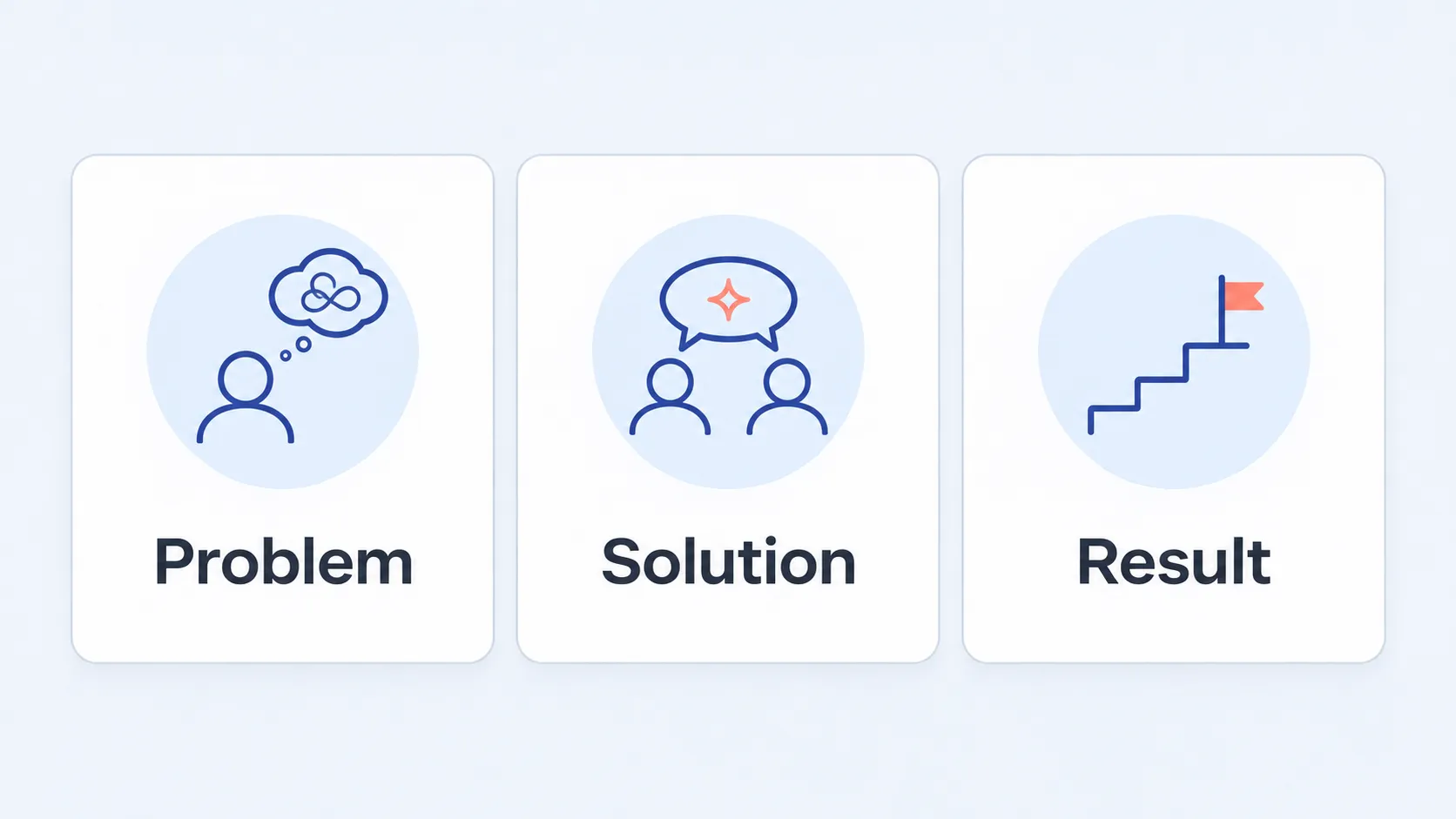
You can capture a compelling case study in just 10–15 minutes over a video conferencing tool like Zoom using three simple steps:
Problem → Solution → Result
1. Problem: What Was Life Like Before Your Coaching Program?
Every good story begins with a problem.
Before you talk about your coaching program, you need to understand what your client was struggling with before they joined.
What were their frustrations? What had they tried? What wasn’t working?
This is arguably the most important part of the interview because it’s where prospective clients recognize themselves.
If someone watching your case study thinks, “That’s exactly what I’m going through,” you’ve captured their attention.
Questions to ask:
- Tell us a little about yourself and your business. What do you do, and who do you help?
- What was your biggest challenge before joining the coaching program?
- What had you tried to overcome this challenge, and why wasn’t it working?
Interview tip: Dig deeper into the emotional side of the problem. Ask how the challenge affected their confidence, motivation, business, or personal life.
The more specific the struggle, the more relatable the story.
2. Solution: How Did Your Coaching Program Help?
Now that you’ve established the problem, it’s time to explore what changed.
But here’s an important distinction.
Don’t make this section a sales pitch about your coaching program’s features. Make it about your client’s experience.
Nobody gets excited about weekly Zoom calls, worksheets, or access to a private community.
They get excited about what those things help them accomplish.
For example, if you run an accountability mastermind for entrepreneurs, the value isn’t simply that members meet every week.
It’s that they finally have people who challenge them, hold them accountable, help them make better decisions, and encourage them to follow through.
Questions to ask:
- What motivated you to join the coaching program? What were you hoping to achieve?
- How did the program change the way you approached your biggest challenges?
- What was the most valuable part of the experience? Was it the coaching, accountability, community, feedback, or something else?
- Can you share a specific moment when the program helped you overcome a challenge or take action you might otherwise have avoided?
Interview tip: Look for turning points.
Ask your client to describe a particular conversation, breakthrough, or decision that changed their direction.
These moments bring the story to life and demonstrate the value of your coaching in action.
3. Result: What Changed After the Program?
This is where the story comes together.
Your prospective clients want to know what became possible because someone invested in your coaching program.
Whenever possible, capture measurable results.
For business coaching, that might mean:
- Increasing monthly revenue from $5,000 to $10,000.
- Signing five new clients in 90 days.
- Launching a new group coaching offer.
- Reclaiming 10 hours a week through better systems.
- Finally following through on a business idea they’d been putting off for years.
But don’t overlook the intangible transformations.
Sometimes the biggest breakthrough isn’t a revenue milestone. It’s developing the confidence to raise prices, overcoming procrastination, or finding a community of entrepreneurs who understand the challenges of running a business.
Questions to ask:
- What specific results have you achieved since joining the program?
- What’s changed most about how you operate your business or approach your life?
- What would you say to someone who’s considering joining this coaching program?
Interview tip: Ask your client to compare their situation before and after joining.
You want them to articulate the transformation in their own words.
And if they mention an impressive result, ask for details. Specific numbers and concrete examples are much more persuasive than vague statements about personal growth.
4. Turn Your Interview Into a Compelling Case Study
Once you’ve recorded your 10–15-minute interview, you can turn it into several valuable marketing assets.
The ideal story: “Before joining, I struggled with [problem]. Through the mastermind, I gained [support/accountability]. As a result, I achieved [specific outcome], and now I feel [personal transformation].”
A Written Case Study
Use the Problem → Solution → Result structure to create a short article featuring your client’s story.
Start with a compelling headline that communicates the transformation.
For example:
“How Sarah Went From Overwhelmed Solopreneur to a $10K/Month Coaching Business”
Then tell the story in three sections, using direct quotes from the interview to make it authentic.
A 60–90-Second Video Testimonial
Edit the interview into a short video that follows the same three-part structure.
Start with the problem, show how the coaching helped, and finish with the transformation.
Avoid turning it into a commercial. The most effective testimonials feel like genuine conversations.
Short Social Media Clips
Pull out two or three powerful moments from the interview.
These could include a breakthrough, an unexpected lesson, or a specific result.
Share them on LinkedIn, Instagram, YouTube Shorts, or wherever your prospective clients spend their time.
Your Workshop or Sales Presentation
If you sell your coaching program through a signature workshop or webinar, client case studies can be particularly effective.
Rather than simply telling people your framework works, show them examples of clients who applied it.
A compelling case study can demonstrate what’s possible while addressing common objections about time, money, confidence, or whether the program will work for someone in their situation.
5. Make Case Studies Part of Your Coaching Process
Here’s where most coaches miss an opportunity.
They wait until they need testimonials before asking their clients for them.
By that point, months may have passed, the details are fuzzy, and some of the best stories have been forgotten.
Instead, make capturing client success stories a regular part of your coaching program.
At the end of each coaching cycle, invite clients who’ve made meaningful progress to share their experiences in a short recorded interview.
You can also collect smaller wins throughout the program.
When someone lands a new client, launches an offer, or overcomes a major obstacle, celebrate that success and ask whether they’d be comfortable sharing their story.
Always get permission before recording, publishing, or repurposing their words. Let clients review sensitive details, especially financial results.
Over time, you’ll build a library of authentic stories showing the different ways your program helps people.
6. The Simple 10-Minute Case Study Interview
If you only have 10 minutes, you don’t need to ask all 10 questions.
Focus on these six:
| Stage | Question |
|---|---|
| Problem | What was your biggest challenge before joining? |
| Problem | What had you tried that wasn’t working? |
| Solution | What motivated you to join? |
| Solution | Can you share a specific moment when the program helped you move forward? |
| Result | What specific results or changes have you experienced? |
| Result | What would you tell someone considering joining? |
Follow up with “Can you give me an example?” whenever you hear a vague answer.
Those six questions are enough to capture the essential elements of a powerful case study.
Final Thoughts: Let Your Clients Do the Selling
The best marketing doesn’t always come from clever copywriting, elaborate funnels, or perfectly produced videos.
Sometimes it’s simply giving your happiest clients the opportunity to share what changed for them.
A great case study does three things.
It helps prospective clients recognize their own struggles. It shows them a believable path forward. And it gives them evidence that transformation is possible.
When you consistently collect and share these stories, you create something more valuable than another marketing campaign.
You build a body of proof that your coaching works.
And in a world full of big promises, genuine client stories can be your most persuasive marketing asset.

Today, he helps experts teach outside the system by productizing their genius and educating through live workshops, group coaching and retreats.
- My Review of Kajabi As A Coach Using It For Over 10 Years - November 25, 2026
- My Review of GoHighLevel After Using It For 5 Years (2026) - November 25, 2026
- How to Create Case Studies for Your Coaching Program - November 25, 2026