


Electricity is something many of us are conditioned to be fearful of, and for generally good reasons. Mild shocks hurt, but larger jolts can kill. So don’t stick forks in the toaster, or fly a kite in a thunderstorm.
But there are some circumstances in which it’s not only safe, but advised to apply some gentle electrical force to your body. Doing so, in the right place and at the right level, can lower stress, reduce anxiety, and boost your immune system.
How? Your body’s nervous system uses electricity to communicate, and the nervous system is divided into two major branches called the sympathetic and parasympathetic nervous systems.
The sympathetic nervous system is responsible for the “fight-or-flight” response, while the parasympathetic system is more “rest-and-digest”.
The more active one is, the less active the other. That’s where vagus nerve stimulation comes in.
The vagus nerve is the major conduit for the parasympathetic nervous system. By applying gentle electrical stimulation, you force its hand, pushing your body into the rest-and-digest state, and away from fight-or-flight.
A growing amount of scientific research is suggesting vagus nerve stimulation can help calm an overactive sympathetic nervous system and improve mood, sleep, and energy.
If you struggle with stress and need some help calming an overactive nervous system, or you’re simply curious about what it’s like, below are the best vagus nerve stimulation devices on the market today.
Who Put This Together?
I’m Kyle Pearce, founder of DIY Genius. For the better part of a decade I’ve been obsessed with improving focus, energy, and motivation through biohacking and tech wearables. I’ve tested all kinds of different biofeedback devices, and vagus nerve stimulators have become one of the more interesting tools I’ve come across.
Many of the companies behind these devices send them to me directly to test. That means I’ve spent real time using most of what’s on this list, not just reading spec sheets. I know what the marketing says and I know what daily use actually feels like.
That experience shapes how I’ve written this guide. I’ve tried to be straight about what’s worth the money, what the apps are actually like to use, and where the research is solid versus where it’s thin.
How To Choose The Right VNS Device For You
Disclosure: Some links in this article are affiliate links. If you buy through them, I may earn a commission at no extra cost to you.
Before you look at specs and clinical claims, check the app. For most people it determines whether they actually use the device consistently, and consistent use is the whole game. I’ve included App Store and Google Play links for every device. Spend five minutes reading the reviews and looking at the screenshots before you spend any money.
Beyond the app, the main questions are where the device sits on your body, how long sessions are, and what it costs to keep using it. The sticker price is rarely the final number.
The app
- How many modes does it have? (stress, sleep, focus, anxiety, recovery)
- Is session scheduling free, or locked behind a subscription?
- Does it track your progress and sessions over time?
- What’s paywalled? Pulsetto, Apollo, and Sensate all charge extra for their best features
- When was it last updated? An abandoned app is a warning sign
- Does the device even need an app? VeRelief and Truvaga 350 don’t, which suits some people and frustrates others
Placement and session length
- Neck: Pulsetto, Truvaga, VeRelief — hold or position against the side of the neck
- Ear: Nurosym, Nuropod, Neuvana Xen, SONA — clips to the ear’s tragus
- Wrist or body: Apollo Neuro — clips to wrist, ankle, or clothing, worn all day
- Chest: Sensate — rests on your chest, works best lying down
- Sessions range from 2 minutes (Truvaga) to 30 minutes (Nurosym, Nuropod). Longer sessions more closely match clinical trial protocols
True cost of ownership
- Gel refills: Pulsetto, Truvaga (~$40 to $45/year)
- Replacement earpieces: Nurosym, Nuropod (covered under warranty for 6 months, then an ongoing cost)
- App subscriptions: Apollo ($99/year for SmartVibes), Pulsetto (optional $99/year), Sensate (Plus subscription for full soundscape library)
- No ongoing costs: SONA (lifetime app included), VeRelief, Dolphin Neurostim
Return windows
- 30 days: Pulsetto, Apollo, Truvaga, Nurosym, Nuropod, SONA, Neuvana Xen
- 60 days: VeRelief Prime
- It takes most people 2 to 3 weeks of daily use to tell whether a device is working, so the return window matters more than it seems
Quick Comparison of Vagus Nerve Stimulation Devices
| Device | Price | Placement | Stimulation type | Session length | App | Ongoing costs | Return window |
|---|---|---|---|---|---|---|---|
| Pulsetto | $278 | Neck | Electrical | 4–20 min | Yes (freemium) | Gel + optional premium app | 30 days |
| Neuvana Xen | $449–$499 | Ear | Electrical | 15–30 min | Yes (free) | Saline solution (~$10/yr) | 30 days |
| Apollo Neuro | $349 | Wrist/body | Vibration | 15–60 min | Yes (freemium) | SmartVibes $99/yr optional | 30 days |
| Dolphin Neurostim | $424–$724 | Neck/ear | Electrical | Varies | No | None | Not stated |
| Nurosym | €700 | Ear | Electrical | 15–30 min | Yes (included) | Replacement earpieces after 6 months | 30 days |
| Truvaga Plus | $499 | Neck | Electrical | 2 min | Yes (free) | Gel ~$45/yr | 30 days |
| Sensate | $299–$349 | Chest | Infrasonic vibration | 10–30 min | Yes (freemium) | Sensate Plus subscription | 30 days |
| VeRelief Prime | $399 | Neck | Electrical | 5+ min | No | Gel tips optional | 60 days |
| Nuropod | $900 | Ear | Electrical | 15–30 min | Yes (included) | Replacement earpieces after 6 months | 30 days |
| SONA | $950 | Ear | Electrical + AI-adaptive | 10 min | Yes (lifetime included) |
These devices are consumer wellness tools, not medical devices (except where CE-marked and specified). None are FDA-approved for treating medical conditions. Consult your doctor before use, especially if you have a pacemaker, implanted device, or serious cardiovascular condition.
1. Pulsetto
Best for: People new to VNS who want a hands-free, affordable starting point.
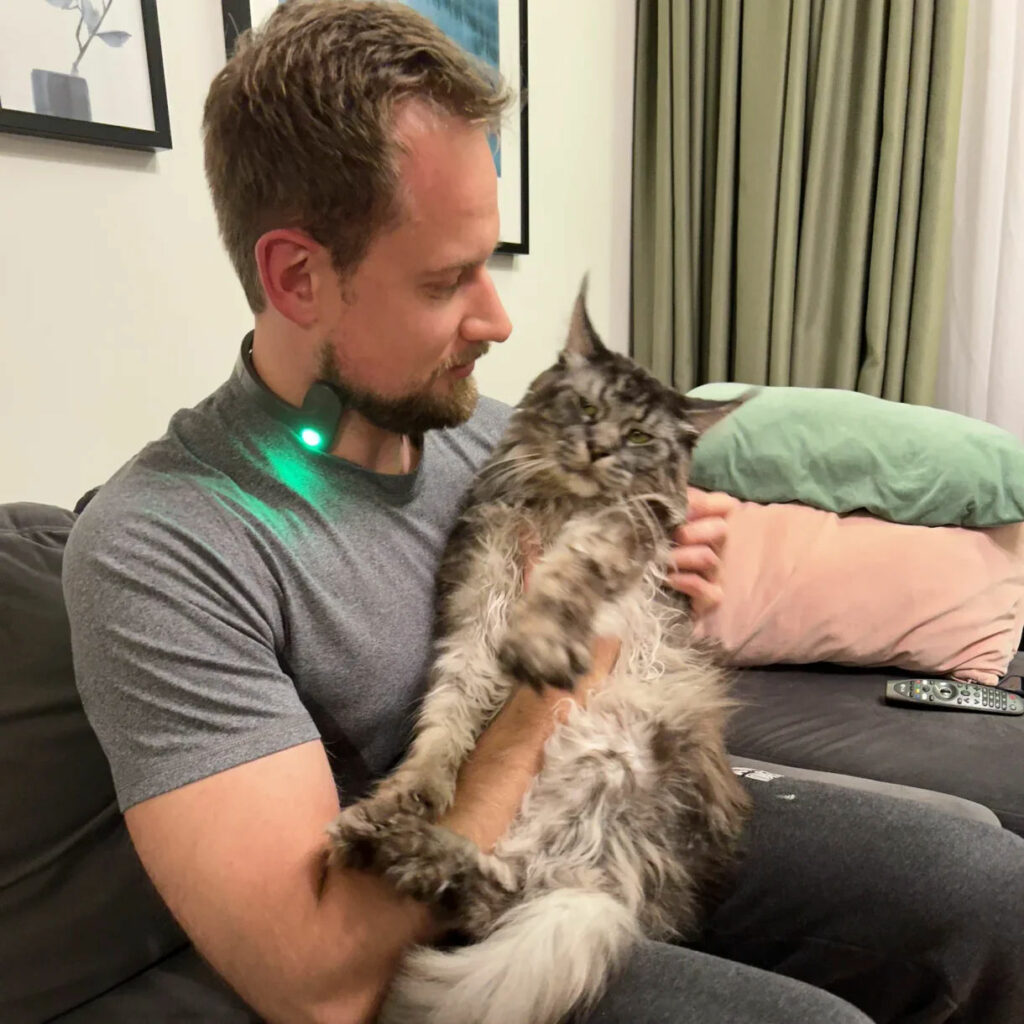
The Pulsetto sits on the back of your neck, and produces a light electrical vibration as it activates your parasympathetic nervous system, prompting a relaxation response and stress reduction.
It takes only 4 minutes to reduce stress and start feeling healthy, and their research suggests you can reduce stress by up to 64.5%, with 86% of users saying they felt generally calmer and less anxious in under 2 weeks.
The device links with an app on your phone that includes a series of free stress-reduction programs, and you can upgrade to a premium subscription which includes more programs, guided meditations, breathing exercises, etc.
It is one of the most affordable vagus nerve stimulation devices at $278 USD but like many of other devices to unlock the full features you may have to pay more for their premium app subscription.
This is by far the best-selling consumer device on the list so they’re definitely doing something right with their excellent, hands-free and comfortable design so the Pulsetto takes the top spot for vagus nerve stimulation devices.
Pros
- Most affordable on this list and the best-selling device
- Hands-free neck design, nothing to hold or distract you
- App-guided programs for stress, sleep, anxiety, burnout, and pain management
- Over 100,000 users with an 86% reported satisfaction rate
Cons
- Correct placement matters: poor contact leads to weaker sessions (the gel helps)
- Premium app requires extra payment after trial ($99/year)
- May not fit comfortably on very slim necks (the Pulsetto FIT version is made for smaller frames)
Pricing: Starts at $278 on the Pulsetto website (optional premium subscription $99/year)
Reviews: Users consistently report better sleep and reduced stress after a few weeks. Independent testers at Innerbody found “decent outcomes in subjective stress and sleep quality markers.” A 2025 pilot study on patients with ankylosing spondylitis showed improved sleep, joint pain, and concentration in the majority of participants after twice-daily use, though the study lacked a control group.
Overall: The best starting point for most people. Affordable, easy to use daily, and the app is genuinely good. If you’re new to VNS, start here.
2. Apollo Neuro
Best for: People who want to wear a device all day without thinking about it, and who prefer vibration over electrical stimulation.
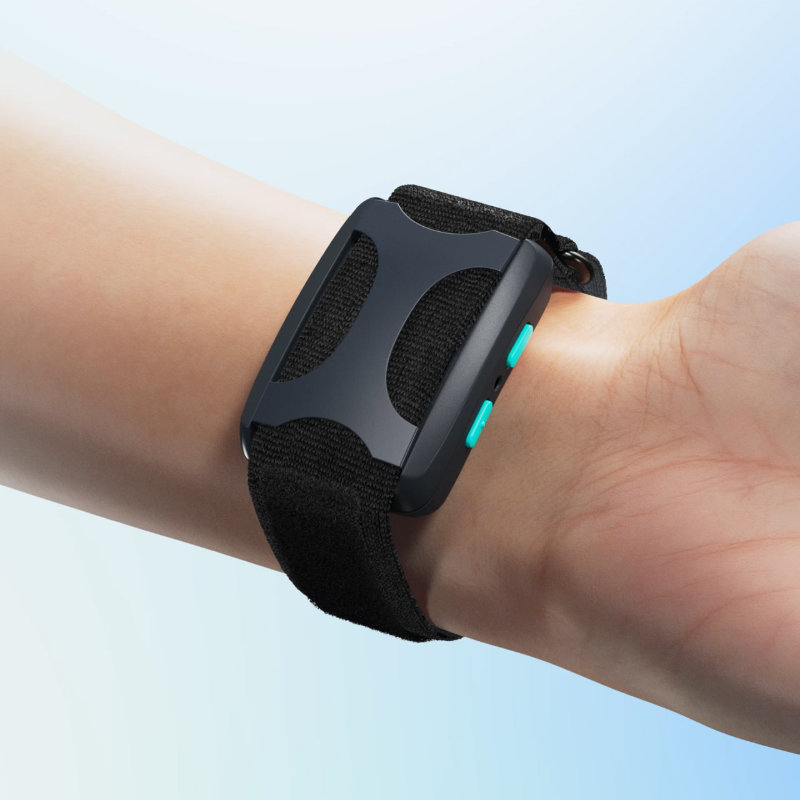
Apollo Neuro takes a different approach than the other devices on this list. Instead of electrical pulses, it delivers low-frequency vibrations through touch. These vibrations engage touch receptors in the skin, which signal the nervous system to shift toward a parasympathetic state.
Technically, Apollo is not a vagus nerve stimulator in the direct electrical sense. The company calls it “Touch Therapy Tech.” But the outcomes it aims for, lower stress, better sleep, improved focus, and higher heart rate variability, overlap with what VNS devices target.
The device is small, around the size of a chunky USB drive, and wears on the wrist, ankle, or clips to clothing. It runs entirely in the background while you go about your day. Seven vibration modes, called Vibes, target different states: energy, focus, calm, sleep, recovery, and more.
The app lets you schedule Vibes throughout the day. A premium SmartVibes subscription adds AI-driven mode selection and Oura Ring integration.
Apollo was developed by neuroscientist and psychiatrist Dr. David Rabin, drawing on research at the University of Pittsburgh that showed specific vibration frequencies improved focus and lowered stress markers.
Pros
- Completely passive: clip it on and forget it
- No gel, no ear placement, no neck positioning
- Seven modes covering energy, focus, calm, recovery, and sleep
- Backed by 17 clinical trials and research from the University of Pittsburgh showing an 11% HRV increase
- 150,000+ users and 90% report feeling calmer and more balanced
- 30-day money-back guarantee and 1-year warranty
Cons
- Not technically direct vagus nerve stimulation: works through vibration, not electrical pulses
- Requires 3 hours of daily use to see statistically significant sleep improvement per the brand’s own guidance
- SmartVibes and premium modes require a $99/year subscription
- Some users report Bluetooth connectivity issues and difficulty getting refunds
- Android app rated significantly lower than iOS
Pricing: The Apollo Neuro starts at $349 (SmartVibes subscription $99/year)
Reviews: Trustpilot averages 3.2/5, with satisfied users praising sleep improvement and daily stress management, and critical reviews focused on customer service issues and refund delays. The iOS app has very strong ratings and several long-term users (2 to 5 years) describe it as a daily non-negotiable.
Overall: If you want something to wear all day with minimal effort, nothing else on this list comes close. Just know it works differently from electrical VNS devices. For direct vagal stimulation, pick something else. For passive, background nervous system support, Apollo is hard to beat.
App: iOS (App Store) – 4.5/5 (1,700 ratings) | Android (Google Play) – 3.0/5 (990 ratings)
3. Neuvana Xen
Best for: People who want to use VNS during daily activities or while listening to music.
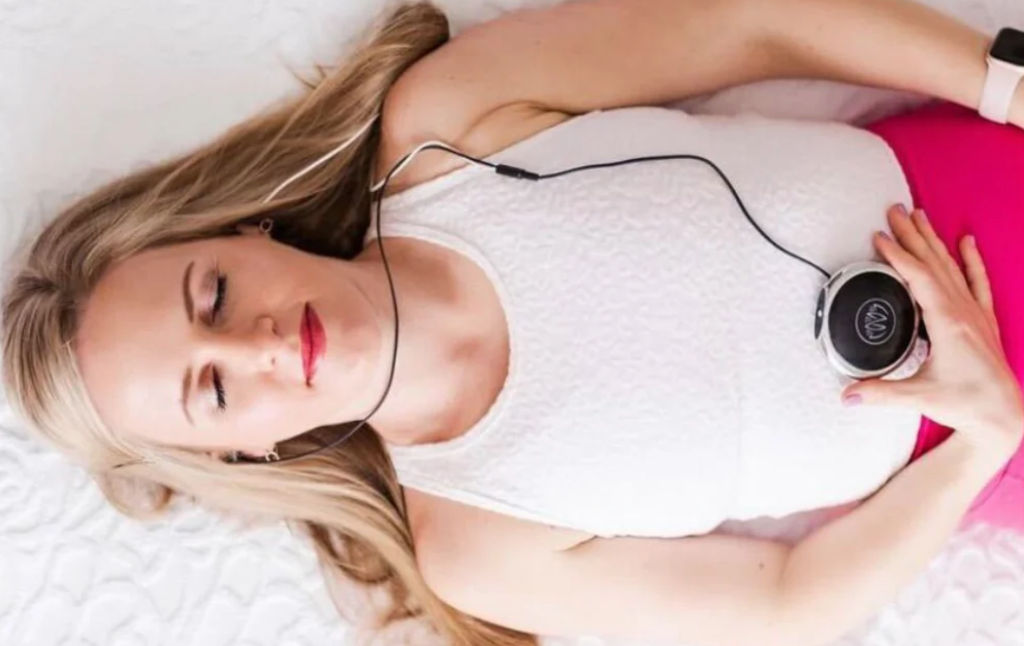
Xen comes in the form of headphones that target the vagus nerve with electrical micro pulses via the left ear specifically, which is called auricular vagus nerve stimulation.
The added benefit of headphones is you can add sound to the mix. Connect to the app, and use sync mode to pair the gentle electrical stimulation with your music, even setting it to match the beat.
Or, use ambient mode when you want to hear what’s going on around you as you engage in regular activities—the intensity of the stimulation can be adjusted so that it is not too distracting.
The Xen Box Set costs $449 and includes the necessities, Xen Traveler’s Bundle costs $459 and includes a travel case and a protective sleeve, or there’s the Xen Companion Bundle which includes an extra pair of headphones all for $499.
Pros
- Designed for use during normal activities: walking, working, commuting
- Music sync mode pairs stimulation with your playlists
- Very low ongoing costs: saline solution is the only consumable (around $5 to $15 per year)
- 210 customizable waveform, length, and signal combinations in the app
- 30-day satisfaction guarantee
Cons
- One tester in a published comparison experienced ear canal inflammation at high intensity
- No preset programs like Pulsetto or Truvaga: you build your own combinations
- The guarantee starts from the date of purchase, not delivery, giving you around 26 usable days to try it
- App has not been updated frequently, which some users flag as a concern
Pricing: Xen Box Set starts at $449 (Ongoing costs minimal)
Reviews: Users rate it highly for daily integration. Innerbody testers found it therapeutic but with “milder effects” than Truvaga Plus. The music sync feature gets specific praise, particularly from people who already use headphones during workouts or commutes.
Overall: A good fit for anyone who wants passive, on-the-go stimulation. The low long-term running cost is a genuine advantage over devices that require gel refills.
App: iOS (App Store) – 4.6/5 (31 ratings — very few reviews, treat with caution) | Android app not available
4. Sensate
Best for: People who prefer vibration over electrical stimulation and want a simple, passive relaxation tool.
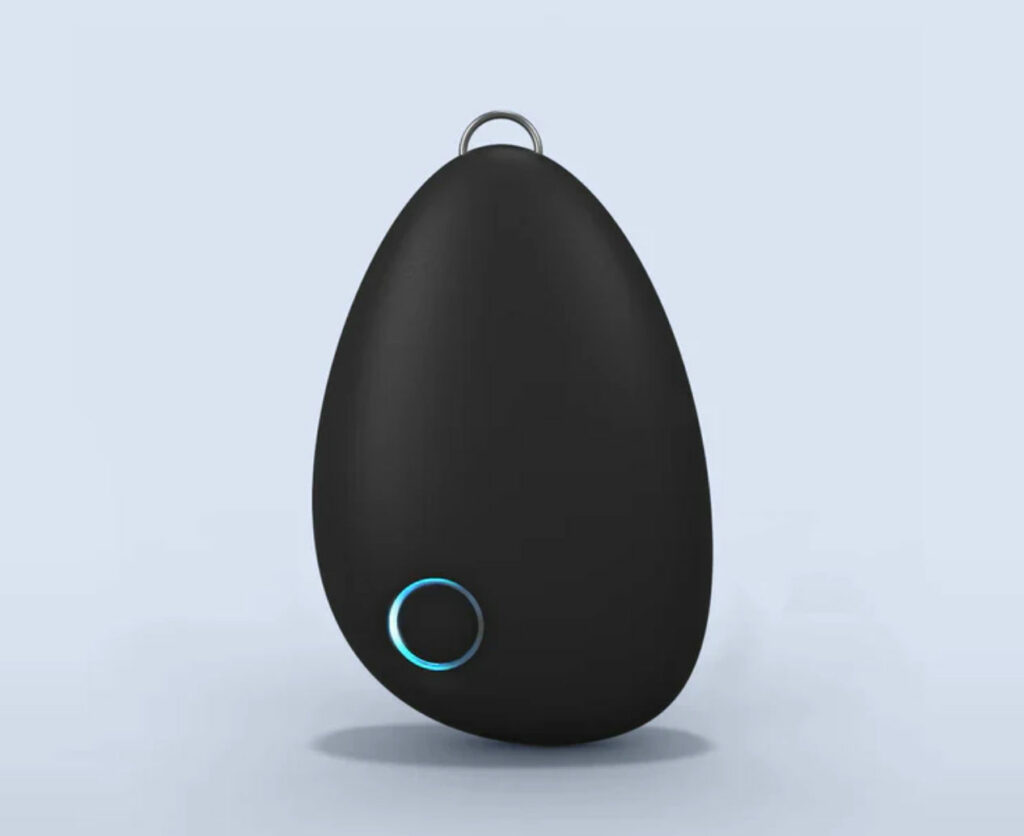
Sensate is unique as it doesn’t rely on electricity, rather it produces infrasonic waves, which is sound in such a low register that you cannot hear it, but you can feel it.
This non-audible sound acts on your vagus nerve through bone conduction. You lie down, set the device on your chest, and the vibrations will resonate through your body, influencing your vagus nerve in the process.
You can get the Sensate device with a lanyard for wearing it around your neck, and some free soundscapes for a more immersive experience, for $299.
You can also get all of the same gear and a year subscription to Sensate Plus for $349 and it’s probably one of the best designed vagus nerve stimulation devices on the list.
Pros
- No electrical stimulation, which some people prefer
- Passive: lie down and let it run
- Pairs with soundscapes for a more immersive experience
- Lightweight and portable
- A pilot study of 25 participants showed reduced self-reported stress and improved sleep after two weeks of daily use
Cons
- Not electrical VNS in the traditional sense: it’s vagus nerve toning through vibration, a less clinically studied approach
- No independent peer-reviewed clinical trials specifically on the Sensate device
- Full soundscape library requires a subscription
- Requires lying still, which isn’t always practical
- Some users have noted the device feels fragile
Pricing: Starts at $299 for the Sensate device ($349 with a year of Sensate Plus)
Reviews: Users praise it for relaxation and sleep. Setup is simple and the app is easy to use. The main criticism is the limited free soundscape library.
Overall: The most accessible entry point for people put off by the idea of electrical stimulation. Not for those who need strong clinical evidence. For straightforward relaxation, it works well.
App: iOS (App Store) – 4.7/5 (3,000 ratings) | Android (Google Play) – ratings vary. Note: the high iOS rating reflects the device experience, not the app itself. A recurring complaint in reviews is that most soundtracks are locked behind the Sensate Plus subscription, and the free library is thin.
5. Truvaga Plus
Best for: People who want clinical-grade cervical stimulation parameters in a consumer device, and don’t mind paying more for it.

Truvaga is a handheld vagus nerve stimulator, designed to be positioned against the side of the neck, with adjustable settings to find the best level of gentle stimulation for you.
One limitation of Truvaga is that sessions are 2 minutes long, after that time the device will beep and turn off.
While this may be long enough to get some benefit (other devices recommend up to 30 minutes), anyone wanting longer sessions will have to go through the effort of setting it up again, a minor but not insignificant hassle.
There are two devices you can choose from. The Truvaga 350 starts $299 and includes 350 2-minute sessions, but isn’t rechargeable, so once those sessions are up the device is done.
That should last you 3 months at 2 sessions per day, so might make for a trial period to see how vagus nerve stimulation treats you.
Or there’s the Truvaga Plus ($499), which has unlimited sessions, is rechargeable, and is app-enabled. Given this is less than two of the Truvaga 350, and should last much longer, this is probably the better option.
Pros
- Technology closely mirrors gammaCore, an FDA-cleared device for migraines
- CE-marked
- In independent testing by Innerbody, it produced the “fastest and most noticeable effects for focus, stress, and sleep quality” compared to Xen, Pulsetto, and VeRelief
- Truvaga Plus app offers preset programs for sleep, mental performance, and stress
Cons
- 2-minute session limit shuts off automatically
- Truvaga 350 is not rechargeable and has a hard session cap
- No warranty mentioned on the product page
- More expensive than Pulsetto for broadly similar cervical stimulation
Pricing: The Truvaga Plus starts at $499 (Gel refills around $45/year)
Reviews: Trustpilot average of 3.8/5. Users report quick, noticeable effects, particularly for focus and sleep. The 2-minute limit is the most common complaint. Some users run multiple sessions to extend their total stimulation time.
Overall: The closest consumer device to a clinical-grade cervical VNS tool. If efficacy and scientific backing matter more than price or convenience, the Truvaga Plus is worth the premium over Pulsetto.
App: iOS (App Store) – 3.2/5 (41 ratings — very few reviews) | Android (Google Play) – limited ratings, newer app
6. Dolphin Neurostim
Best for: People managing chronic pain who also want vagus nerve stimulation in the same device.
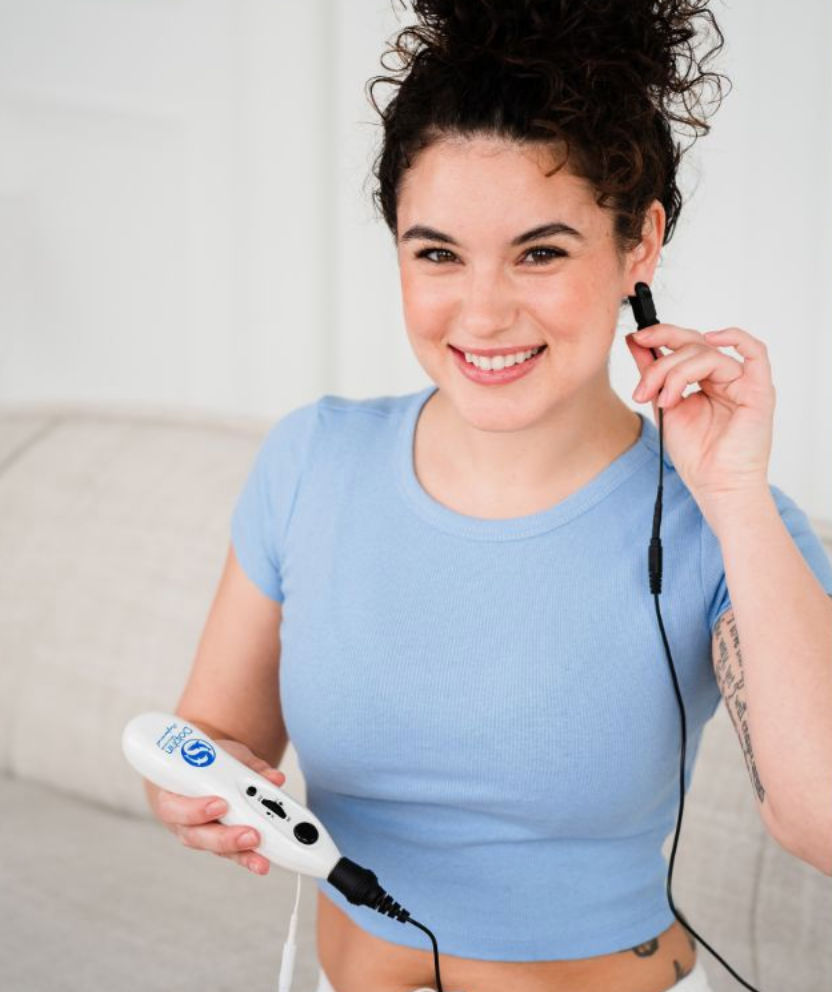
Dolphin have a number of pain management tools, all focused on applying levels of electrical stimulation to different points on the body, to activate the vagus nerve directly where it is most needed.
The main device is the Dolphin Neurostim, which has the power supply and can be used for direct stimulation, or you can attach a cable with a clip to attach to your ear.
Using the device directly is likely helpful for tackling specific pain points, while the ear attachment is better for a general reduction in stress.
There are a number of packages available including the pain management kit is $424, and includes the main Dolphin Neurostim and an extension probe, while you can add the Vagus Nerve Stim Kit to that for $724.
Pros
- Versatile: works for both direct pain management and vagus nerve stimulation
- Designed for clinical and home use
- No subscription or app required
- The only device on this list primarily designed for pain management
Cons
- Looks and feels like clinical equipment, not a consumer product
- Requires more setup than other options
- Expensive when buying the full vagus nerve kit
- No companion app for guided programs or session tracking
Pricing: Pain management kit $424 (Full vagus nerve stim kit is $724)
Reviews: Most feedback comes from physical therapy and pain management contexts rather than general wellness. Users with chronic pain conditions report meaningful relief. Reviews specifically for stress reduction use are limited compared to other devices on this list.
Overall: This one is for people managing chronic pain who also want vagus nerve access, not for people primarily after daily stress relief. If pain is the main goal, it’s worth considering. For stress and sleep alone, simpler options exist.
App: No companion app.
7. VeRelief Prime
Best for: People who want no-fuss electrical VNS with no app, no subscription, and no gel.
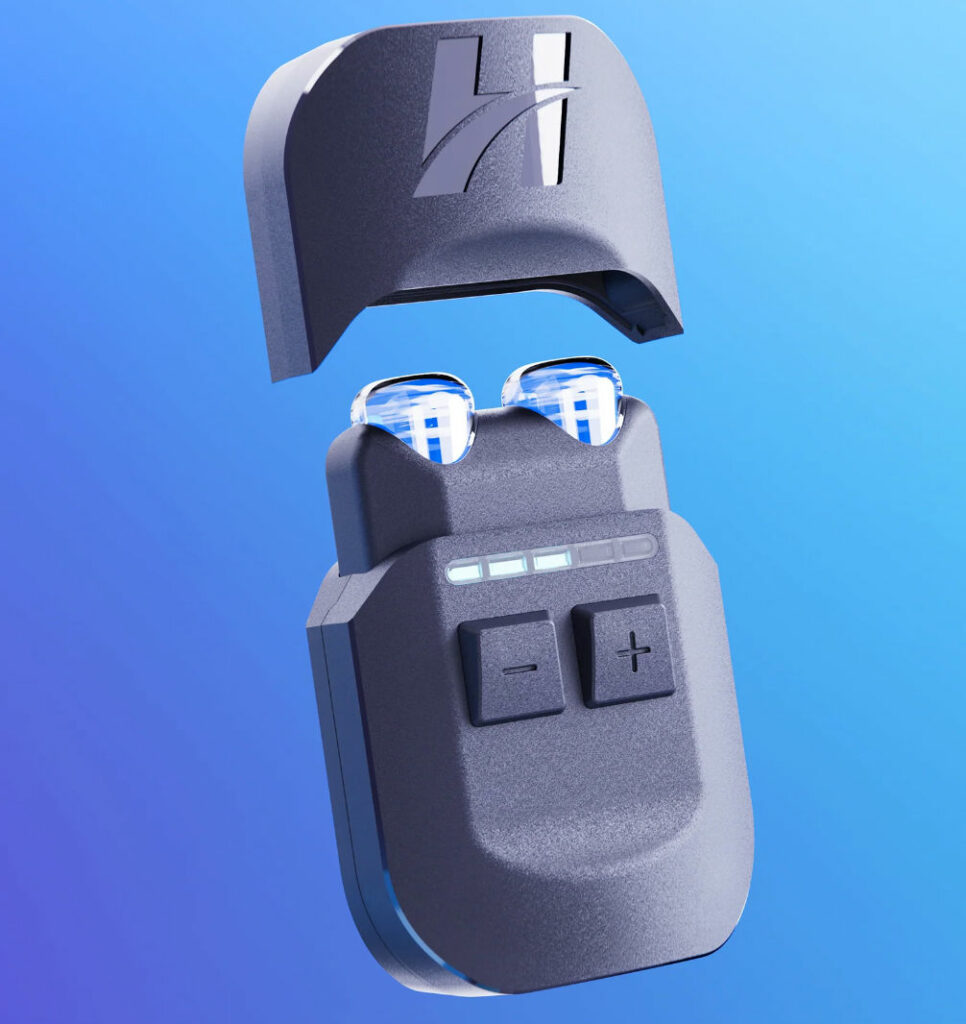
Like Truvaga, VeRelief is a handheld device designed to be positioned against your neck, as low-level electrical waves act on your vagus nerve.
It’s designed to be quick and easy to use—no connecting apps, or messy gel (you’ll find many other devices require applying a gel to help with conductivity).
There are gel tips that add that conductive advantage, so it’s really just a matter of picking the device up, turning it on, and pressing it against your neck.
You can get the VeRelief Prime device, charger, gel and gel tips, a rehydration solution, a magazine, and a free consultation, all for $399.
Pros
- No app, no screen, no setup
- Five stimulation modes with adjustable intensity
- 60-day money-back guarantee, longer than most competitors
- Patented tri-nerve stimulation approach
- Used by military units and first responders, according to the manufacturer
Cons
- No app also means no session tracking, guided programs, or preset modes
- Independent validation of the tri-nerve stimulation claims is limited
- More expensive than Pulsetto for broadly comparable cervical results
- Mixed user feedback on Trustpilot and Reddit
Pricing: $399 for the full VeRelief Prime kit (60-day money-back guarantee, 1-year warranty)
Reviews: Users who like it tend to report fast results, particularly for acute stress and pre-sleep use. The “no-app, no-fuss” design is frequently praised. Critics say results are inconsistent and the lack of structure makes it harder to build a habit.
Overall: A solid option for anyone who wants to keep it simple and avoid subscriptions entirely. The longer return window gives you real time to assess whether it’s working.
App: No companion app.
8. Nuropod
Best for: US-based buyers who want the most clinically validated ear-based VNS device available without a prescription.

Nuropod is the North American version of Nurosym, sold specifically for the US and Canadian markets by the same parent company, Parasym. Both devices use identical technology: Parasym’s patented Auricular Vagal Neuromodulation Therapy (AVNT).
Like Nurosym, it works via an electrode that clips onto the tragus of your ear, sending targeted electrical signals to the vagus nerve. Sessions are typically 15 to 30 minutes.
Nuropod is backed by over 50 clinical studies, including randomized placebo-controlled trials from institutions including UCLA and UChicago Medicine.
Pros
- Same clinically validated AVNT technology as Nurosym, the most research-backed option for US buyers
- CE-marked and certified as a wearable neuromodulation device
- 30-day money-back guarantee
- 2-year device warranty, 6-month earpiece warranty
- No surgery or prescription required
Cons
- $900 is among the highest prices on this list
- Full clinical study links are not easy to find on the website
- Not FDA-cleared as a medical device: it’s a consumer wellness product
- Cannot be used if you have a pacemaker or other implanted device
Pricing: $900 for the Nuropod (10% discount sometimes available on the single unit)
Reviews: Broadly positive. Users report improved sleep, reduced brain fog, and lower anxiety after consistent use. Medical professionals quoted on the site describe using it with Long COVID patients and seeing improved fatigue and mood. The main criticism from independent reviewers is the price.
Overall: For US buyers who want the Nurosym-level research pedigree, Nuropod is the answer. The price is high, but it comes with the most substantial research backing of any ear-based device that ships to American buyers.
App: iOS (App Store) | Android (Google Play). The app is newly launched and has no public rating yet. Features include a vagus nerve assessment, daily check-ins, educational content, usage protocol guidance, and in-app support. It’s more of an onboarding and compliance tool than a session-control app.
9. Nurosym
Best for: People in Europe, the UK, or Canada who want the most clinically validated consumer VNS device available to them.
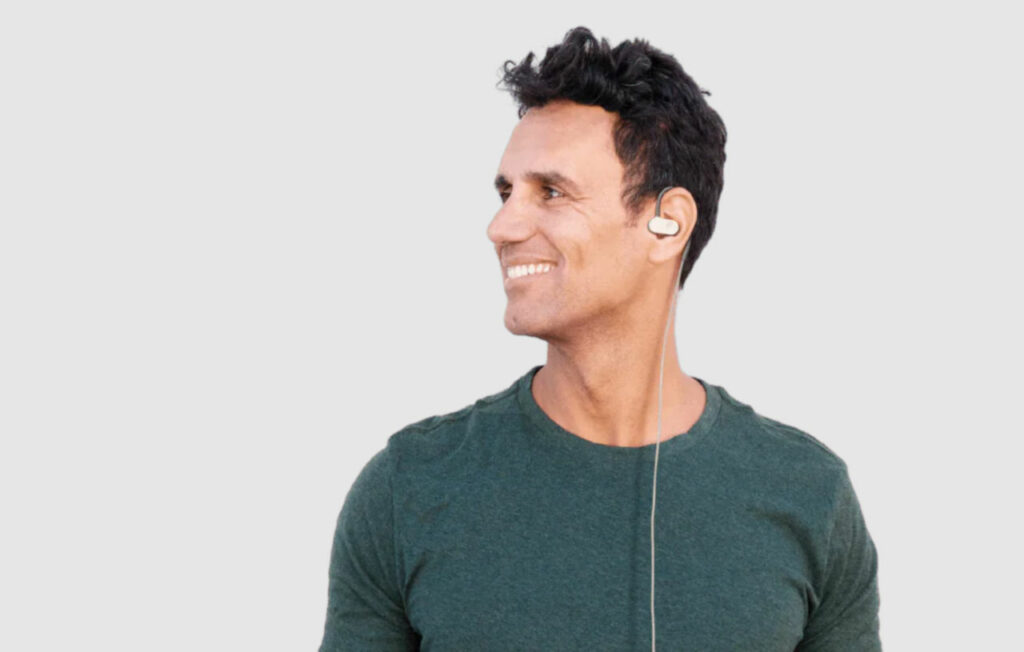
Nurosym is a popular UK-based vagus nerve stimulation device. It’s another that accesses the vagus nerve through the left ear.
The earpiece loops around behind your ear and attaches to the Nurosym device, a simple control where you can adjust the level of stimulation.
They claim a 61% increase in vagus nerve activity within 5 minutes, as well as substantial improvements in long-term COVID-19 symptoms, sleep, heart rate variability, attention deficiency, and more.
Unfortunately, it is not currently available in the US, but can be purchased in Canada for $1,066.90 CAD, in the UK for £599, or in Europe for €699. This includes a 30-day trial period with a full refund if you’re not happy.
Pros
- CE-marked medical device, a meaningful distinction from most consumer wellness gadgets
- Backed by 50+ clinical studies including randomized placebo-controlled trials
- 30-day full refund period
- 2-year device warranty, 6-month earpiece warranty
- Targets the ear’s tragus, which gives direct access to the vagus nerve branch connecting to the brainstem
Cons
- Not available in the US
- One of the more expensive devices on this list
- Research links on the website don’t go directly to the full studies
- Requires 15 to 30 minutes of daily sessions to see long-term benefit
Pricing: Nurosym is $1,066.90 CAD, UK: £599 and Europe: €700
Reviews: Trustpilot shows over 1,100 reviews with broadly positive sentiment. Users frequently cite reduced anxiety and better sleep. Customer service response to faulty earpieces gets specific praise. A common note: people feel the difference when they stop using it.
Overall: If you’re in Europe, the UK, or Canada, and can afford the price, this is among the most scientifically validated consumer VNS options available. The CE mark and volume of clinical research set it apart from most competitors.
App: The Nurosym app is available on iOS and Android. App store ratings are limited in volume and not reliably current.
10. SONA
Best for: Tech-forward buyers who want AI-personalized VNS and are willing to pay for it.

SONA is an ear-based vagus nerve stimulator that adapts stimulation to your biometric signals in real time. Rather than delivering a fixed protocol, it reads your heart rate and breathing rate, then adjusts the intensity and pattern of each session as it goes.
The device sits around your ear like an earbud and connects to an app that tracks your progress over time. The idea is that the longer you use it, the more the algorithm learns your patterns, and the more targeted each session becomes. Sessions run around 10 minutes.
SONA also pairs with soundscapes, music, or guided breathing exercises during sessions. The team behind it includes engineers from Neuralink, a cognitive neuroscientist with Oxford and Harvard fellowships, and a former neuromodulation researcher.
Selling out in multiple batches since launch signals real demand, even if SONA-specific peer-reviewed research is still limited.
Pros
- Real-time biometric adaptation makes it the most personalized device on this list
- AI algorithm learns your patterns over time with free software updates
- No ongoing subscription required: lifetime app access included
- No gel required
- CE Mark, UKCA, and RoHS certified
- Onboarding call and weekly check-ins offered after purchase
Cons
- Around $950 makes it one of the most expensive options here
- SONA-specific peer-reviewed clinical trials are limited: pre-clinical trials involved 100+ participants, but independent external research is sparse
- Relatively new to market, so long-term user data is thin
- Some features described as still rolling out via software updates
Pricing: Around $950 depending on their website (Lifetime app access included)
Reviews: Early feedback is positive. Users report better HRV scores, improved sleep, and reduced stress. A WellnessPulse reviewer described the personalized approach as genuinely interesting, while noting that “the actual significance of these adjustments would likely vary a great deal from person to person.”
Overall: SONA is the most technically forward device on this list. Whether AI-driven personalization delivers meaningfully better results than a well-designed fixed protocol is still an open question. The research isn’t there yet. If you want the latest in consumer VNS technology and the budget isn’t a barrier, it’s worth a look.
App: iOS (App Store) | Android (Google Play) – app is new with limited ratings volume
Vagus Nerve Stimulation FAQ
1. What is the vagus nerve?
The vagus nerve is the longest cranial nerve in the body. It runs from the brainstem down through the neck, chest, and abdomen, connecting the brain to the heart, lungs, gut, and most major organs. Its name comes from the Latin word for “wandering,” which describes how it travels through the body. It carries signals in both directions: from the brain to the organs, and from the organs back up to the brain. Around 80% of the fibers run upward, meaning the brain is receiving a lot of information from the body through this nerve.
2. What does the vagus nerve actually do?
It’s the main driver of the parasympathetic nervous system, the side responsible for rest, digestion, recovery, and calm. It regulates heart rate, breathing, digestion, and the inflammatory response. It also plays a role in mood, sleep, and immune function. When the vagus nerve is working well and its tone is high, you tend to recover from stress faster, sleep better, and feel more emotionally regulated. When vagal tone is low, the opposite tends to be true.
3. What is vagal tone and why does it matter?
Vagal tone is a measure of how active and responsive your vagus nerve is. Higher vagal tone is associated with better stress recovery, lower inflammation, improved heart rate variability, and stronger emotional resilience. Lower vagal tone shows up in conditions linked to chronic stress, anxiety, depression, and inflammatory illness. Heart rate variability (HRV) is the most common proxy for vagal tone that consumer devices track. A higher HRV generally means better vagal tone.
4. Can you improve vagal tone without a device?
Yes. Deep, slow breathing (particularly extending the exhale) is one of the most well-supported methods. Cold water exposure to the face or neck triggers a vagal response. Humming, singing, and gargling all activate the muscles in the throat connected to the vagus nerve. Regular exercise and social connection also support vagal tone over time. VNS devices are a more direct route, but they’re not the only one.
5. What is the connection between the vagus nerve and the gut?
The vagus nerve is the main communication pathway of the gut-brain axis. It carries signals between the enteric nervous system (sometimes called the “second brain” in the gut) and the central nervous system. Disrupted vagal function is linked to digestive issues including IBS, bloating, and slow gastric emptying. Some early research suggests VNS may help with inflammatory bowel conditions, though this is an area still being studied.
6. Why do so many people have low vagal tone?
Chronic stress is the main driver. When the body stays in fight-or-flight for extended periods, the parasympathetic system gets underused and vagal tone drops. Poor sleep, sedentary lifestyles, processed food, social isolation, and constant low-grade anxiety all compound the problem. It’s essentially a modern lifestyle issue, which is part of why VNS devices have found an audience.
7. Do vagus nerve stimulation devices actually work?
For electrical VNS devices, the evidence is reasonably solid. A 2025 systematic review and meta-analysis of randomized controlled trials confirmed that transcutaneous VNS produces clinically meaningful improvements in sleep quality. Research also supports benefits for stress reduction, HRV improvement, and anxiety management. The strongest evidence is for cervical and auricular electrical stimulation. Vibration-based approaches like Apollo Neuro and Sensate have more limited data, though both have pilot studies behind them.
8. Are these VNS devices safe?
Generally yes, for healthy adults. You should not use any electrical VNS device if you have a pacemaker, cochlear implant, or other implanted electronic device. People with arrhythmias, epilepsy, or psychiatric conditions managed by medication should check with their doctor first. Sensate and Apollo Neuro, which use vibration rather than electricity, have fewer contraindications.
9. How long does it take to feel results?
Some people notice a difference in the first session or two. Others need two to four weeks of consistent daily use. Most devices recommend daily use for 15 to 30 minutes (or multiple short sessions). Apollo Neuro specifically states that three hours of daily wear for at least 21 days is needed for statistically significant sleep improvement.
10. Are these approved by the FDA?
No consumer VNS device on this list is FDA-cleared. The only FDA-cleared non-invasive VNS device is gammaCore, available by prescription for migraines and cluster headaches. Truvaga’s technology is closely modeled on gammaCore. Nurosym and Nuropod are CE-marked medical devices, which is the European equivalent. All others are wellness devices.
11. What’s the difference between cervical and auricular stimulation?
Cervical devices (Pulsetto, Truvaga, VeRelief) press against the side of the neck to target the vagus nerve where it runs near the carotid artery. Auricular devices (Nurosym, Nuropod, Neuvana Xen, SONA) target a branch of the vagus nerve in the ear, specifically the tragus. Both approaches have clinical backing. The ear approach is favored by some researchers because the auricular branch connects more directly to the brainstem.
12. Can I use these devices alongside medication?
Most people do. However, if you’re on medication that affects heart rate, blood pressure, or seizure threshold, talk to your doctor before using any VNS device. These are not medical treatments and should not replace prescribed therapy or medication.
13. Which device is best for sleep?
Nurosym and Nuropod have the most clinical trial data specifically on sleep outcomes. Apollo Neuro has strong user-reported sleep data and clinical trials showing increased deep sleep. Pulsetto and Sensate also have positive sleep feedback from users. For sleep, any of these can work. Consistency matters more than which device you pick.
Calming the Nervous System With Vagus Nerve Stimulation
The vagus nerve is one of the longest and most important nerves in your body. It runs from the base of your brain down to most of your major organs.
While your body naturally regulates and balances the activity of your nervous system, many situations and circumstances (particularly modern ones), can push you out of balance.
When you suffer from prolonged stress and anxiety, your body won’t be spending enough time in the “rest-and-digest” state, and your immune system and overall health will start to suffer as a result.
Start pushing the nervous back into balance. The vagus nerve is the target, and vagus nerve stimulation devices are the best way to nudge it into action.

I believe the future of education starts with helping people find their "zone of genius" so they can develop their uniquely human ability to create meaning, connection and community (that A.I. can't replicate).
I'm also big on completely unplugging from tech to recharge on nature retreats and trekking adventures. That led me to start my most recent company Sacred Treks.
- 10 Best AI Wearables That Can Help Your Focus And Productivity - June 26, 2026
- 4 Pillars of How Google’s EEAT Shapes SEO For Health Websites - June 25, 2026
- 11 Best Digital PR Tools That Help Founders Get Cited By AI - June 25, 2026