


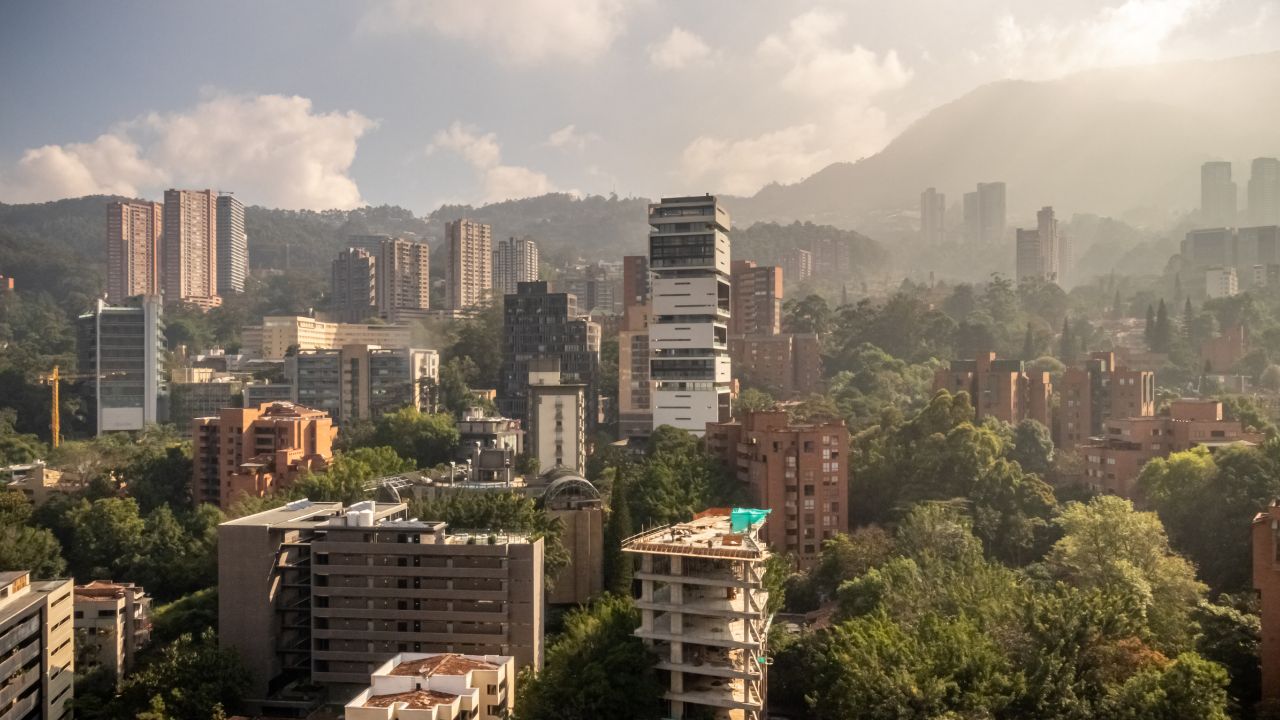
I first went to Medellín for a month in the summer of 2021 and I fell in love with the city. Since then, I’ve returned a couple of times and the city continues to grow on me.
I run build online businesses, vibe code apps and advise startups on growth marketing for a living so I’m location independent and I’ve tried a lot of the usual nomad cities.
Medellín, Rio de Janeiro and Santa Marta are the ones that pulled me back, and it isn’t just because of the weather or the cheaper cost of living, it is ultimately about the people.
I’ve found the most important part of being a digital nomad and being a founder is being surrounded by the right people and over the years I’ve built communities in these 3 cities that have made all the diference.
I wanted to create this guide for other digital nomads who are interested in living in Medellín and what to hit the ground running when they arrive by getting into the right communities, whatsapp groups and events.
This is the guide I wish I’d had when I first arrived in Medellín and it covers where to live, where to work, what it costs, how to get into nature within an hour, where to escape when you need the beach, and how to stay safe without being paranoid.
I’ve done my best to put real prices on things that count in 2026 inflation and named some of the key secret places I’d actually send a friend to. Treat the numbers as ballpark, since they move, and treat the opinions as one founder’s view.
The reason Medellín is different is the founder community
They say if you want to build something extraordinary you should be in either New York City or San Francisco because these cities provide the best proximity to venture capital backed founders and A-list talent for hire.
But let’s face it, these cities have become burnout machines and the American way of life isn’t really for me. Sure, these are still the best places to build a billion dollar company but if you’d rather build a lifestyle business then these aren’t the places you’ll thrive.
That’s where Medellín comes in. It has become one of the best places in the world to be around other people building online businesses that actually have time to connect and do fun things.
I don’t mean that in a loose way. In any given week I could have dinner with a SaaS founder doing 7 figures of revenue, a media operator running a portfolio of newsletters, an agency owner scaling past their first few hires, and a couple of people running ecommerce setups that literally print money.
These are not people posting about the laptop lifestyle and “faking it until they make it”, they’re people running serious business and Medellín has been the best city I’ve found for connecting and collaborating with other digital nomad founders.
Meeting founders here is easy in a way it isn’t elsewhere. Part of it is the lifestyle. People aren’t rushing as much as in the United States. A coffee turns into three hours and a quick workout turns into lunch afterwards. Part of it is the self-selection, since the people who move to Medellín to build something tend to be open, social and a little obsessed with their work. Y
There are coliving houses full of entrepreneurs, where you wake up and the person making coffee next to you is heads-down on a launch. That setup isn’t for everyone, but for a stretch it was perfect for me. The accountability is built in so you can’t coast when you are accountable to other founders in the house.
If you come here to grow a business and not just to escape winter, this is the single biggest reason to pick Medellín over a prettier beach town. I prefer the lifestyle in Santa Marta and Rio de Janeiro but the digital nomad founder community in Medellín is outstanding.
Is Medellín safe for digital nomads?
I won’t sugarcoat this, because bad advice here gets people hurt and dishonest advice gives the city a worse name than it deserves.
Medellín is much safer than its reputation, and far safer than it was twenty years ago. I lived here and never had a serious problem. But it’s still a city where street smarts matter, and the people who get into trouble are almost always the ones who got careless.
The local phrase to learn is “no dar papaya,” which roughly means don’t make yourself an easy target. Most crime against foreigners is opportunistic. A phone left on a restaurant table, a flashy watch on a quiet street, a wallet in a back pocket.
The rules I lived by were simple.
Generally avoid the city center as it’s pretty sketchy, especially at night.
Keep your phone in your pocket on the street, not in your hand. Phone snatching is the most common petty crime, and it’s quick.
Take an Uber, inDrive or registered taxi at night rather than walking long distances or standing on the street, especially after drinking.
Be careful with dating apps and with strangers who want to buy you a drink, particularly around Lleras. Drink spiking with scopolamine is a real risk, and the target is usually a foreigner who’s had a few. Don’t leave your drink unattended and don’t go home with people you just met.
Stick to El Poblado, Laureles and Envigado, and the main trails and tourist areas, until you know the city. Some neighborhoods are fine to live in and some are not, and a local will tell you which is which.
One piece of good news. The tap water in Medellín is clean and safe to drink, which is not true everywhere in Colombia. Fill your bottle from the sink and skip the plastic.
Carry the level of caution you’d use in any large city you didn’t grow up in. Do that and Medellín will treat you well.
The best neighborhoods for digital nomads
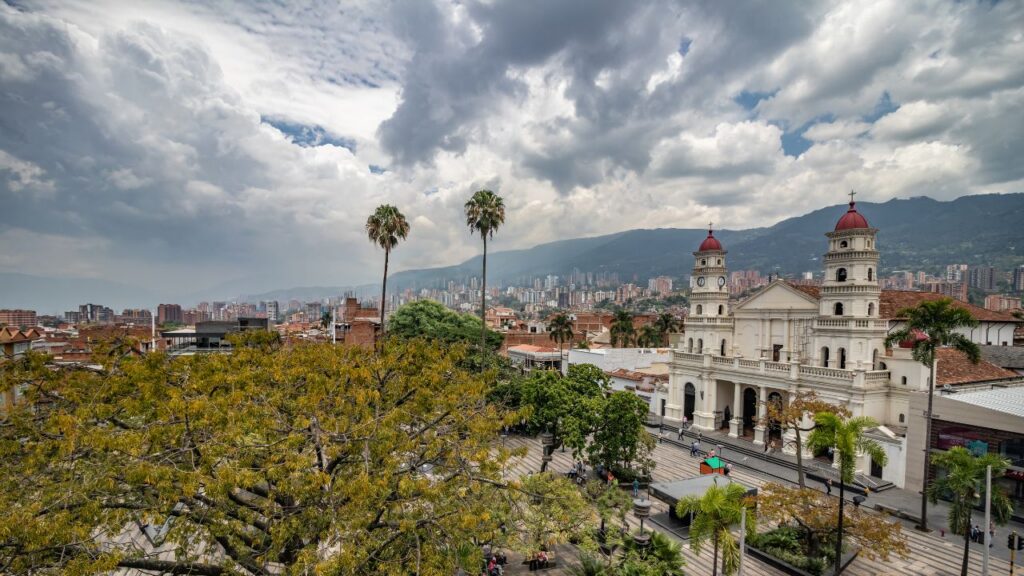
You’ll spend most of your time in three areas. Pick wrong and you’ll either overpay for noise or feel cut off from everyone.
Here’s how I’d think about it, with the rents I typically saw for a furnished one-bedroom.
1. El Poblado
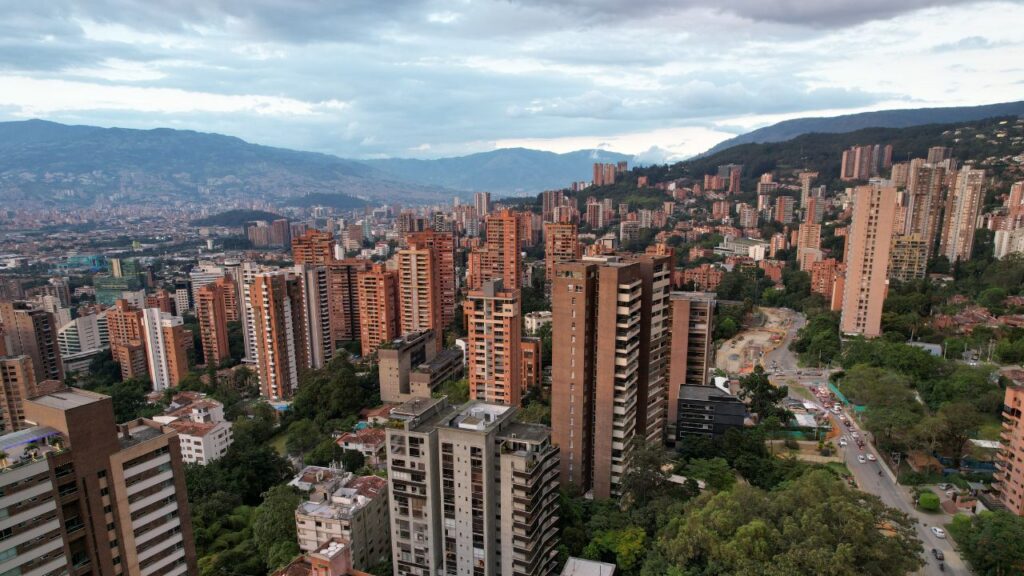
El Poblado is where almost everyone starts, and for good reason. It’s very walkable, most international part of the city, packed with cafés, restaurants, gyms and short-term apartments.
The sub-areas to know are Provenza and Manila, which are leafy and full of good food, and the area around Parque Lleras, which is the nightlife center. This is the center of the action but I personally don’t like this area as it’s ground zero for Medellin’s sex tourism and travel bro industry.
One upside of El Poblado is convenience and the highest concentration of other nomads and founders. The downside is price, prostition and noise. A furnished one-bedroom here runs roughly 800 to 1,500 USD a month on Airbnb-style platforms, and parts of it can feel like a bubble where you hear more English than Spanish.
If it’s your first stay, you may want to start in El Poblado. It removes a lot of friction while you find your feet.
2. Laureles
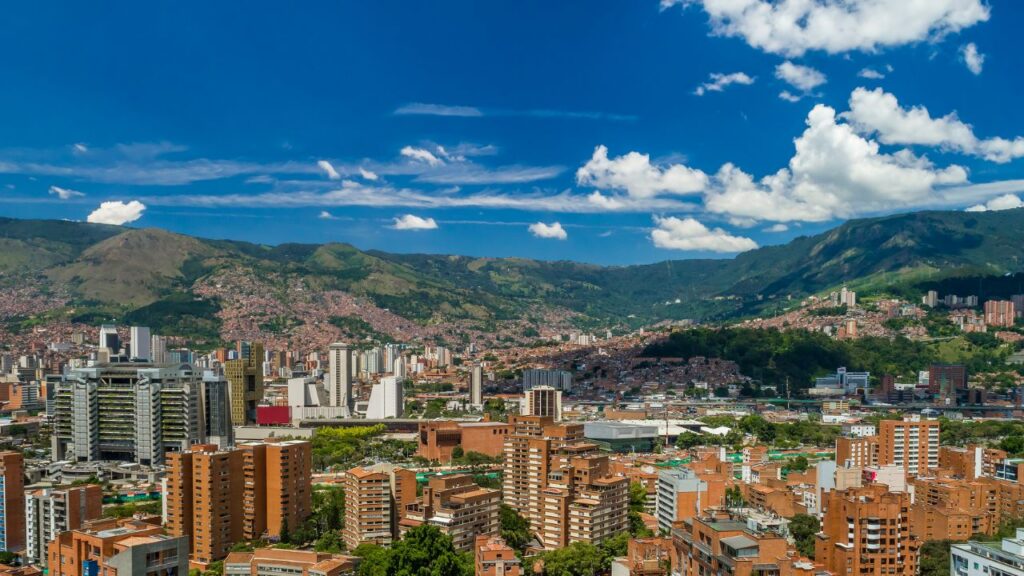
Laureles is where I usually end up, and where a lot of people end up once the novelty of El Poblado wears off.
It’s a flatter, greener, grid-pattern neighborhood that feels more like a real Colombian city. Tree-lined streets, local bakeries, the long strip of bars and restaurants on La Setenta, and noticeably better rent for the same quality of apartment.
A furnished one-bedroom in Laureles runs roughly 600 to 1,200 USD a month, and near the stadium you can find local listings from around 450. It’s quieter, more residential and easier to focus in. The trade-off is that you’re a little further from the densest nomad scene, though that gap shrinks every year.
My honest advice: spend your first week or two in El Poblado, then spend a week in Laureles before you commit to a month anywhere. Most people I know prefer Laureles once they’ve tried both.
3. Envigado
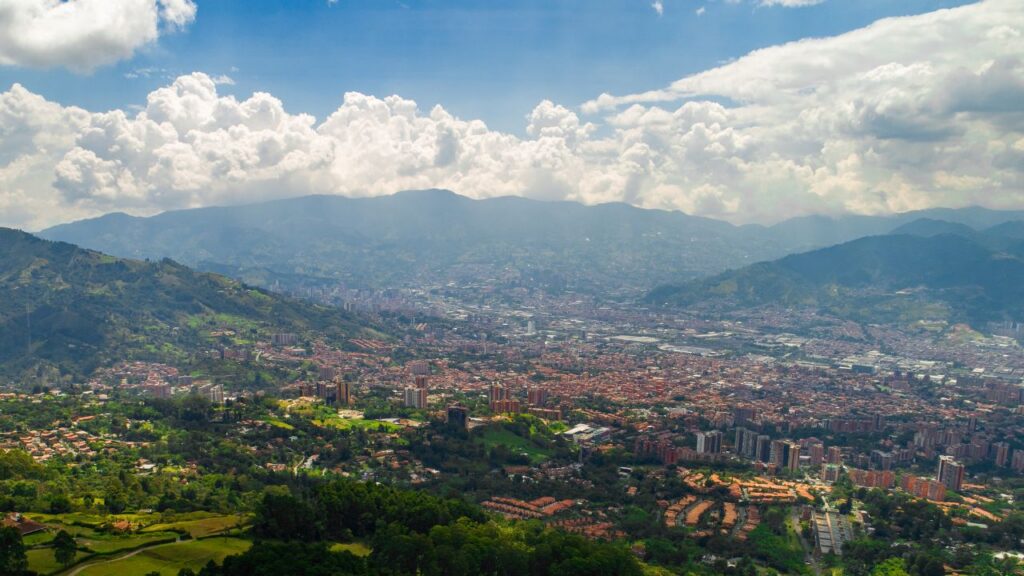
Envigado is technically its own municipality just south of El Poblado, and it’s the most local of the three. Residential, calm, family-oriented, with a pretty main square and almost no tourists. If you want to practice Spanish, live among Colombians and pay less, Envigado is the move. One-bedrooms in Envigado Centro start around 400 to 550 USD on local listings.
The trade-off is that you’re further from the action and you’ll lean on taxis or the Metro more. For a longer stay where you want routine over novelty, it’s a good pick.
The other neighbourhoods
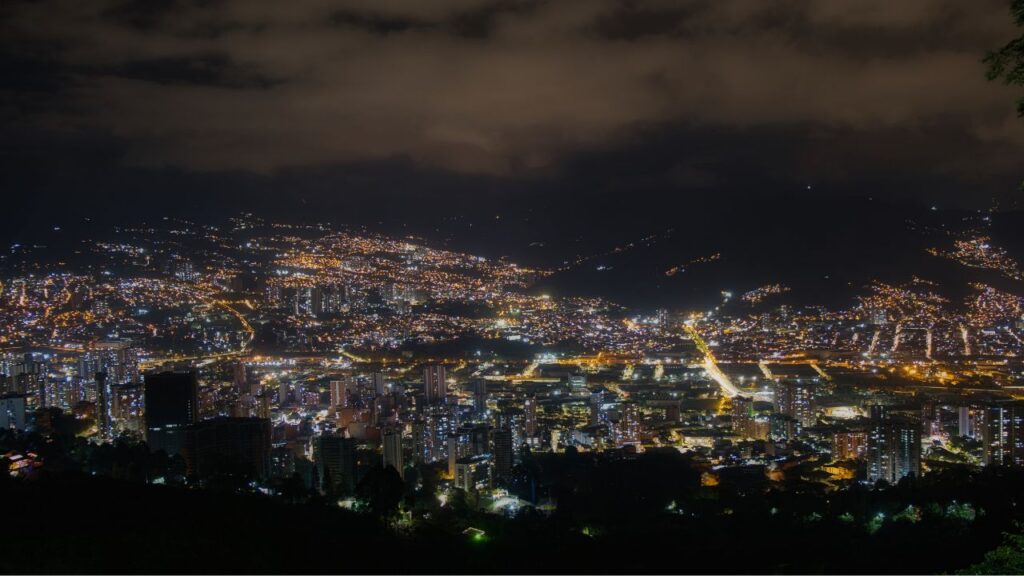
Sabaneta, further south, is even more local and cheaper again.
Belén is a large, working-class area with the Tres Cruces trailhead in it. The area around the stadium,
Estadio, is sporty and central. None of these are where I’d send a first-timer, but if you stay long enough to want out of the nomad areas, they’re worth a look.
One money tip that applies everywhere. The local rental sites, Fincaraiz and Metrocuadrado, run 30 to 50 percent cheaper than the international platforms for the same apartment.
The reality is that furnished places booked in dollars carry a real premium. If you’re staying three months or more, book a cheap first month, then find your real place in person and negotiate directly.
Coworking and cafés with fast wifi
I’m personally not a big fan of coworking spaces. I prefer working from home and meeting people after work at events.
However, Medellín has more good coworking options per square kilometer than most cities you’ll work from, and the prices are low enough that it’s easy to keep a membership and still café-hop.
Run a speed test the moment you sit down anywhere. In Medellín, 100 Mbps is a fair minimum and 200 is achievable. If a space can’t hold 50 during business hours, leave and try the next one, since the good options are close together.
Socialtel, El Poblado
The default social pick, and where I’d start on day one. Day pass around 30,000 COP, roughly 10 USD. A monthly flex desk runs about 225,000 COP, near 79 USD, and a dedicated desk around 480,000 COP, near 169. Commit to three months and it drops to roughly 130 a month.
Fiber is 100-plus Mbps with a backup line, access is 24/7 on any plan, and there’s a bar downstairs for the moment work ends. It gets noisy at peak hours, which is the price of the social energy.
Atom House, El Poblado
Built by and for paisa entrepreneurs, with the strongest founder energy of the bunch and some of the fastest upload speeds in the city, comfortably 200-plus Mbps.
Day passes around 12 USD, monthly plans near 110, open Monday to Saturday roughly 7:30 to 7:30, no 24/7 access. If you care about being around people building things, this is the one.
Tinkko
A Colombian chain with a sleek, corporate feel and a flexible model where you buy hours to use whenever you like rather than fixed day passes. A flex desk works out near 51 USD a month, the best monthly value on this list, and the El Poblado location sits high up a tower with the views to match.
Good for client calls and quiet, professional work. Multiple locations let you move around the city on one plan.
Semilla Café Coworking, Laureles
A café on the ground floor and an open-plan coworking space on the floor above, right by the Primer Parque de Laureles. Good coffee, food, fast wifi and a smaller crowd that never feels packed.
Day passes run around 8 USD, which is less than two coffees at most cafés, with weekly and monthly plans too. My pick for a focused day in Laureles without committing to a membership.
La Casa Redonda, Laureles
A community of creative people that runs barbecues, potlucks, yoga and workshops, which makes it an easy place to make friends as much as get work done. Roughly 200,000 COP, near 70 USD, gets you eight passes a month to use when you want, day passes are around 30,000 COP, and a dedicated desk runs near 476,000 COP.
Open 8 to 8 on weekdays and shorter hours Saturday. The Laureles answer to Selina, with less noise.
WeWork, El Poblado
The corporate option, with private offices, meeting rooms and the consistency you’d expect. Worth it only if you need client-meeting polish or a proper office for a small team. Register in advance rather than walking in.
Cafés
For days you don’t want a desk, the café scene is generous.
Pergamino in El Poblado has some of the best coffee in the city, solid wifi and plenty of outlets. Botánica gives you a good indoor-outdoor setup.
Café Velódromo in Laureles is a local institution with fast internet and an actual neighborhood crowd rather than a wall of laptops. Most cafés here are happy to let you camp out for hours on a single order.
One practical rule. Even if you mostly work from cafés, pay for one monthly coworking membership with backup internet. You want a reliable fallback for the day a storm knocks the wifi out everywhere else, and your income shouldn’t depend on a café router.
Medellín is a green, walkable, outdoorsy city
Most big cities make you choose between urban convenience and being outside. Medellín doesn’t, and that reminded m surprised me more than anything.
The weather is the main reason. Sitting at about 1,500 meters near the equator, the city stays in a spring range most of the year, warm days around 22 to 28 degrees and cool evenings, no heating and barely any need for air conditioning. That’s why locals call it the City of Eternal Spring.
Life here happens outside by default. The neighborhoods I’d recommend living in are genuinely walkable. In El Poblado and Laureles you can run errands, hit a gym, meet friends and find dinner all on foot. After years of car-dependent cities, that does something good for your head.
The Metro is the pride of the city, and rightly so. It’s clean, cheap, safe and easy, and the Metrocable gondolas that run up into the hills double as both transit and a view. There’s a city bike system and rideshare apps for everything else.
For green space, you’re spoiled. The linear parks along the quebradas, like Parque Lineal La Presidenta in El Poblado, give you shaded creekside walks in the middle of the city.
The Botanical Garden near the Universidad metro is free and full of iguanas. Cerro El Volador and Cerro Nutibara are forested hills you can climb without leaving the city limits. Parque Arvi is easy to get to in 45 minutes when you need a nature fix. On Sundays the Ciclovía closes major roads to cars so the whole city walks, runs and cycles.
I’d recommend joining Sweat & Chill Medellin and the Medellin Run Club. There’s a ton of great events happening each week, a great resource I found useful for events was MDE Community.
The point is living in Medellín means that an active lifestyle takes almost no effort. You don’t have to drive somewhere to be outside. You step out the door and there’s green space nearby to enjoy.
Day trips and weekend trips in Antioquia
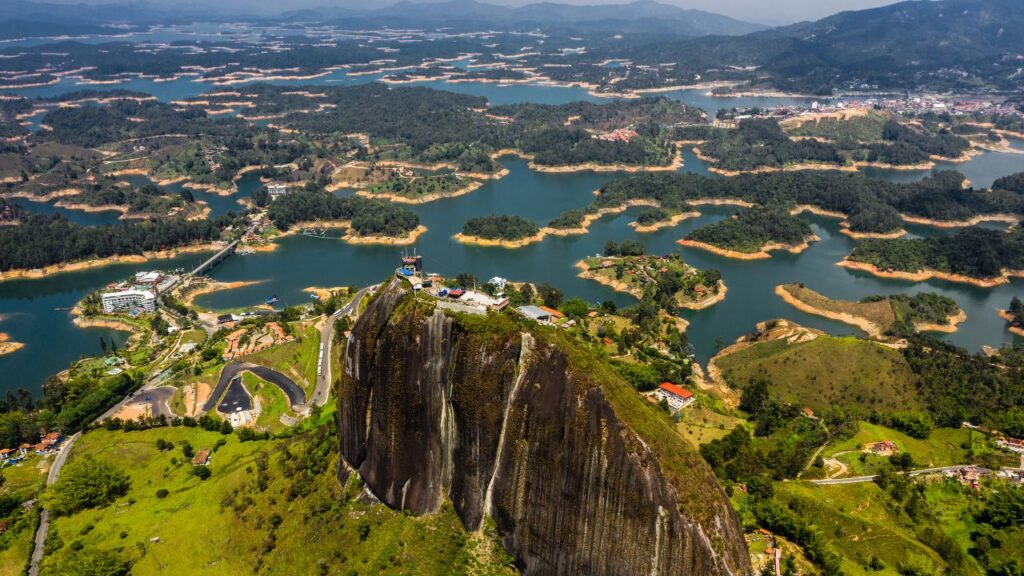
This is the part that converted me from “nice city” to “I’m not leaving.” Medellín sits in the middle of Antioquia, and Antioquia is one of the best regions in the country for getting out of the city. Within one to three hours you can be in a colonial town, a canyon, or a river valley full of natural swimming pools.
The city itself has plenty of quick hikes too, from Cerro de las Tres Cruces to Parque Arví up the Metrocable. I’ve put the full trail-by-trail detail in my Medellín hiking guide, so I’ll keep this section to the trips worth leaving town for.
A few of these need a rental car, but most are doable by shared van from the bus terminals or by an organized tour for 20 to 40 USD a head. Bring cash in small bills, since the small towns don’t always take cards, and pack a swimsuit and a rain jacket.
Guatapé, the easy classic
Guatapé is the day trip everyone does first, about two hours east. You climb the 740 steps up El Peñol, the giant rock that towers over a maze of lakes, then wander the town itself, which is painted in bright colors with decorated panels called zócalos along the base of the buildings.
It’s touristy, and it earns it. Go on a weekday to beat the crowds. A shared van from Terminal del Norte runs around 15,000 COP and takes about two and a half hours, or you can drive it in two. Easy as a day, better with a night.
Santa Fe de Antioquia, colonial heat
About an hour and a half northwest, Santa Fe de Antioquia is the old colonial capital of the region, with whitewashed streets, a warm lowland climate and the Puente de Occidente, a historic suspension bridge over the Cauca River just outside town.
It’s a good pick when you want heat without flying to the coast, since it sits much lower than Medellín. Wander in the morning, find a pool in the afternoon. Doable in a day, relaxed as an overnight.
San Rafael, the water town
San Rafael is my pick for people who want nature over postcards. It’s about three hours east, and the town is built around water. Locals count more than 90 natural pools, the charcos, plus rivers and waterfalls you can swim in.
Charco El Limón is one of the prettiest and costs almost nothing to enter. There are river spots for tubing and a handful of waterfall hikes like Cascada La Honda for when you want to earn the swim. It’s quieter and less developed than Guatapé, which is the point. Go for a weekend, not a day.
San Carlos and the eastern water towns
An hour beyond San Rafael, San Carlos is more of the same in the best way, a small mountain town surrounded by rivers and falls, with trails like La Viejita that follow the water to a series of swimming holes. The town came through a hard history during the conflict years and rebuilt around tourism, and the welcome you get reflects that.
Pair San Rafael and San Carlos into one weekend loop if you have a car. The road between them is twisty and the mountain views are worth the drive.
Río Claro, canyon and river
Río Claro is a marble canyon about three hours east on the Medellín to Bogotá road, where a clear river cuts through jungle. You can float the river, explore the caves, and stay in open-sided lodges right over the water with no walls between you and the forest. One night here resets your whole nervous system. Good as an overnight or a long weekend.
Jardín, coffee country
Jardín is the prettiest coffee town within reach, about three and a half hours south. The main square is the kind of place where the whole town drinks coffee on plastic chairs all afternoon. Ride the old cable basket up the hillside, watch for the bright red cock-of-the-rock birds at dusk, and hike out to the Cueva del Esplendor, a waterfall that pours through a hole in the roof of a cave. A weekend trip, and a favorite.
The one multi-day trek to do: the Valley of the Waterfalls
If you do a single overnight hike in Antioquia, make it the Valley of the Waterfalls, the Valle de las Cascadas. It blew me away, and I don’t say that lightly.
The trek runs through the Santo Domingo River canyon in eastern Antioquia, about two and a half hours from the city. You hike along the river, cross hanging bridges, swim in pools under enormous waterfalls, and sleep in a rustic farmhouse with food cooked over a fire and no wifi anywhere. The big falls, La Esmeralda and Santa Bárbara, are the kind of thing you don’t believe until you’re standing under them.
It’s moderate, with a few steep sections and four to six hours of walking a day, so come with some fitness. Go with local guides who run it as a two or three day trip. Full detail is in my hiking guide linked above.
A safety note. For busy in-city trails, hiking solo is generally fine. For remote trails, canyons and waterfalls, go in a group or with a local guide. That’s normal practice here, not paranoia.
When you need the beach escape to Santa Marta
Medellín has one real weakness. It has no beach (although they are building an artificial one to open in April 2027), and it has two rainy seasons, roughly April into May and again from September into November, when the afternoon storms get old and the gray sky starts to wear on you.
Whenever the rain set in or I just needed heat and salt water, I’d fly to the coast. The flight to Santa Marta is short and cheap, and it lands you in a completely different climate. While Medellín is overcast and dripping, the Santa Marta area stays sunny because it sits in the rain shadow of the Sierra Nevada de Santa Marta, the tallest coastal mountain range in the world. It has one of the lightest rainy seasons in the country.
When the highlands are wet, the coast is dry. So the rainy season, which is the worst time to be stuck in Medellín, is a great time to be on the beach near Santa Marta.
I’d base myself around El Rodadero, the calm, swimmable beach just south of the city, and use it to slow down for a week. Mornings on the sand, afternoons working, weekends out to Tayrona National Park, the village of Minca up in the coffee hills, or further along the coast to Palomino. Then back to Medellín for the founder scene and the trails.
I liked El Rodadero so much, I started Santa Marta Life Coliving with a Colombian friend there. Running this rhythm, mountains during the dry months and coast during the wet ones, is the single best lifestyle hack I found in Colombia. You get the community and cool nights of Medellín and the heat and water of the Caribbean, and you’re never stuck somewhere for the wrong season.
What it actually costs to live in Medellín
Here’s the real math for a single remote worker, in US dollars per month.
A lean setup in Laureles or Envigado, with a local-rate apartment, cooking at home most nights, a cheap coworking plan and the Metro, lands around $1,200 a month. That’s a comfortable, not bare-bones, number.
A normal setup, with a nicer furnished one-bedroom, eating out regularly, a good coworking membership and weekend trips, runs roughly 1,500 to 2,000. This is where most nomads I know actually sit.
A high-end setup in a modern El Poblado tower with every amenity pushes toward 3,000 and up. You can spend 5,000 if you try, but you’re paying for a view and a pool, not necessities.
The biggest variable by far is rent, and the gap between what you can pay and what you need to pay is wider here than almost anywhere in Latin America. Get the apartment decision right and you save 300 to 400 a month. The levers are neighborhood, furnished versus unfurnished, and dollars versus pesos.
As it is everywhere, you can save big if you’re staying for a year and willing to lock into a lease. Long unfurnished leases are far cheaper but usually need a local guarantor and a Spanish contract, so most nomads stick with furnished places for the flexibility.
What a typical week looks like in Medellín
To make the rhythm concrete, here’s a normal week from one of my longer stays in Laureles.
Mornings started early. Two or three days a week I’d hike Tres Cruces or do a loop of a city park before it got hot, then take calls and do deep work from a coworking space until mid-afternoon. The time zone is friendly to US clients, which made the workday clean.
Lunch was usually a menú del día, a set local lunch with soup, a main and a juice, for a few dollars. Afternoons I’d float between a café and the desk depending on focus.
Evenings were where the community lived. A founder dinner one night, a mastermind the next, a gym session or a run along the Ciclovía corridor on Sunday. La Setenta in Laureles or Provenza in El Poblado for when people wanted a drink.
Each weekend I’d usually go for a hike somewhere outside the city on a day trip. Roughly one weekend a month I’d leave the city. Guatapé and the big rock to the east, a coffee town like Jardín to the south, or, when the rains came, a flight to the coast for a week of sun near Santa Marta.
The point of the rhythm was simple: work hard in good blocks, stay active daily, and never let a bad-weather stretch trap me in one place.
The practical stuff to know about the city
A few things to sort out so your first month runs smoothly.
Internet. Fiber is widespread and fast. Most apartments in the nomad areas have solid connections, colivings typically run 100 to 300 Mbps, and any decent coworking space will hold 100-plus. Get a local SIM from Claro, Tigo or Movistar on arrival for cheap data and a backup hotspot.
Visa. Most nationalities get 90 days on arrival, extendable up to 180 days in a calendar year. If you want to stay longer, Colombia has a digital nomad visa that can cover up to two years, with an income requirement around three times the local minimum wage, roughly 1,000 USD a month, plus health insurance. The longer-stay migrant visa has similar income proof. Sort this before your 180 days run out, since the process takes a few weeks.
Getting around. The Metro and Metrocable cover a lot, cost almost nothing, and are clean and safe. For everything else, Uber and inDrive are cheap and easy, with most city rides a few dollars. Skip the car.
Spanish. The paisa accent is clear and people are patient and friendly. You can get by in the nomad areas on English alone, but even basic Spanish changes your whole experience, especially once you step outside El Poblado. Take a few weeks of classes early. It pays off socially more than anything.
The kind of creative person Medellín is for
Medellín is ideal for the creative entrepreneurial person who wants to build something meaningful and have a life at the same time.
It gives you a real community of founders, fast internet, spring-like weather, hiking trails in every direction, and a cheap flight to the Caribbean whenever the sky turns gray.
It is not a quiet beach hideaway, and it is not a place you visit to switch off completely. The energy here is about doing the work, with good people to support you, in a place that makes the rest of life easy.
I came for a few weeks to try it out and it become one of my favourite cities in the world. I built more, met better people and lived healthier than I had in years.
That’s why I keep going back to Medellín, and why, if you run something online and you’ve been thinking about it, I’d tell you to book the flight.

I believe the future of education starts with helping people find their "zone of genius" so they can develop their uniquely human ability to create meaning, connection and community (that A.I. can't replicate).
I'm also big on completely unplugging from tech to recharge on nature retreats and trekking adventures. That led me to start my most recent company Sacred Treks.
- 15 Creator House Retreats For Founders & Entrepreneurs - November 2, 2026
- The Workshop Funnel: How To Fill, Run And Sell From A Live Workshop - October 28, 2026
- Workshops Vs Webinars: Which Is Better For Selling Your Expertise? - October 28, 2026