

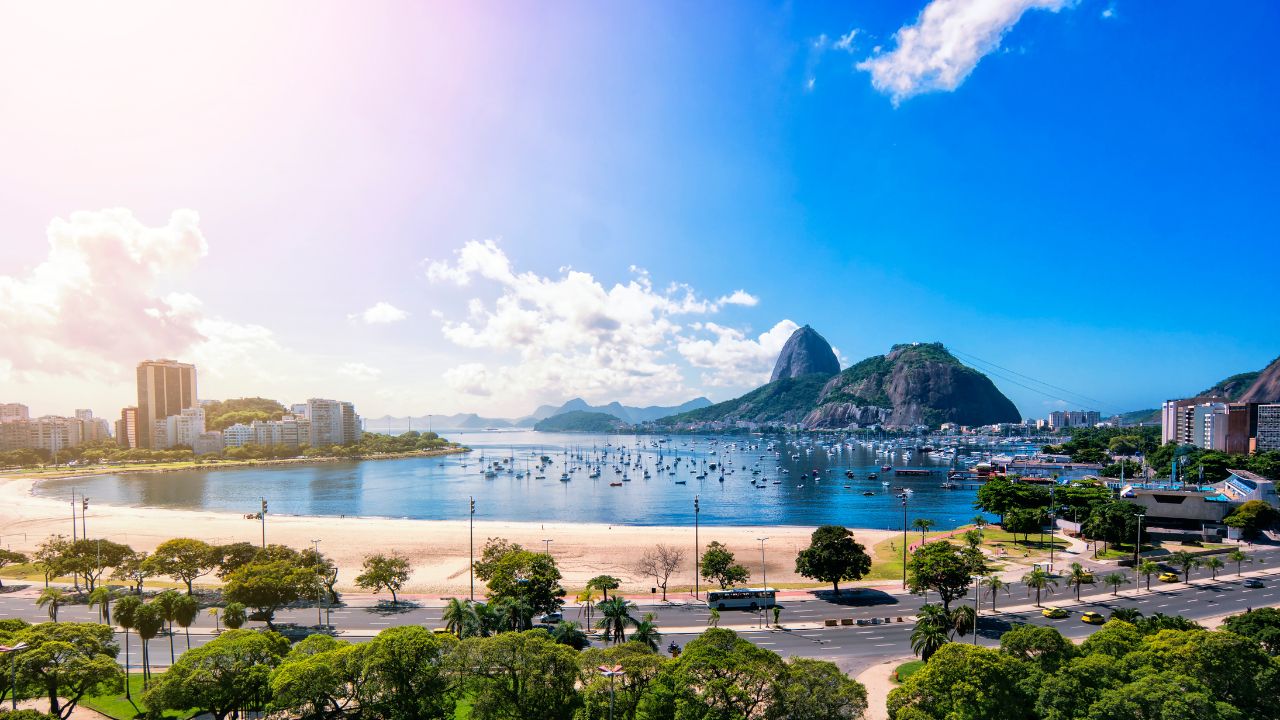
With a low cost living, fast Internet and a lot of excellent beach cities that are under the radar, Latin America is a good place to base yourself as a digital nomad.
While a two-bedroom apartment in a major Western city costs 2,500 to $4,000 per month before food or transport. The same standard of living in Playa del Carmen, Santa Marta, Cartagena or Florianópolis costs less than half that. Add warm weather, a beach within walking distance, and a community of other digital nomads and you’ve got a little piece of paradise.
The beach lifestyle shift is real. Working from a co-working space two blocks from the ocean, surfing before your 9am call, paying $800 a month for a good apartment on a yearly lease. This is a daily reality for tens of thousands of digital nomads who made the decision and moved to a sunnier climate.
Latin America covers an enormous range of climates, cultures, and costs. Mexico has spectacular white sand beaches. The Colombian Caribbean has warm water and colonial cities. Brazil’s northeast delivers 300 sunny days a year. The Southern Cone of Argentina, Uruguay and South Brazil has European-style cities with world-class food. Ecuador and Peru give you Pacific warmth on a very small budget.
None of these cities are perfect. Traffic can be bad, the government bureaucracy can be exhausting and some neighbourhoods require real safety awareness. But for most people making this move, the balance tips so heavily in favour of a coastal base that the friction stops mattering within a few months.
I’ve been travelling and living across Latin America for nearly twenty years, so I thought I’d put together a guide that covers the best beach cities that have at least 100,000 people and modern infrastructure that can support a digital nomad lifestyle.
I also mention nearby beach towns and tropical islands that are worth visiting or basing yourself from near these beach cities with large domestic or international airports.
Table of Contents
1. Playa del Carmen, Mexico 🇲🇽
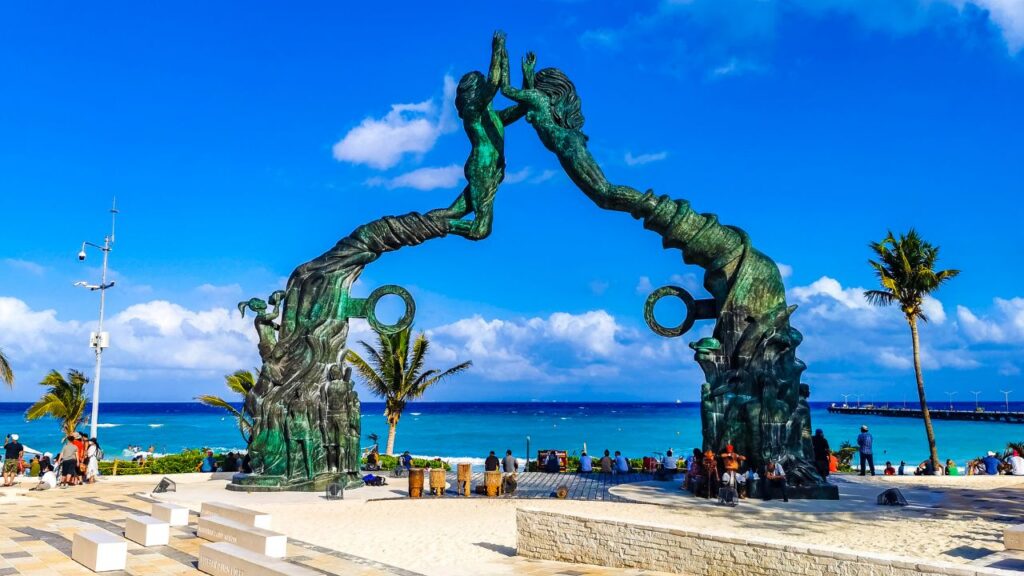
Playa del Carmen sits on the Caribbean coast of Quintana Roo just south of Cancún, and is the main digital nomad and expat hub on the Riviera Maya. The beach runs directly behind the main pedestrian strip, Quinta Avenida, which is lined with restaurants, co-working spaces, rooftop bars, and the infrastructure of a city that has been actively attracting remote workers for years.
The weather is warm and tropical year-round. Temperatures average 26 to 32°C. The dry season from November to April is the most pleasant. The wet season from June to October brings afternoon rain and occasionally severe storms during hurricane season, though direct hits are rare. The Caribbean water is turquoise and warm at 26 to 29°C year-round.
The co-working scene is one of the most developed in Mexico, with multiple established spaces within walking distance of the beach. The nomad community is very large, very international, and very active, with regular meetups, events, and a social infrastructure that makes it one of the easiest places in Latin America to arrive alone and build a life quickly.
A comfortable life runs $1,500 to $2,500 per month. The main cons are the tourist economy that inflates some prices, the noise and crowds on Quinta Avenida, and the fact that the city can feel like a theme park version of Mexico rather than the real thing. For people who want a ready-made nomad life with a Caribbean beach at the door, it is hard to beat.
I chose Playa del Carmen as #1 because of the size of the digital nomad community. The beaches in the city aren’t great (especially with the Sargassum) but you’ll find excellent beach towns in the area like Tulum, Isla Mujeres, Holbox and Bacalar further to the south that are close enough to explore on a day or weekend trip.
I go into more detail in my digital nomad’s guide to Rio de Janeiro.
Population: 300,000 city; 500,000 metro
Weather: 26 to 32°C year-round; dry season November to April; wet season June to October; Caribbean warm year-round
Internet: 100 to 300Mbps fibre via Telmex, Izzi, Totalplay; $30 to $45 per month
Digital nomad community: One of the largest in Latin America; very international; excellent co-working; coliving near the beach at Rio de Janeiro Life Coliving; easy to integrate immediately
Cost of living: $1,500 to $2,500 per month; one-bedroom $700 to $1,200
Pros: Caribbean beach directly accessible, enormous nomad community, excellent co-working, warm turquoise water year-round, easy flight connections
Cons: Tourist economy inflates prices, can feel like a bubble, Quinta Avenida noise, pushy vendors and crowds, hurricane season June to October
Beaches Rating: 8/10
Digital Nomad Rating: 9/10
2. Rio de Janeiro, Brazil 🇧🇷
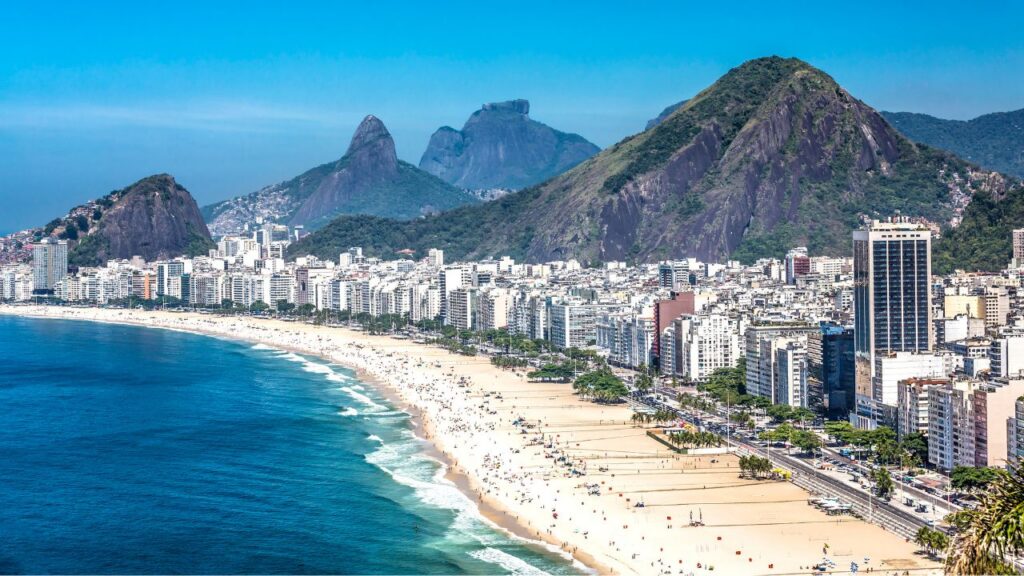
Rio is often underestimated as a place to actually live and work. The postcard images are real: Copacabana and Ipanema are two of the most beautiful urban beaches in the world, and the mountains rise directly behind the city.
But Rio is also a fully functioning major city and tech capital. Botafogo, Santa Teresa, and Leblon offer a quality of everyday urban life that few cities anywhere can match. The arts, music, and food scenes are world-class.
The best season is April to August: warm, clear, and dry at 20 to 26°C. Summers from December to March reach 30 to 35°C with high humidity and massive afternoon thunderstorms. The rainy season runs November to March with heavy afternoon downpours that usually clear quickly.
A comfortable life in the Zona Sul near the beach runs $2,000 to $3,200 per month. Security requires genuine awareness in parts of the city. For people who want the full South American metropolis experience with a beach at the end of the street, Rio is unmatched.
To the south of Rio de Janeiro, you have the Costa Verde where you’ll find idyllic beach towns like Paraty, Mangaratiba, Ubatuba and Vila do Abraão on Ilha Grande as well as the spectacular wild coast between Macumba and Barra de Guaratiba on the edge of the city. To the north, there is string of excellent beach and surf towns leading to Cabo Frio and Búzios.
Rio de Janeiro is also probably the best tropical city in the world for hiking. There are great hikes in the city like Pedra da Gávea, Pico da Tijuca and Dois Irmãos as well as cooler mountain towns like Teresópolis and Nova Friburgo. There’s also excellent camping and trekking on world class routes like Teresopolis Travessia, Ilha Grande 360º and Joatinga.
Population: 6.8 million city; 13.5 million metro
Weather: Average 24 to 30°C; summers 30 to 35°C (December to March); best season April to August (20 to 26°C, dry)
Internet: 200 to 500Mbps fibre via Claro, Vivo, NET; $25 to $40 per month
Digital nomad community: Large but dispersed; strong co-working in Botafogo and Ipanema; broad international community (read the full digital nomad guide to Rio)
Cost of living: $2,000 to $3,200 per month; one-bedroom in Botafogo or Flamengo R$2,500 to R$4,500
Pros: Many world-class urban beaches, extraordinary city, strong infrastructure, large international community, world-class food and arts
Cons: Security awareness required, expensive by South American standards, intense summer heat and humidity, heavy traffic
Beaches Rating: 10/10
Digital Nomad Rating: 8/10
3. Florianópolis, Brazil 🇧🇷
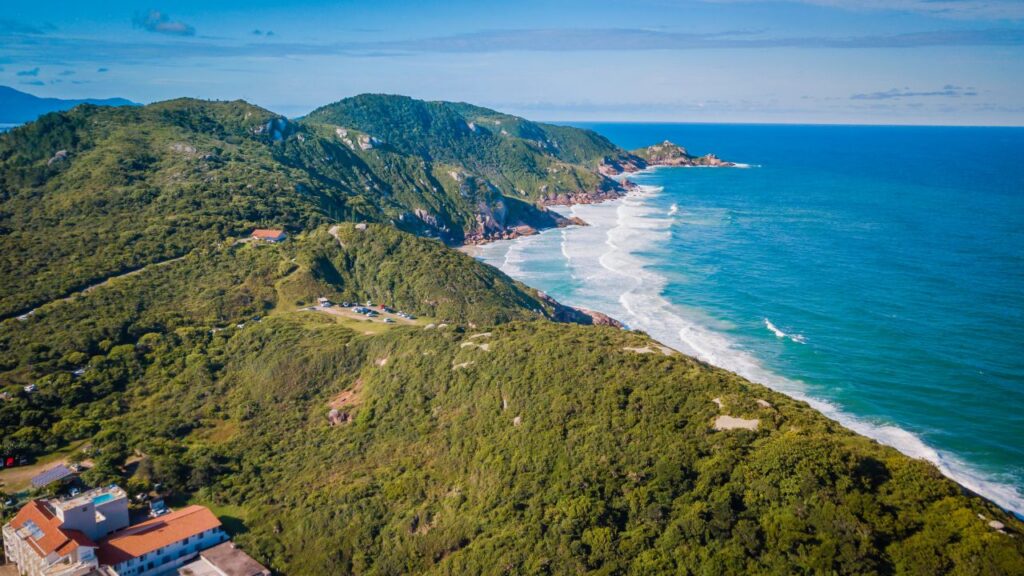
Florianópolis sits on an island off Brazil’s southern coast and has been the country’s leading digital nomad destination for years. The island has 42 beaches, a strong local startup ecosystem, and a quality of life that regularly tops Brazilian liveability rankings.
The weather is subtropical, not tropical. Summers reach 30 to 35°C. Winters drop to 15 to 20°C and can be cool and wet. People who arrive expecting year-round tropical heat in July are sometimes surprised.
The tech infrastructure is excellent. Fibre runs at 200 to 500Mbps for $20 to $30 per month. WeWork, Impact Hub, and dozens of independent co-working spaces operate across Lagoa da Conceição and Jurerê.
A comfortable life costs $1,800 to $2,800 per month. The surf at Joaquina and Praia Mole draws international competition. The food scene is strong and reflects the city’s German and Italian colonial roots alongside broader Brazilian cooking.
There is easy access to laid back beach areas like Garopaba, Enseada da Pinheira and
Guarda do Embaú as well as mountain towns like Urubici, Rancho Queimado and Alfredo Wagner if you want to go hiking.
Population: 540,000 on the island; 1.2 million metro
Weather: Summers 30 to 35°C (December to March); winters 15 to 20°C (June to August); best season October to April
Internet: 200 to 500Mbps fibre; R$100 to R$150 per month ($20 to $30)
Digital nomad community: One of the largest in South America; strong mix of international and Brazilian nomads; well-established co-working scene
Cost of living: $1,800 to $2,800 per month; one-bedroom R$2,000 to R$3,500
Pros: 42 beaches, excellent infrastructure, large nomad community, world-class surf, strong food scene, high liveability
Cons: Expensive by South American standards, cool winters, heavy traffic in peak season, Portuguese required for deeper integration
Beaches Rating: 9/10
Digital Nomad Rating: 8/10
4. Santa Marta, Colombia 🇨🇴
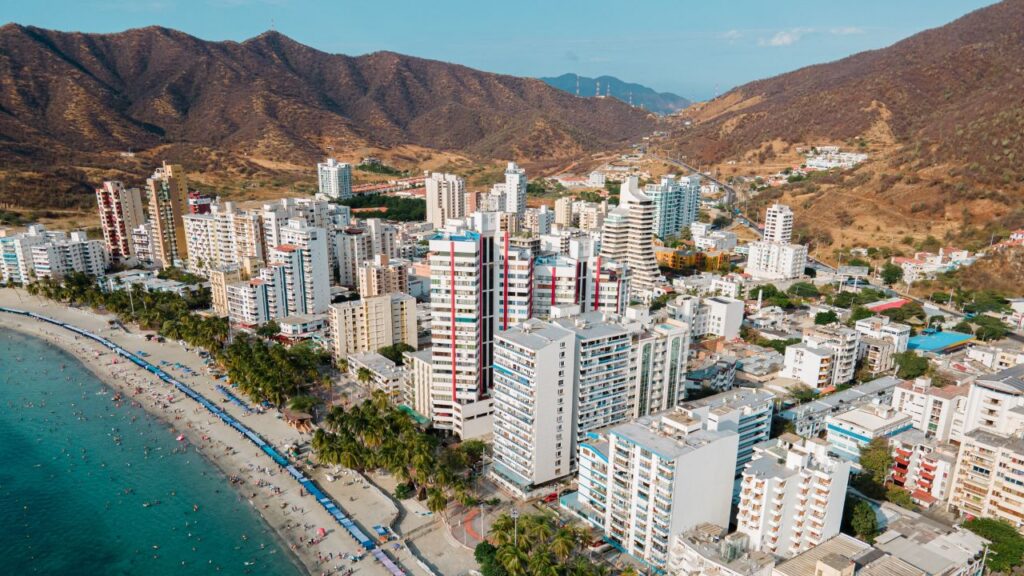
Santa Marta is Colombia’s oldest surviving city, sitting on the Caribbean coast with the Sierra Nevada mountains rising directly behind it. It is less polished than Cartagena and considerably cheaper.
The beach in the city is mostly used by local people and isn’t built for tourists. Most digital nomads choose to stay in nearby beach towns like El Rodadero, Playa Salguero and Pozo Colorados where you have world class beaches.
The surrounding geography of the Sierra Nevada de Santa Marta, the world’s tallest coastal mountain range, is extraordinary. Less than hour away you will find Tayrona National Park and the idyllic mountain village of Minca, which gives you coffee farms, waterfalls, and cooler air when the coast gets too hot.
Costs run $1,000 to $1,500 per month. The co-working scene is smaller than Medellín but growing and there are lots of local WhatsApp groups for digital nomads that make it easy to meet people. The digital nomad community is under-the-radar, which is most of the appeal.
To the east of Santa Marta, there is a number of excellent beach towns for surfing and living in the jungle like Palomino, Mendihuaca and Buritaca. There are also a number of world class beaches like Playa Cristal, Playa Neguanje, Playa Chengue and Bahia Cinto that are accessible by boat.
The tropical biodiversity, wildlife, waterfalls and indigenous culture in the surrounding Sierra Nevada de Santa Marta is astonishing. I highly recommend staying at the El Dorado Birding Reserve on Cerro Kennedy and learning about the local indigenous culture on multi-day trekking adventures like the Lost City Trek and the Bunkuany Archeological Trek.
Population: 560,000
Weather: 29°C average year-round; one of the driest and least humid cities on the Caribbean coast; consistent sea breeze and dry season wind off the mountains known as La Brisa Loca
Internet: 50 to 150Mbps fibre in some central areas; better to stay where there is Starlink
Digital nomad community: Small and under-the-radar; tight community feel; coliving at Santa Marta Life; growing slowly.
Cost of living: $1,000 to $1,500 per month; one-bedroom apartment $600 to $1000 (one year lease)
Pros: Genuine Caribbean city, cheap, excellent beaches, no risk of hurricanes, Tayrona and Minca mountain escape nearby, less tourist-saturated than Cartagena
Cons: Less infrastructure than Cartagena or Medellín, sewages can flood the streets after big storms in the rainy season, urban awareness required in some areas
Beaches Rating: 9/10
Digital Nomad Rating: 7/10
5. Cartagena, Colombia 🇨🇴
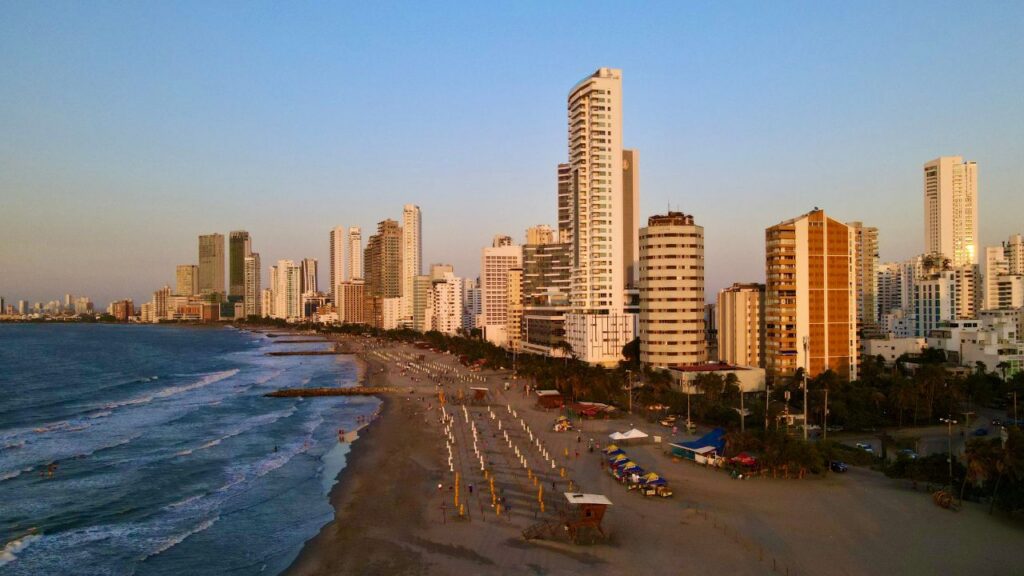
Cartagena is one of the most photographed cities in South America and it earns that. The walled old city is genuinely beautiful, with colonial buildings in yellow and terracotta and a quality of evening light that is hard to find elsewhere.
Most long-term nomads do not live inside the walls. They live in Getsemaní, Bocagrande, or the quieter Manga neighbourhood, where the city is more affordable and more real.
The heat is relentless, sitting between 28 and 34°C year-round. Some people love it. Others find it draining within weeks. It is worth spending time here in the wet season before committing to a longer stay.
A comfortable life costs $1,500 to $2,200 per month. The tourist economy pushes prices up, but Getsemaní still offers good value compared to the old city and has become the main hub for younger nomads and creatives.
The beaches in the city aren’t great but you can take boat trips to local islands and reefs where you have great swimming, snorkelling and scuba diving in places like the Rosario Islands, Tierra Bomba, Playa Blanca on Isla Barú.
Population: 1 million
Weather: 28 to 34°C year-round; dry season December to April; humid wet season May to November
Internet: 100Mbps fibre via Claro and Movistar; $25 to $35 per month
Digital nomad community: Mid-sized and tight; Getsemaní is the hub; easier to meet people quickly than in larger cities
Cost of living: $1,500 to $2,200 per month; one-bedroom in Getsemaní $600 to $900
Pros: Beautiful old city, Caribbean access, strong culture and food, large LGBTQ community, good first Colombia experience
Cons: Relentless heat and humidity, higher costs than interior Colombia, limited co-working compared to Medellín
Beaches Rating: 6/10
Digital Nomad Rating: 8/10
6. Puerto Vallarta, Mexico 🇲🇽
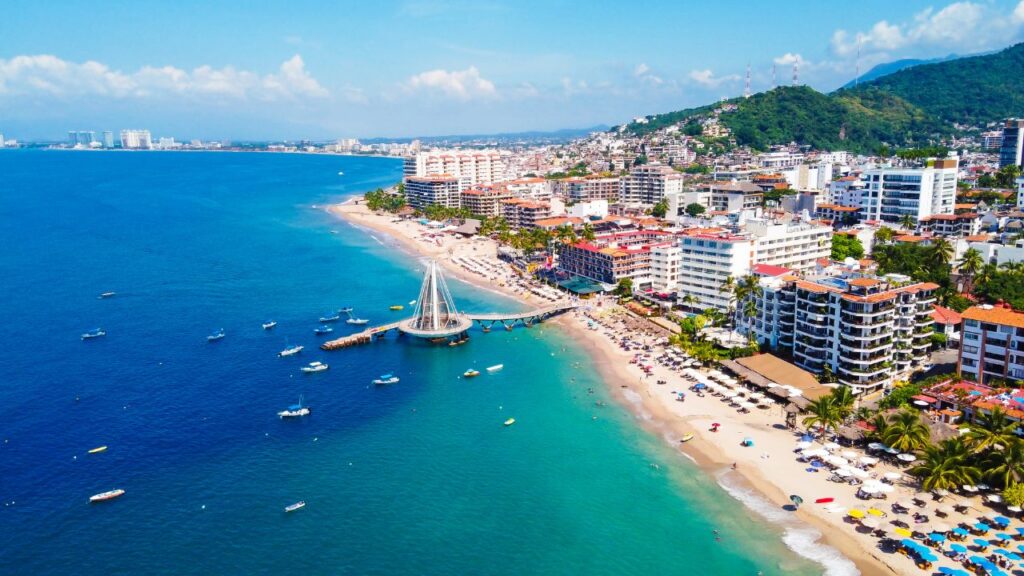
Puerto Vallarta sits in Banderas Bay on Mexico’s Pacific coast and has been one of the most popular expat and nomad destinations in Latin America for years. The bay is one of the largest in North America, the water is warm year-round, and the Sierra Madre mountains rising behind the city give it a dramatic geography.
The weather is warm and tropical. The dry season from November to May is the prime season: sunny, warm at 24 to 28°C, and low humidity. The wet season from June to October brings heavy rain, higher humidity, and lush green hillsides. The ocean stays warm year-round at 24 to 28°C.
The co-working scene in Puerto Vallarta is well developed, with multiple dedicated spaces in the Romantic Zone and Centro. The nomad community is one of the largest and most established in Mexico, with a strong LGBTQ presence and a social infrastructure that makes it easy to build a life quickly.
A comfortable life runs $1,500 to $2,500 per month. The Romantic Zone (Zona Romántica) is the main nomad and expat neighbourhood: walkable, dense with restaurants and cafes, and close to Los Muertos beach. The main cons are the cost relative to other Mexican cities, the tourist pricing in peak season, and the wet season humidity.
If you’re looking for a smaller town experience that’s more focused on surfing, I prefer the atmosphere in Sayulita nearby or Puerto Escondido to the south in Oaxaca but they lack the infrastructure of a bigger city.
Population: 345,000 city; 500,000 metro
Weather: Dry season November to May: 24 to 28°C; wet season June to October: hot and humid with heavy rain; ocean warm year-round
Internet: 100 to 300Mbps fibre via Telmex, Izzi, Megacable; $30 to $45 per month
Digital nomad community: One of the largest and most established in Mexico; Romantic Zone is the hub; huge LGBTQ community; easy to integrate
Cost of living: $1,500 to $2,500 per month; one-bedroom in Romantic Zone $700 to $1,200
Pros: Warm Pacific bay, dramatic mountain scenery, large established nomad community, excellent food and nightlife, easy flight connections from North America
Cons: Higher cost than other Mexican cities, tourist pricing in peak season, wet season humidity June to October, can feel like a tourist bubble
Beaches Rating: 9/10
Digital Nomad Rating: 7/10
7. Salvador, Bahia, Brazil 🇧🇷
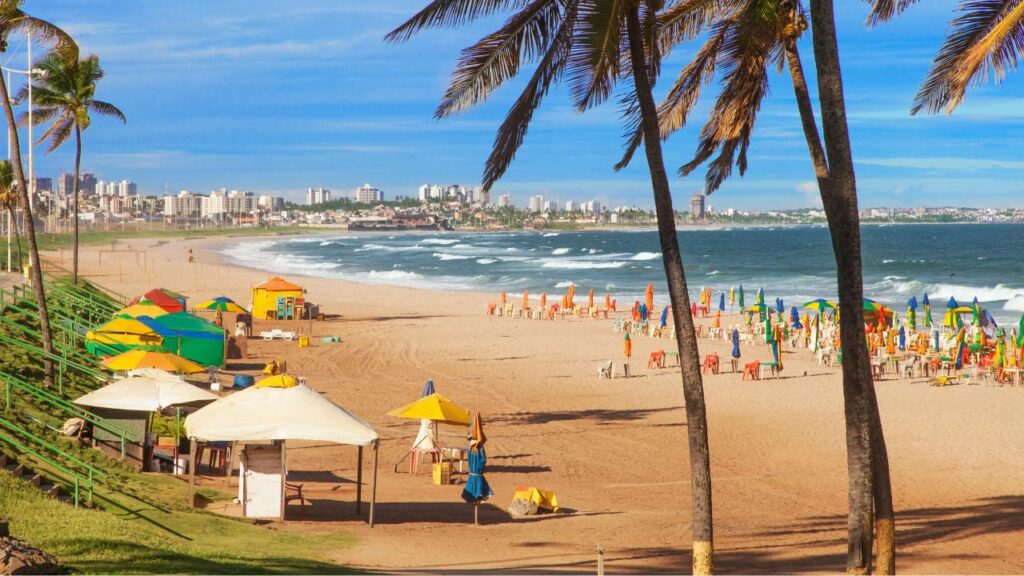
Salvador is the capital of Bahia and the cultural heart of Afro-Brazilian life. The Pelourinho historic centre is a UNESCO World Heritage site with Baroque architecture matched nowhere else in the Americas.
The city is also a major music capital. Forró, axé, and samba-reggae fill the streets during Carnival and year-round in the bars of Pelourinho. For people who want a beach city with serious cultural depth, Salvador stands apart.
The beaches along the Orla, running through Barra, Ondina, and out to Itapuã, are long, warm, and accessible by public transport. Itacaré, a world-class surf town, is about three hours south.
A good life runs $1,200 to $1,900 per month. The food is outstanding. The co-working scene is smaller than in southern Brazil, so expect to do more legwork to find your setup.
The very best “postcard paradise” beaches in Bahia are often outside Salvador itself and you can visit them on a day trip like Praia do Forte, Morro de São Paulo, or Boipeba.
Population: 2.9 million city; 4.3 million metro
Weather: 26 to 30°C year-round; rainy season April to June; dry and sunny most of the year
Internet: 100 to 300Mbps fibre via Claro and Vivo; $20 to $30 per month
Digital nomad community: Small but genuine; concentrated in Pituba and Barra; strong local integration possible
Cost of living: $1,200 to $1,900 per month; one-bedroom in Barra R$1,800 to R$3,200
Pros: Outstanding Afro-Brazilian culture, UNESCO historic centre, excellent food, warm beaches along the Orla, Itacaré surf nearby
Cons: Safety awareness required at night, smaller nomad infrastructure, co-working scene requires effort to find
Beach Rating: 8/10
Digital Nomad Rating: 7/10
8. Cabo Frio, Brazil 🇧🇷
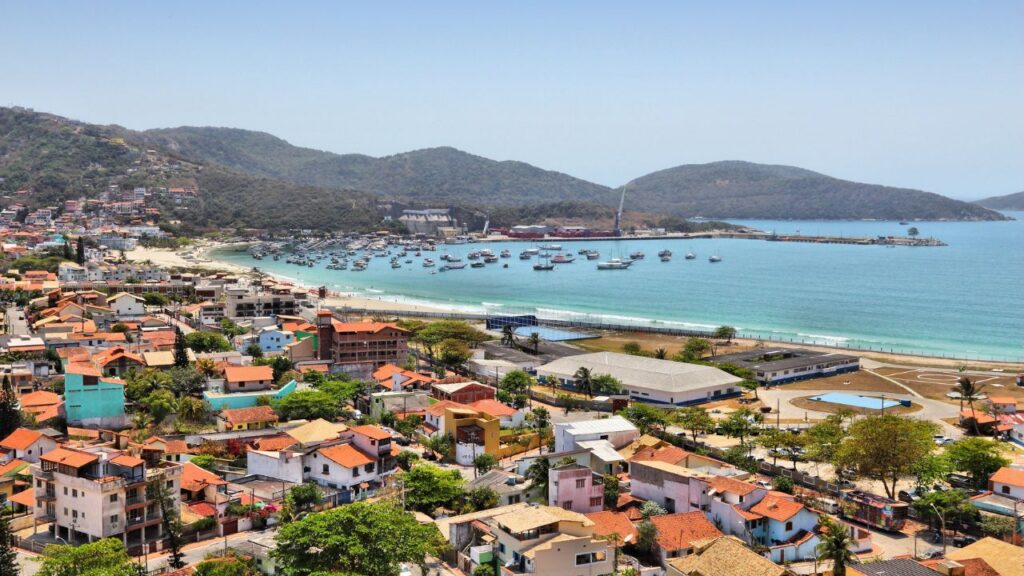
Cabo Frio sits on the Costa do Sol, about 160km east of Rio de Janeiro, and is the gateway to one of the most beautiful stretches of coastline in Brazil. The city itself has 230,000 people, a canal running through the centre, long white-sand beaches, and some of the clearest water on the Brazilian coast.
Búzios, the famous upscale beach peninsula made internationally known when Brigitte Bardot visited in the 1960s, is just 25km further east and functions as Cabo Frio’s glamorous neighbour. Most longer-stay nomads base themselves in Cabo Frio for the cost and use Búzios for weekend beach-hopping across its 23 beaches.
The surrounding region has a string of lagoons, dunes, and surf breaks that extend back towards Rio. Arraial do Cabo, 10km south of Cabo Frio, has some of the clearest water in South America and a small but growing community of divers and nomads. The drive between Rio and Cabo Frio along the RJ-106 passes through a series of coastal towns and surf spots that make the whole stretch worth exploring over time.
The weather is warm and drier than Rio, averaging 24 to 30°C year-round. A constant wind from the south keeps temperatures manageable and makes the region one of the best kite surfing spots in Rio state. The rainy season is less intense than in the capital. Co-working is limited but the remote worker scene is growing as people from Rio discover the cost and quality difference.
A comfortable life runs $1,100 to $1,700 per month, considerably cheaper than Rio with better beach access. The main cons are the limited co-working infrastructure, the fact that it is a smaller city with fewer cultural and professional options than Rio, and some neighbourhoods that require the usual urban awareness.
For people who want the Rio de Janeiro region’s beaches without the Rio price tag or the Rio traffic, Cabo Frio is the practical answer.
Population: 230,000 city
Weather: 24 to 30°C year-round; drier than Rio; constant southern wind; mild rainy season
Internet: 100 to 200Mbps fibre via Claro and Vivo; $20 to $30 per month
Digital nomad community: Small and growing; mostly Brazilian remote workers from Rio; Arraial do Cabo nearby adds diving community
Cost of living: $1,100 to $1,700 per month; one-bedroom R$1,500 to R$2,800
Pros: Beautiful white-sand beaches, clearest water in the region, Búzios 25km away, Arraial do Cabo for diving, cheaper than Rio, constant wind for kite surfing
Cons: Limited co-working, smaller city with fewer cultural options than Rio, getting to and from Rio involves traffic
Beach Rating: 9/10
Digital Nomad Rating: 6/10
9. Balneário Camboriú, Brazil 🇧🇷
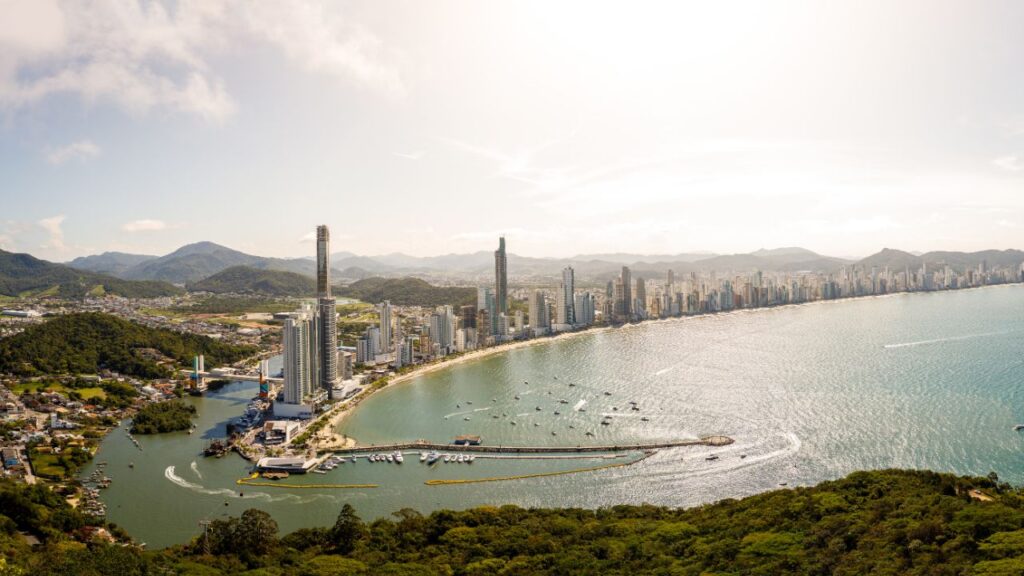
Balneário Camboriú sits 80km north of Florianópolis and has a very different character. Where Florianópolis spreads across an island with a hippy-surfer feel, Balneário Camboriú is a vertical city of high-rise towers regularly described as the Miami or Dubai of Brazil.
Central Beach is wide and well maintained with a 4km promenade. A cable car connects the centre to Laranjeiras beach on the other side of the headland. The city consistently ranks among the highest HDI cities in Brazil and it is safe to walk around at night.
The weather mirrors Florianópolis: hot summers at 28 to 34°C and mild winters. The best window is October to April. Winters here are too cool for year-round beach life.
Costs broadly match Florianópolis at $1,800 to $2,600 per month. The nomad scene is growing but skews toward Brazilians and Argentines. It is more a city remote workers have moved into than one built around the nomad market.
Population: 145,000 permanent; over 1 million in peak summer
Weather: Summers 28 to 34°C (December to March); winters mild at 14 to 20°C; best season October to April
Internet: 200 to 400Mbps fibre via Claro and Vivo; $20 to $35 per month
Digital nomad community: Growing; primarily Brazilian and Argentine; fewer international nomads than Florianópolis
Cost of living: $1,800 to $2,600 per month; one-bedroom R$2,000 to R$4,000
Pros: Beautiful long beach, high-quality infrastructure, high HDI, excellent restaurants, well connected by road to Florianópolis
Cons: Very high-rise density, expensive real estate, cool winters, enormous crowds in January and February
Beaches Rating: 8/10
Digital Nomad Rating: 6/10
10. Panama City, Panama 🇵🇦
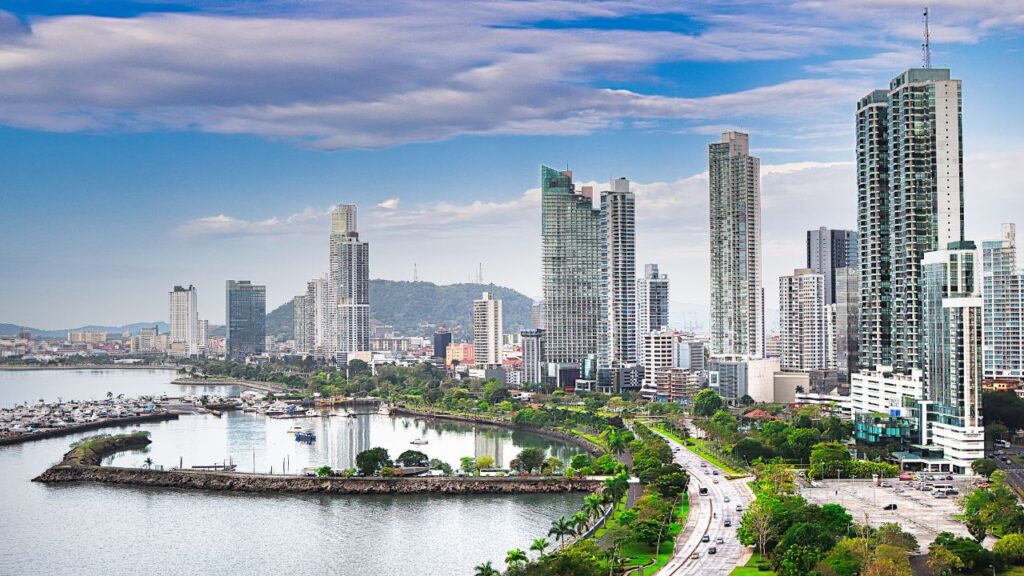
Panama City is the only city in Latin America where you can watch a container ship pass through an engineering wonder from your apartment window. It is a proper metropolis of 1.5 million people with a dollarized economy, a modern financial district, and two coastlines within a three-hour drive.
The weather is tropical year-round. Temperatures average 28 to 32°C. The dry season runs January to April, which is when the city is at its best. The wet season from May to December brings heavy afternoon rain that clears quickly but is persistent enough to factor into your daily routine.
Internet infrastructure is the best in Central America. Fibre at 200 to 500Mbps is widely available from Cable Onda and Claro for $30 to $50 per month. The nomad community is substantial and international, centred on the Casco Viejo historic district and the Marbella and El Cangrejo neighbourhoods.
Panama has a Friendly Nations visa and a Digital Nomad visa that make legal longer stays more accessible than in most of the region. It is also has a territorial tax system, which means foreign-earned income is not taxed something it shares with other Latin America countries like Costa Rica, Paraguay, Guatemala, Nicaragua and El Salvador.
A comfortable life runs $1,800 to $2,800 per month. The main cons are the heat and humidity year-round, the cost relative to South American alternatives, and the fact that the city lacks a swimmable beach. The appeal is the infrastructure, the stability, the financial services, and the position as a hub for exploring both Central and South America.
To get to good swimmable beaches that aren’t polluted, you’ll have to drive at about 2 hours to El Palmar, Playa Blanca or Punta Chame. You can also take a ferry 1 hour to Isla Taboga or a slightly longer ferry to the Islas Perlas. If you’re willing to take a short flight, you’ll find Panama’s world famous postcard perfect beaches in Guna Yala and Bocas del Toro.
Population: 1.5 million city; 2.2 million metro
Weather: 28 to 32°C year-round; dry season January to April; wet season May to December with heavy afternoon rain
Internet: 200 to 500Mbps fibre via Cable Onda and Claro; $30 to $50 per month; best in Central America
Digital nomad community: Large and international; Casco Viejo and El Cangrejo are the hubs; strong expat infrastructure
Cost of living: $1,800 to $2,800 per month; one-bedroom in Casco Viejo or Marbella $800 to $1,300
Pros: Dollar economy, best internet in Central America, strong nomad visas, two coastlines within reach, financial hub, direct flights from most of the Americas
Cons: Year-round heat and humidity, city beaches not swimmable, higher costs than South American alternatives, wet season rain is persistent
Beaches Rating: 6/10
Digital Nomad Rating: 7/10
11. Lima, Peru 🇵🇪
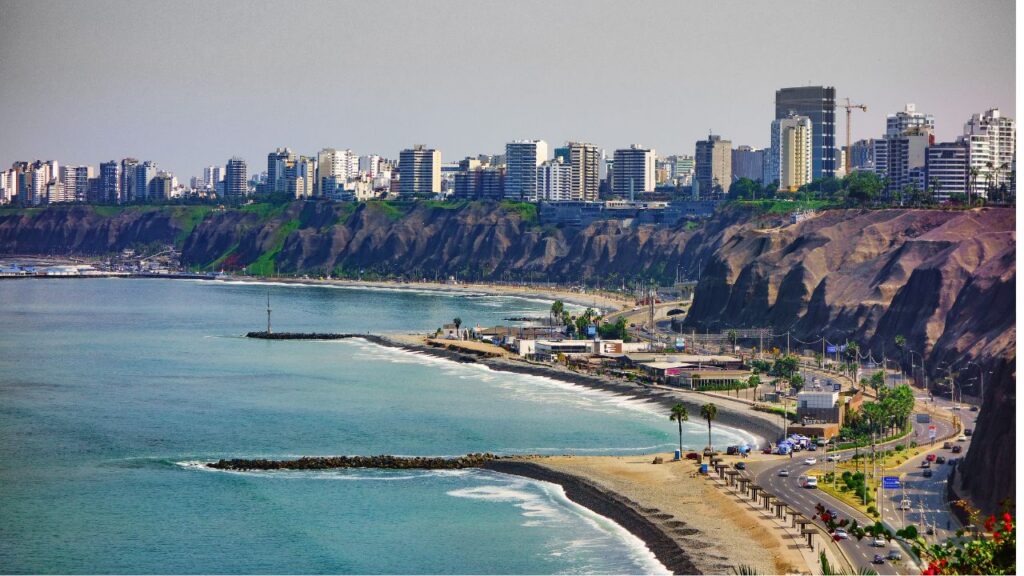
Lima is a Pacific coast capital of 11 million people and one of the most underrated cities for long-term nomad life in South America. It has the best food scene on the continent, world-class infrastructure, and cliffside neighbourhoods in Miraflores and Barranco that sit directly above the ocean.
The adjustment is the weather. A grey mist called the garúa covers the city from June to November. Temperatures drop to 14 to 18°C and the sun largely disappears. From December to May, the sun returns and the city opens up completely.
Many nomads spend the grey months at Máncora in the north or in Colombia, then return for the Peruvian summer. Once you understand the rhythm, it is manageable. Due to the Humboldt Current, the water here is very cold but there is good surfing if you use a wet suit.
Internet is among the fastest in South America at 200 to 600Mbps. The co-working scene in Miraflores is excellent. Lima has more restaurants in the World’s 50 Best than any other Latin American city, and the everyday food at every price point backs that up.
Population: 11 million city; 13 million metro
Weather: December to May: 25 to 28°C and sunny; June to November: 14 to 18°C with grey garúa mist
Internet: 200 to 600Mbps fibre via Claro, Movistar, WOM; $25 to $40 per month
Digital nomad community: Large and international; concentrated in Miraflores and Barranco; excellent co-working scene
Cost of living: $1,400 to $2,200 per month; one-bedroom in Miraflores $600 to $1,000
Pros: Best food scene in South America, world-class infrastructure, large nomad community, cliffside ocean neighbourhoods
Cons: Grey winters June to November, heavy traffic, cool Pacific (not for swimming), large and sprawling city
Beaches Rating: 5/10
Digital Nomad Rating: 9/10
12. Santos, Brazil 🇧🇷
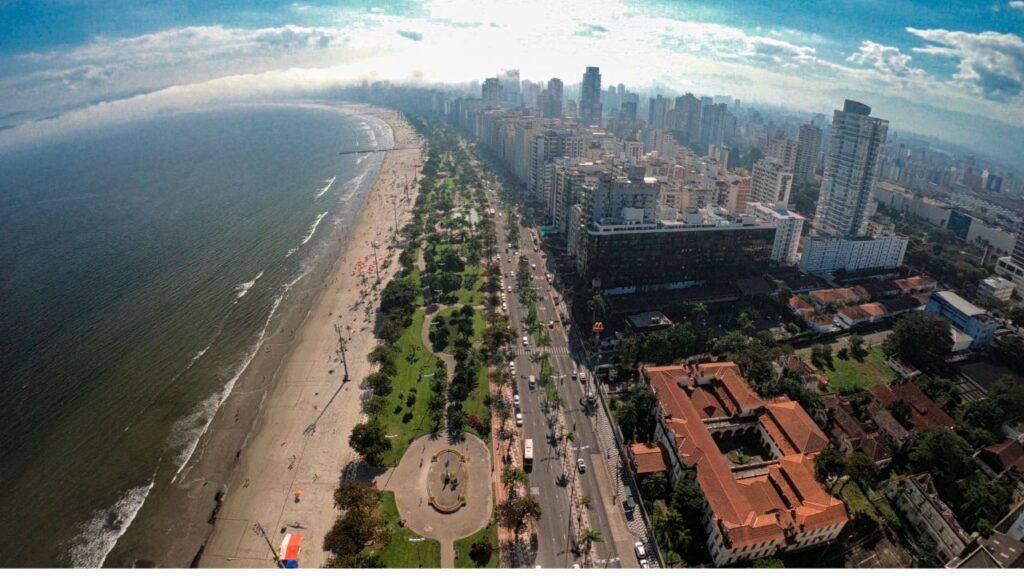
Santos is Brazil’s largest port city and sits on the coast of São Paulo state, about 90 minutes drive southeast of the city of São Paulo. It has a population of 430,000 and a beach boulevard said to be one of the longest urban beach gardens in the world, stretching 5km along the waterfront.
Santos is a real working city with a history rooted in coffee exports and maritime trade, a large football tradition as the home club of Pelé, Brazil’s most famous footballer Neymar lives here and the cost of living is a fraction of São Paulo despite sitting within easy commuting distance of the largest business city in the Americas.
Santos sits at the southern end of the Costa Verde, the Green Coast, which stretches 300km southwest along the São Paulo and Rio de Janeiro state coastlines to Angra dos Reis and Paraty. This stretch of Atlantic Forest tumbling down to the sea is one of the most biologically rich and visually dramatic coastal landscapes in Brazil.
On the Costa Verde you have Ubatuba, Ilhabela, and São Sebastião, which are regular escapes for Santos and São Paulo residents and are becoming longer-stay destinations in their own right. Paraty, at the southern end near the Rio de Janeiro state border, is a UNESCO heritage colonial town with an extraordinary natural setting.
The weather is warm and humid. Temperatures average 22 to 30°C year-round with a wetter summer from November to March. Winters are mild at 16 to 22°C so you get a break from the tropical heat with a more Mediterranean-style climate. The co-working scene is small but present, driven partly by São Paulo professionals who have relocated to the coast. The nomad community is largely Brazilian and growing as São Paulo’s costs push people out.
A comfortable life in Santos runs $1,200 to $1,800 per month, with a one-bedroom near the beach costing R$1,800 to R$3,000 per month. The main pros are the proximity to São Paulo for professional needs, the extraordinary Costa Verde coastline on the doorstep, and a genuine city feel that the smaller beach towns lack.
Population: 430,000 city; 1.8 million metro
Weather: 22 to 30°C year-round; humid summers November to March; mild winters 16 to 22°C
Internet: 100 to 300Mbps fibre via Claro, Vivo, NET; $20 to $35 per month
Digital nomad community: Small but growing; primarily Brazilian remote workers from São Paulo; co-working present but limited
Cost of living: $1,200 to $1,800 per month; one-bedroom R$1,800 to R$3,000
Pros: Proximity to São Paulo, 5km beach boulevard, gateway to the Costa Verde, Paraty and Ilhabela within easy reach, genuine city infrastructure
Cons: Port city industrial character, humid summers, beach water quality lower than the Costa Verde further along, limited international nomad community
Beaches Rating: 9/10
Digital Nomad Rating: 6/10
13. Mazatlán, Mexico 🇲🇽
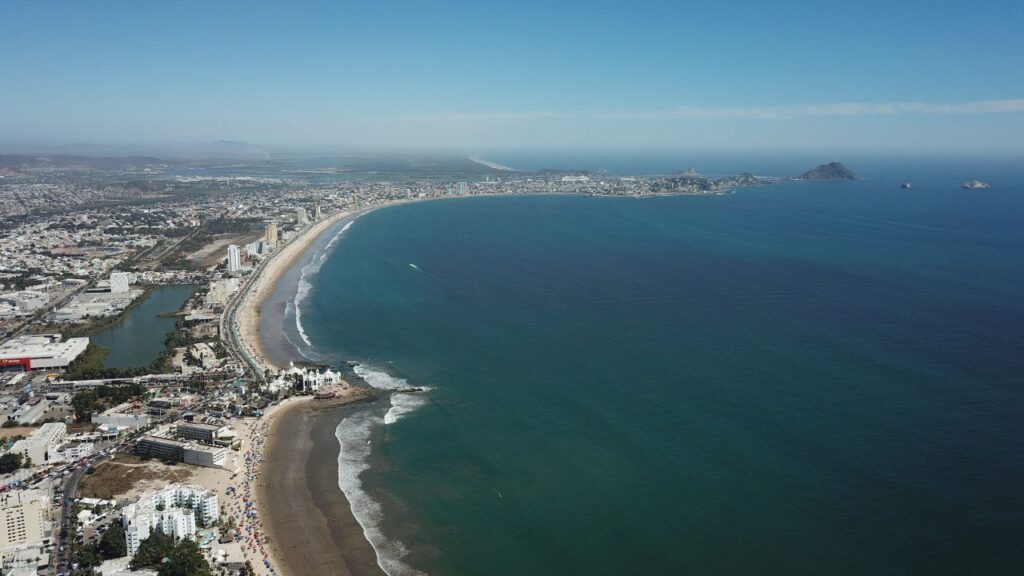
Mazatlán sits on Mexico’s Pacific coast in Sinaloa state and has one of the longest beach promenades in the Americas: the Malecón runs for 21km along the waterfront. It has a restored colonial historic centre, a working fishing port, and a growing community of North American expats and digital nomads who have arrived in the past few years as word spread about the cost and quality of life.
The weather is warm and mostly sunny. Temperatures average 24 to 30°C with a dry season from October to June. The wet season from July to September brings humidity and afternoon rains but is rarely unpleasant. The Pacific here is warm enough to swim in from May through November when water temperatures reach 26 to 28°C.
Co-working has grown in the Centro Histórico and the Golden Zone beach area. The digital nomad community is mid-sized and expanding, with a strong mix of North American retirees and younger remote workers. Direct flights from multiple US and Canadian cities make logistics straightforward.
Costs are very reasonable. A comfortable life runs $1,200 to $1,800 per month, with a one-bedroom apartment in a good area costing $500 to $900 per month. The seafood is outstanding, particularly the fresh shrimp and marlin.
The main cons for Mazatlán is the Sinaloa state security reputation, which requires awareness even though the tourist and expat zones are generally safe, and a social scene that leans older than some other cities on this list.
Population: 530,000 city
Weather: 24 to 30°C average; dry season October to June; wet season July to September; Pacific warm May to November
Internet: 100 to 300Mbps fibre via Telmex and Izzi; $25 to $40 per month
Digital nomad community: Growing; mix of North American retirees and younger remote workers; expanding co-working scene in Centro Histórico
Cost of living: $1,200 to $1,800 per month; one-bedroom $500 to $900
Pros: 21km beach promenade, beautiful historic centre, warm Pacific, excellent seafood, direct flights from North America, lower cost than Puerto Vallarta
Cons: Sinaloa state security reputation requires awareness, social scene skews older, smaller international nomad community than Puerto Vallarta
Beaches Rating: 8/10
Digital Nomad Rating: 6/10
14. Montevideo, Uruguay 🇺🇾
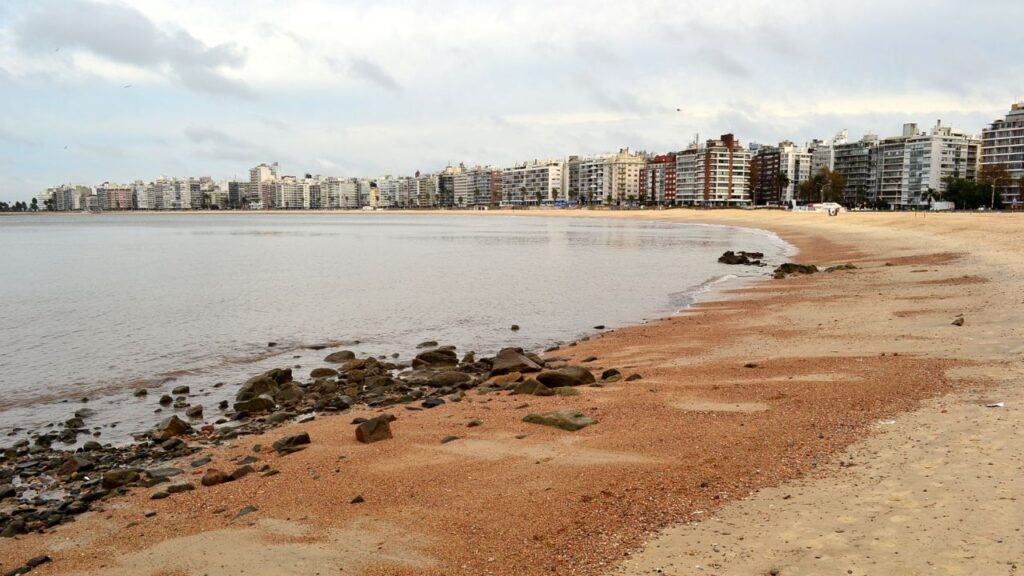
Montevideo is one of the quietest, most liveable cities in South America. Its Rambla, a 22km coastal promenade along the Rio de la Plata, is one of the best urban walking routes on the continent.
It is not a tropical beach destination. It is a genuinely excellent city for nomads who want stability, safety, and high quality of life. Punta del Este, Uruguay’s beach resort, is 130km east and about two hours by bus.
Antel, the state telecom company, has deployed fibre across most of the city. Speeds of 300 to 600Mbps are common for $25 to $40 per month. Uruguay’s digital infrastructure consistently ranks among the best in Latin America.
Costs run $1,800 to $2,600 per month. Uruguay’s political stability, low corruption, safety, and straightforward residency options make it the most sensible long-term legal base in South America for people who prioritize those factors.
The best beaches are 1-2 hours away in Atlántida, José Ignacio, Piriápolis and Punta del Este but keep in the mind the ocean is usually pretty cold compared to tropical beaches although there is decent swimming in the summer.
Population: 1.4 million city; 1.8 million metro
Weather: Summers 25 to 30°C (December to February); winters 8 to 14°C (June to August); best in spring and autumn
Internet: 300 to 600Mbps fibre via Antel; $25 to $40 per month; among the best in Latin America
Digital nomad community: Smaller but high-quality; strong startup scene; co-working in Pocitos and Ciudad Vieja
Cost of living: $1,800 to $2,600 per month; one-bedroom $700 to $1,100
Pros: Safest major city in South America, political and economic stability, best digital infrastructure in the region, straightforward residency, 22km coastal Rambla
Cons: Cool winters, higher costs than Colombia or Brazil, small nightlife scene, ocean beach requires a trip to Punta del Este
Beaches Rating: 5/10
Digital Nomad Rating: 7/10
15. João Pessoa, Brazil 🇧🇷
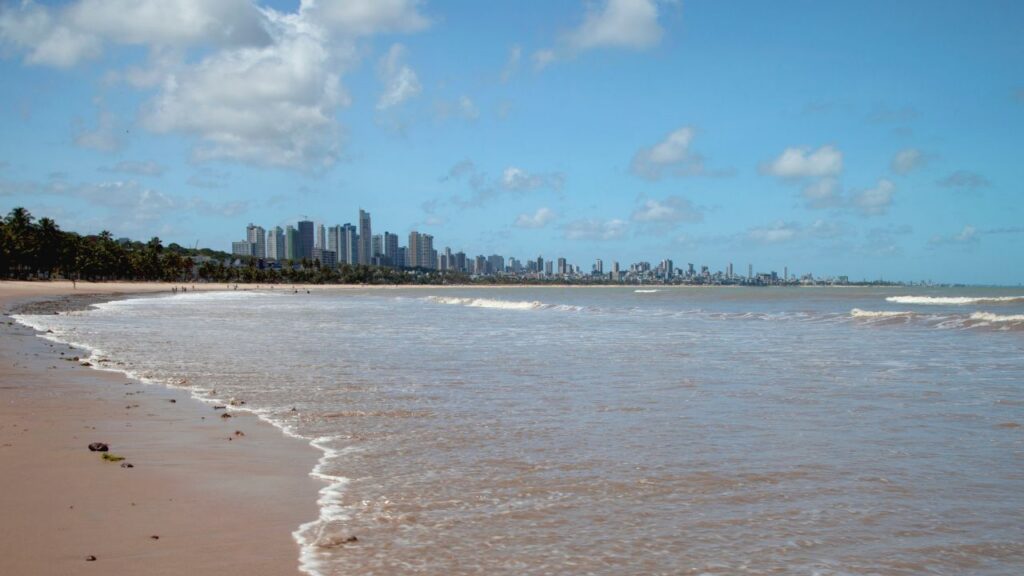
João Pessoa is the capital of Paraíba and sits on Brazil’s northeast coast, just south of Natal. It claims to be the easternmost city in the Americas, and the beaches here back that up: long, calm, and lined with natural pools formed by offshore reefs at low tide.
The city is largely unknown to international nomads, which keeps prices low and the experience genuine. Tambaú and Cabo Branco are the main beach neighbourhoods, walkable and well served by restaurants and small supermarkets.
The weather is consistently warm at 26 to 30°C year-round. The rainy season runs April to July but is rarely severe enough to stop beach life. Outside those months, the sun is reliable and the sea breeze keeps the heat manageable.
Costs are among the lowest of any capital city on this list. A comfortable life runs $900 to $1,400 per month, with a one-bedroom near the beach costing R$1,000 to R$1,800. The digital nomad infrastructure is thin but fibre internet and Starlink is available and the city is genuinely pleasant and safe to live in.
You will find some of Brazil’s best beaches nearby like Coqueirinho Beach, Tambaba Beach and Tabatinga Beach. The popular surf town Pipa, which has become a digital nomad hotspot is only 2-3 hours away but car but most people fly into Natal to go there.
Population: 900,000 city; 1.3 million metro
Weather: 26 to 30°C year-round; rainy season April to July; sunny and dry for most of the year
Internet: 100 to 200Mbps fibre via Brisanet and Claro; $20 to $30 per month
Digital nomad community: Very small; largely undiscovered by the international nomad circuit; genuine local integration possible
Cost of living: $900 to $1,400 per month; one-bedroom near the beach R$1,000 to R$1,800
Pros: Beautiful reef beaches, very cheap, calm and safe by northeast Brazilian standards, genuine local city with no tourist inflation
Cons: Almost no nomad infrastructure, limited co-working options, smaller job market for those working locally, fewer direct international flights
Beach Rating: 9/10
Digital Nomad Rating: 5/10
16. Mérida, Mexico 🇲🇽
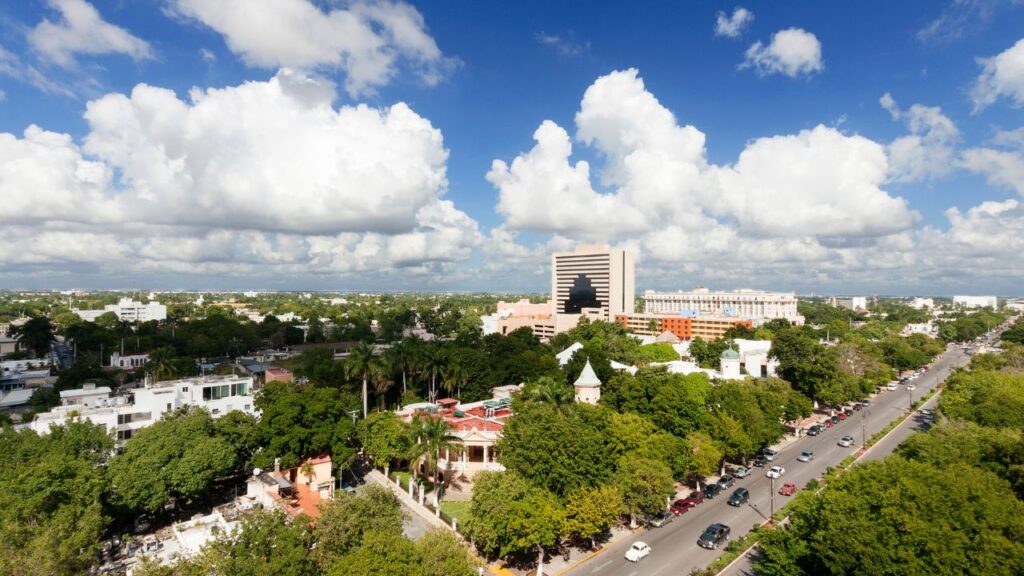
Mérida is the capital of Yucatán state and is not on the coast, but it belongs on this list as the practical base for the entire Yucatán Peninsula. The Gulf of Mexico coast at Progreso is 35 minutes north. The Caribbean at Celestún and Dzibilchaltún is accessible in under two hours. Tulum, Playa del Carmen, and the entire Riviera Maya are about 3-4 hours east by road or train.
The city itself is one of the safest in Mexico, with a colonial centre of pastel mansions, excellent regional cuisine, a strong arts scene, and a large and well-integrated expat and digital nomad community. It consistently ranks as one of the most liveable cities in Mexico.
The weather is hot. Mérida is one of the hottest cities in Mexico, averaging 30 to 36°C from March to June. The rainy season from June to October brings afternoon showers and slightly lower temperatures. From November to February it is genuinely pleasant at 22 to 28°C. Air conditioning is not optional.
Costs are moderate and lower than the coast. A comfortable life runs $1,200 to $1,800 per month. The co-working scene is strong for a city of its size and the nomad community is large, organized, and friendly but the expat community skews toward older people and retirees.
Population: 1.1 million city; 1.3 million metro
Weather: Very hot March to June: 30 to 36°C; rainy season June to October; pleasant November to February: 22 to 28°C
Internet: 100 to 300Mbps fibre via Telmex and Izzi; $25 to $40 per month
Digital nomad community: Large and well-organised; one of the best nomad communities in Mexico; strong co-working infrastructure
Cost of living: $1,200 to $1,800 per month; one-bedroom $500 to $900
Pros: Safest major city in Mexico, excellent colonial architecture and food, large nomad community, lower cost than the coast, easy access to both Gulf and Caribbean coasts
Cons: Not on the beach (coast is 35 minutes away), extreme heat March to June, air conditioning essential, not for people who need immediate beach access
Beaches Rating: 7/10
Digital Nomad Rating: 6/10
17. Barranquilla, Colombia 🇨🇴
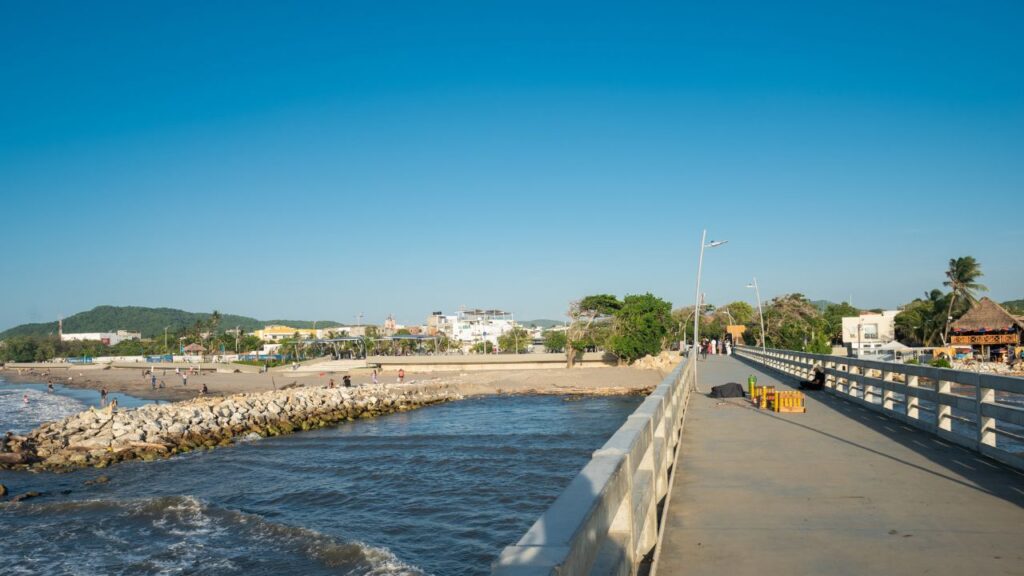
Barranquilla is Colombia’s fourth-largest city and sits at the mouth of the Magdalena River on the Caribbean coast. It is a port city and industrial hub, not a tourist destination. That is precisely why it flies under the nomad radar.
It is a real city with one of most dynamic economies in Colombia. You get the Colombian Caribbean without the premium prices of Cartagena. The beaches at Puerto Colombia, about 30 minutes west, are where locals and residents spend their weekends.
Temperatures average 28 to 33°C year-round. The dry season runs December to April. The heat can be intense from January to March when the winds drop, but most apartments and co-working spaces are well air-conditioned.
A comfortable life runs $1,000 to $1,600 per month. The food is excellent, the Carnival is one of the largest in the world held annually in early February, and there is a small but growing community of digital nomads.
Population: 1.3 million city; 2.4 million metro
Weather: 28 to 33°C year-round; dry season December to April; wet season May to November
Internet: 100 to 300Mbps fibre via Claro, ETB, Tigo; $20 to $35 per month
Digital nomad community: Small but growing; co-working in El Prado and Ciudad Jardín; more locally integrated than Cartagena
Cost of living: $1,000 to $1,600 per month; one-bedroom apartment $450 to $750
Pros: Affordable, genuine Colombian Caribbean city, excellent food, real local culture, world-class Carnival, lower costs than Cartagena
Cons: Beach requires a 30-minute drive, intense heat, smaller nomad infrastructure, requires more Spanish than tourist-oriented cities
Beach Rating: 5/10
Digital Nomad Rating: 7/10
18. Recife, Brazil 🇧🇷
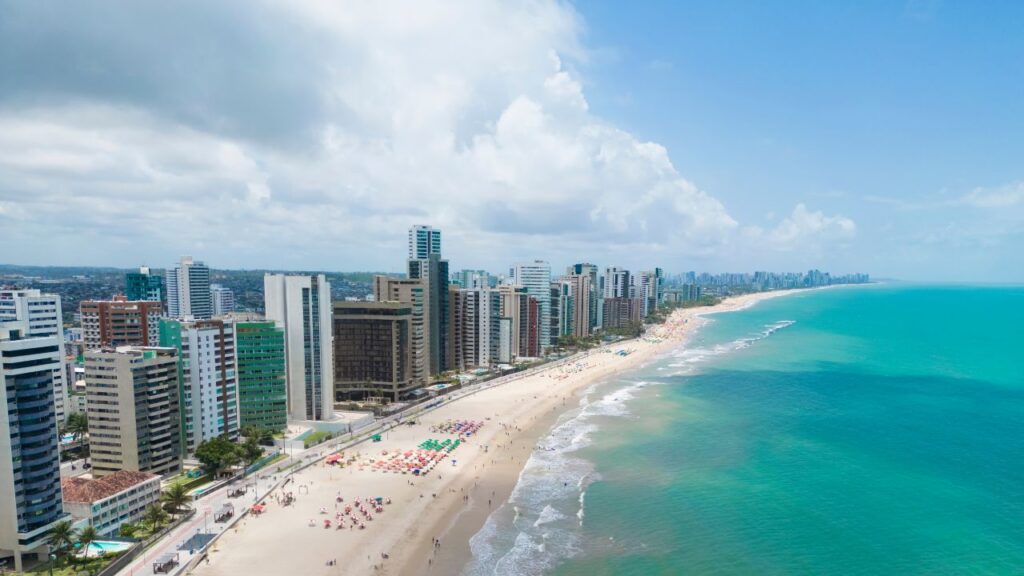
Recife is the capital of Pernambuco and one of the most culturally rich cities in Brazil. It sits at the confluence of two rivers, giving it a geography of islands, bridges, and beaches woven through an urban centre.
Porto Digital, a tech park in the Recife Antigo historic district, houses hundreds of companies and has built a genuine startup ecosystem here. Olinda, a UNESCO World Heritage colonial town, sits immediately to the north.
The beaches at Boa Viagem are long and urban. Offshore reefs create calm swimming conditions. The shark situation at certain beaches beyond the reef line is a well-known local fact worth understanding before you swim.
A comfortable life costs $1,100 to $1,700 per month. The food culture is outstanding, drawing on African, Indigenous, and Portuguese traditions. The rainy season runs May to August, which is the reverse of most of Brazil.
For world class beaches, you have the beach resorts of Porto de Galinhas and Praia dos Carneiros a short drive to the south.
Population: 1.7 million city; 4.1 million metro
Weather: 28 to 32°C year-round; rainy season May to August (reverse of most of Brazil)
Internet: 200 to 400Mbps fibre; $20 to $30 per month; Porto Digital has driven strong local infrastructure
Digital nomad community: Growing; concentrated around Porto Digital and Boa Viagem; tech-sector bias
Cost of living: $1,100 to $1,700 per month; one-bedroom in Boa Viagem R$1,500 to R$3,000
Pros: Porto Digital tech ecosystem, UNESCO Olinda nearby, outstanding food culture, lower cost than southern Brazil
Cons: Safety awareness required, shark risk at some beaches, rainy season May to August, smaller nomad scene than Fortaleza
Beach Rating: 8/10
Digital Nomad Rating: 4/10
19. Fortaleza, Brazil 🇧🇷
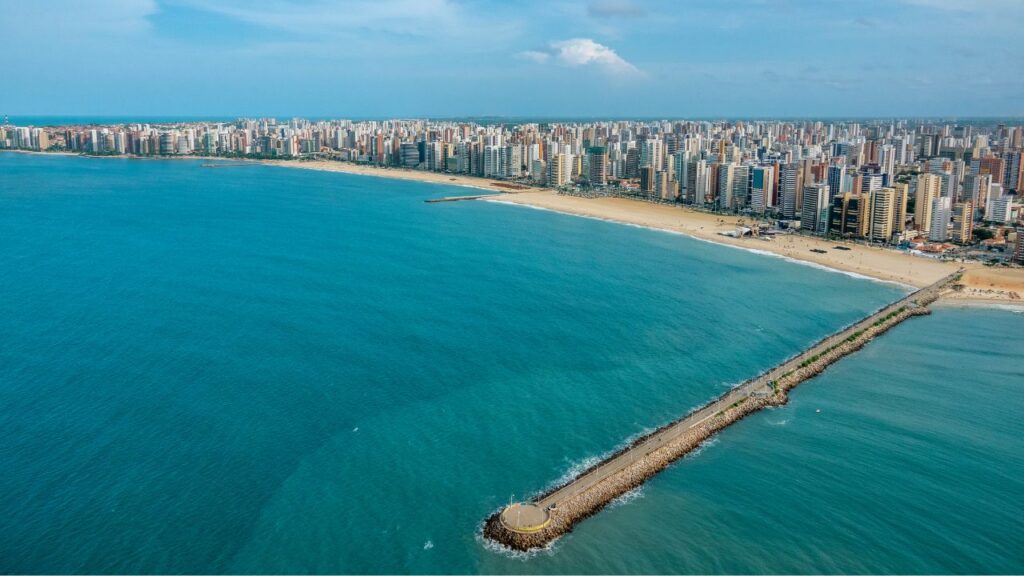
Fortaleza gets an average of 300 sunny days per year. It is the fifth-largest city in Brazil with major urban infrastructure, and the beach runs along its entire waterfront. You can walk from a mid-range apartment to the sea in under five minutes.
The northeast trade winds blow consistently along the coast, making conditions ideal for kite surfing. Cumbuco, 35km west, is one of the best kite spots in South America and draws a large international crowd.
The rainy season runs February to May. Outside those months, clear sky is the default. Temperatures sit at 28 to 32°C with no meaningful seasonal variation.
Costs run $1,200 to $1,800 per month. The nomad community skews locally Brazilian, which means more genuine integration but requires basic Portuguese. Northeastern food is a serious advantage: carne de sol, tapioca, and some of the best seafood on the continent.
Population: 2.7 million city; 4.1 million metro
Weather: 28 to 32°C year-round; 300 sunny days per year; rainy season February to May
Internet: 200 to 500Mbps fibre via Vivo and Claro; $20 to $35 per month
Digital nomad community: Growing; more locally Brazilian than international; solid co-working scene; good for genuine integration
Cost of living: $1,200 to $1,800 per month; one-bedroom in Meireles R$1,500 to R$2,800
Pros: 300 sunny days per year, walkable beach, big city infrastructure, excellent kite surfing at Cumbuco, strong northeastern food
Cons: Safety awareness required in some areas, rainy season February to May can be severe, less polished than southern Brazil
Beach Rating: 8/10
Digital Nomad Rating: 6/10
20. Natal, Brazil 🇧🇷
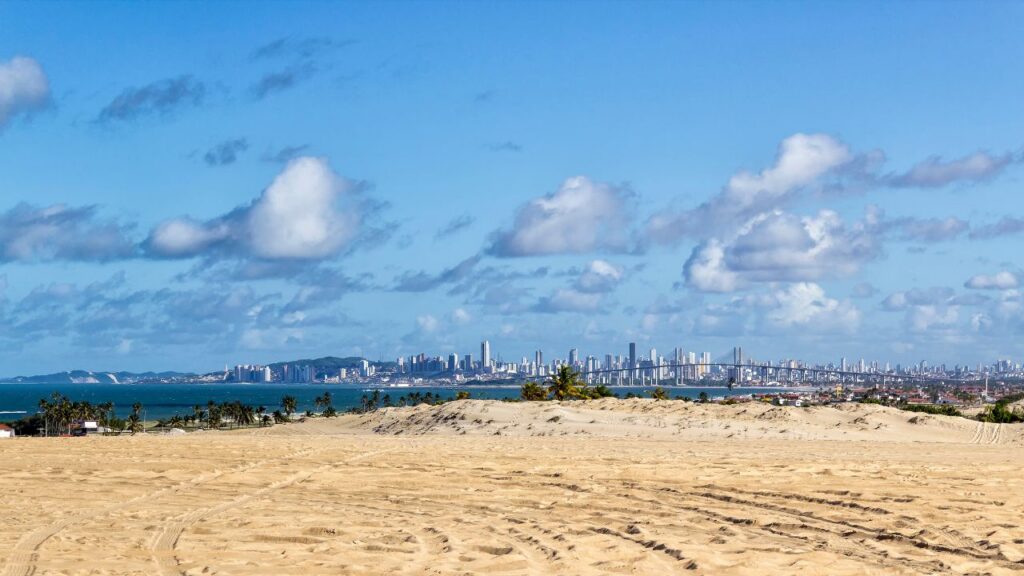
Natal is the capital of Rio Grande do Norte and sits at the easternmost point of the Americas, geographically closer to Africa than to the Andes. It has some of Brazil’s best beaches and constant southeast winds that have made the region a top kite surfing destination.
Ponta Negra, in the south of the city, functions as a self-contained beach village within the larger urban area. It is where most nomads and expats concentrate their lives. The dunes at Genipabu to the north are extraordinary.
The dry season runs July to February. The rainy season from March to June brings more cloud but rarely stops beach life entirely. Temperatures average 27 to 32°C year-round.
Costs are among the lowest for a Brazilian coastal city at this level. A comfortable life runs $1,000 to $1,600 per month, with a one-bedroom in Ponta Negra running R$1,200 to R$2,200.
Natal is best known to digital nomads as the gateway to the beach town of Pipa, which is a surf town that has become a digital nomad hotspot. To the north is Maracajaú, which is considered one of the best beaches in Brazil.
Population: 900,000 city; 1.8 million metro
Weather: 27 to 32°C year-round; dry season July to February; rainy season March to June
Internet: 100 to 200Mbps via Brisanet and Claro; $20 to $30 per month
Digital nomad community: Small and tight; Ponta Negra is the centre; kite surfing community provides a ready-made social network
Cost of living: $1,000 to $1,600 per month; one-bedroom in Ponta Negra R$1,200 to R$2,200
Pros: Beautiful beaches and dunes, top kite surfing region, genuine beach neighbourhood feel, lower cost than Fortaleza
Cons: Smaller professional ecosystem, fewer international flights, safety awareness required outside Ponta Negra
Beach Rating: 9/10
Digital Nomad Rating: 4/10
21. Manta, Ecuador 🇪🇨
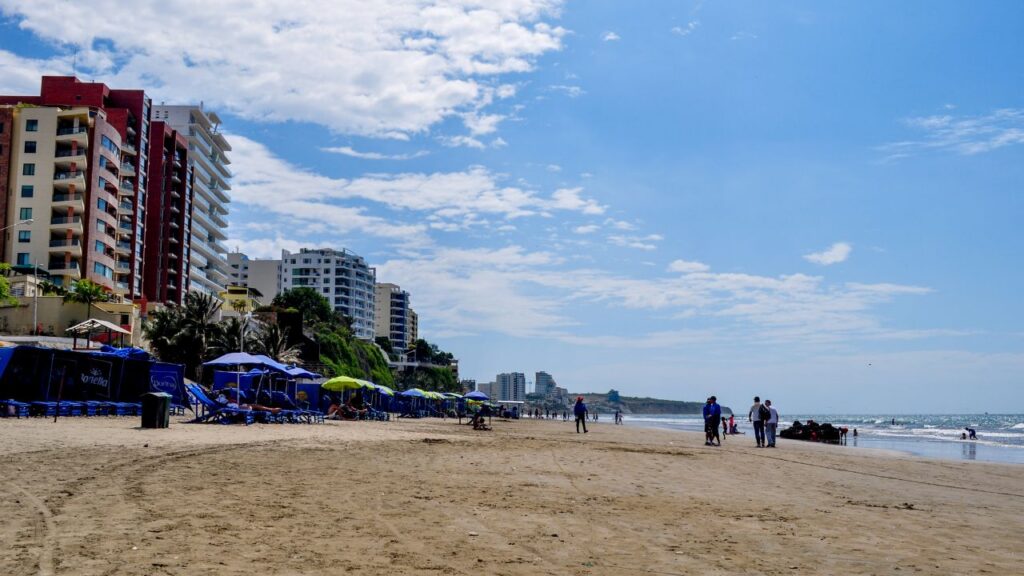
Manta is the largest city on Ecuador’s Pacific coast with a population of around 270,000. It is a major tuna fishing and export port, which means it has real city infrastructure: a hospital, an airport with domestic connections, supermarkets, and a range of co-working options that the smaller coastal towns cannot match.
The beaches at Murciélago and Tarqui sit right in the city. Murciélago is the clean tourist-facing beach with restaurants and bars along the malecón. Tarqui is the working fishing beach where the catch comes in each morning. Both are walkable from central accommodation.
The weather is warm and relatively dry at 23 to 28°C year-round. The wet season runs January to April but is less severe than further north. The dry season from May to December is the more comfortable period, with reliable sunshine and a sea breeze keeping temperatures down.
Manta is the most practical base on the Ecuador Pacific coast for people who need real city infrastructure alongside beach access. More picturesque beach towns like Canoa, Salinas and Montañita are within two to four hours by road.
Population: 270,000
Weather: 23 to 28°C year-round; wet season January to April; dry season May to December
Internet: 50 to 150Mbps fibre via CNT and Claro; $20 to $30 per month
Digital nomad community: Small but present; more locally integrated than tourist-town options; real city means more independent cafes and work-friendly spots
Cost of living: $900 to $1,400 per month; one-bedroom apartment $350 to $600
Pros: Real city infrastructure, hospital and airport, calm city beaches, good seafood, practical hub for the Ecuador coast circuit, US dollar economy
Cons: Not a destination city in the way Montañita is, limited international nomad community, industrial port character in some areas
Beaches Rating: 7/10
Digital Nomad Rating: 5/10
22. Mar del Plata, Argentina 🇦🇷
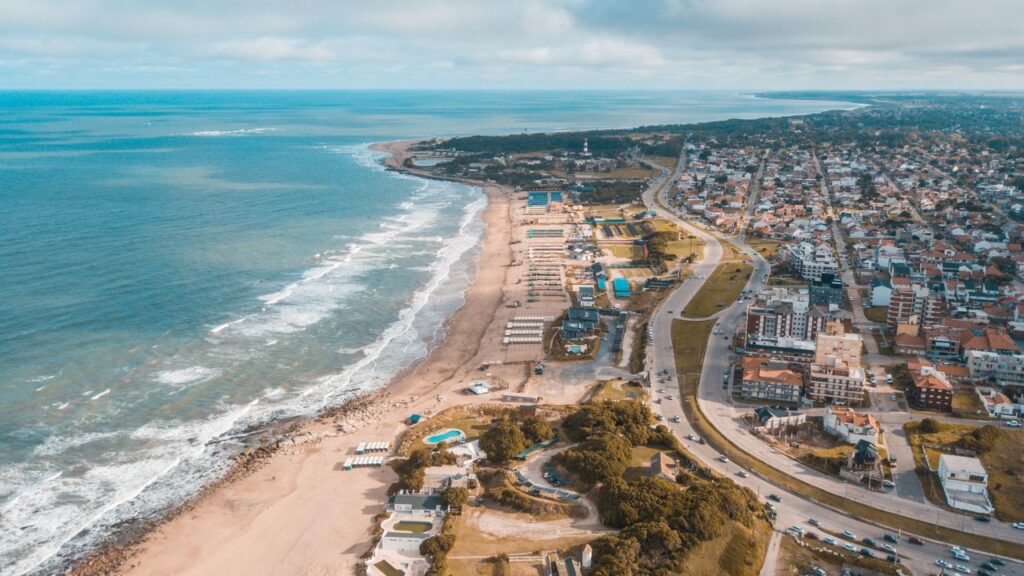
Mar del Plata is Argentina’s largest beach city and sits 400km south of Buenos Aires on the Atlantic coast. It has a population of around 700,000 and functions as a real mid-sized city with universities, hospitals, a fishing port, and a cultural scene that sustains itself year-round, not just in summer.
The summer season from December to February is when the city fills with Buenos Aires residents escaping the capital. Outside those months, Mar del Plata is quieter and considerably cheaper. The Atlantic beaches are wide and long. The water is cold but swimmable in summer at 16 to 20°C.
The weather is temperate. Summers reach 22 to 28°C. Winters drop to 5 to 12°C and can be grey and windy. The best seasons are spring and autumn, roughly October to November and March to April. Fibre internet from Fibertel and Claro runs at 100 to 300Mbps for $15 to $30 per month at current exchange rates.
Costs are low in dollar terms, broadly in line with Buenos Aires. A comfortable life runs $1,000 to $1,600 per month outside peak summer season, with apartments costing $400 to $750 per month. The nomad community is small but the city has enough infrastructure for remote work and enough cultural life to sustain a longer stay.
Population: 700,000 city
Weather: Summers 22 to 28°C (December to February); winters 5 to 12°C (June to August); best in spring and autumn
Internet: 100 to 300Mbps fibre via Fibertel and Claro; $15 to $30 per month at current exchange rates
Digital nomad community: Small; more locally Argentine than international; quieter outside summer season
Cost of living: $1,000 to $1,600 per month outside peak season; one-bedroom $400 to $750
Pros: Real city infrastructure, wide Atlantic beaches, low dollar costs, university city with cultural life, quieter and cheaper than Buenos Aires
Cons: Cold winters, crowds and price spikes in January and February, cold Atlantic water, small international nomad community
Beaches Rating: 8/10
Digital Nomad Rating: 5/10
23. Valparaíso, Chile 🇨🇱
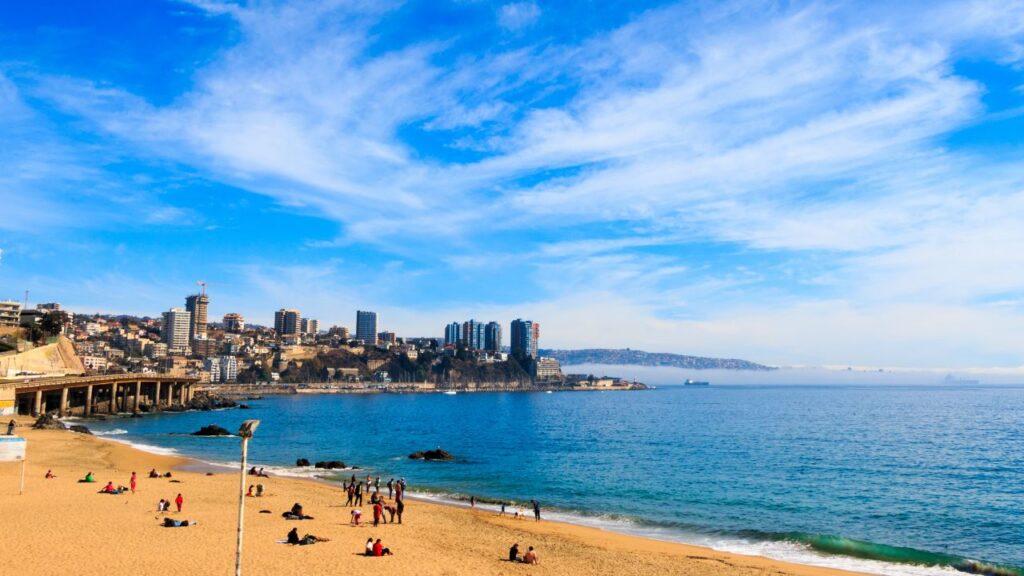
Valparaíso is built across more than 40 hills above a Pacific port. Houses are painted in every colour, funicular elevators connect the hills to the waterfront, and street art covers most available walls. It is a UNESCO World Heritage site and one of the most visually distinctive cities in South America.
It sits 120km from Santiago, making it an easy base for people who want coastal living with regular access to a major hub. The best beaches for swimming are at Viña del Mar, immediately adjacent to the north but keep in mind that the ocean is always cold here.
The weather is Mediterranean. Summers reach 20 to 25°C, dry and warm. Winters drop to 8 to 14°C with rain. The Pacific here is cold year-round due to the Humboldt Current so it’s not a good spot for actually swimming.
Costs run $1,400 to $2,200 per month. The nomad community is small, artistically inclined, and international. It is concentrated in the Cerro Alegre and Cerro Concepción hillside neighbourhoods above the port.
Population: 285,000 city; 1 million metro including Viña del Mar
Weather: Summers 20 to 25°C (December to February); winters 8 to 14°C (June to August); Mediterranean; Pacific is cold year-round
Internet: 100 to 300Mbps fibre via Entel and VTR; $25 to $45 per month
Digital nomad community: Small, artistically inclined, international; concentrated in Cerro Alegre and Cerro Concepción; Santiago proximity helps
Cost of living: $1,400 to $2,200 per month; one-bedroom $550 to $950
Pros: UNESCO heritage city, extraordinary visual character, strong arts scene, close to Santiago and wine country, genuine creative community
Cons: Cold Pacific (no warm swimming), cool wet winters, hilly terrain is physically demanding, safety awareness required in lower port areas
Beaches Rating: 4/10
Digital Nomad Rating: 6/10
24. Buenos Aires, Argentina 🇦🇷
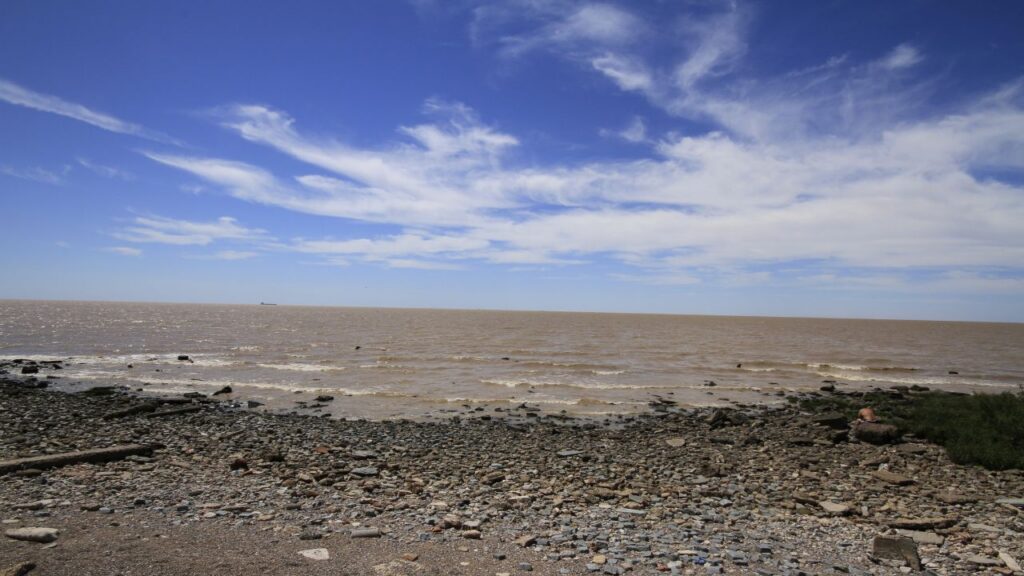
Sadly, Buenos Aires has no swimmable ocean beach. It earns its place here because of what it offers nomads: the cultural depth of a European-style capital, extraordinary food and nightlife, and a cost of living that sits well below what the city’s quality should command, driven by Argentina’s persistent economic instability.
People earning in foreign currency can live at a significant discount. At current rates, a comfortable life in Palermo runs $1,200 to $1,800 per month. A furnished one-bedroom apartment costs $500 to $800 per month in good neighbourhoods.
Summers reach 28 to 35°C. Winters drop to 8 to 15°C and can be grey. Spring and autumn are the best seasons: warm, sunny, and dry. The city rewards people who commit to it for at least three months.
The nomad community is one of the largest and most diverse in South America. Fibre at 100 to 300Mbps runs $15 to $30 per month. The food and nightlife are outstanding. The main risks are economic volatility and visa complexity for longer stays.
The closest things Argentina has to a beach city is Mar del Plata, which has a population of around 700,000 and some of the best beaches in Argentina in the summer but a very small digital nomad community.
Population: 3.1 million city; 15 million metro
Weather: Summers 28 to 35°C (December to March); winters 8 to 15°C (June to August); best in spring and autumn
Internet: 100 to 300Mbps fibre via Fibertel and Personal; $15 to $30 per month at current exchange rates
Digital nomad community: One of the largest in South America; diverse and international; excellent co-working across Palermo and Microcentro
Cost of living: $1,200 to $1,800 per month; one-bedroom in Palermo $500 to $800
Pros: European-quality city, extraordinary food and nightlife, large nomad community, cheap in dollar terms, world-class arts and culture
Cons: No ocean beach in the city, economic instability and currency volatility, cool winters, visa complexity for longer stays
Beach Rating: 2/10
Digital Nomad Rating: 10/10
25. Medellín, Colombia? 🇨🇴
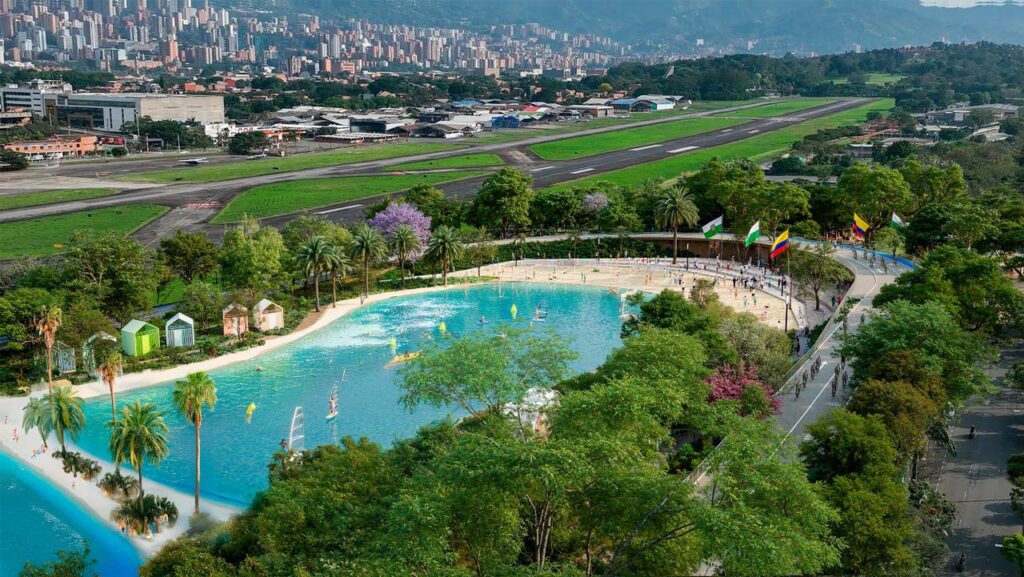
Wait, isn’t Medellín supposed to be in a mountain valley at 1,500 m? Yes, but the city is actually building its own artificial beach resort to be opened in April 2027.
The City of Eternal Spring earns its place here because it is the digital nomad capital of South America and the natural hub for people exploring Colombia.
The city has invested heavily in public infrastructure over two decades. A metro system, cable cars connecting hillside comunas to the centre, and a dense concentration of co-working spaces in El Poblado and Laureles.
It has become a lot safer with the murder rate dropping 95% since the mid-1990s. The average temperature sits at 22°C year-round with two rainy seasons. Rain here usually means afternoon showers and some grey days, not grey weeks.
Laureles has overtaken El Poblado as the preferred neighbourhood for longer-stay nomads. It is quieter, more local, and noticeably cheaper. A comfortable life runs $1,400 to $2,200 per month.
Many digital nomads relocate to Cartagena or Santa Marta in the rainy season because it tends to be a lot sunnier. I go into more detail in my digital nomad’s guide to Medellín.
Population: 2.5 million city; 4 million metro
Weather: 22°C year-round; rainy seasons April to May and October to November
Internet: 100 to 300Mbps fibre via ETB and Claro; $20 to $30 per month
Digital nomad community: Very large; one of the most established in South America; strong co-working in Laureles and El Poblado
Cost of living: $1,200 to $1,800 per month; one-bedroom apartment $500 to $700
Pros: Year-round spring weather, enormous nomad community, excellent food, cheap fast internet, strong public transport
Cons: No direct beach access, El Poblado can feel like a tourist bubble, security concerns in some areas after dark
Beach Rating: 2/10
Digital Nomad Rating: 10/10
Why I love living in Santa Marta by the Caribbean Sea
Most of this guide covers beach cities in Latin America that appear in standard nomad round-ups. But there is a growing group of people who want something different: not a well-known hub or an expat bubble, but a place where you can settle, know your neighbours, and do good work with the Caribbean outside the door.
They have usually already done a stint in Medellín or Florianópolis or Cartagena. They found that bigger is not always better.
Santa Marta Life Coliving is a co-living community on the Caribbean coast of Colombia, 10 minutes from the city of Santa Marta in the beach town of El Rodadero. It sits close enough to access the city’s nightclubs, healthcare, restaurants, and transport links, while removing you from the noise of a tourist centre.
The surroundings are hard to match. You have access to the tallest coastal mountain range in the world with world class hiking in cooler areas like Tayrona National Park, Minca, the El Dorado Bird Reserve and the Lost City Trek. The cost of living is low enough to save on a typical remote income. The internet is fast enough for serious work.
Co-living at Santa Marta Life suits a specific stage: past hostels, not ready to commit to a full apartment lease, wanting people around who are building something rather than on extended holiday.
The Colombian Caribbean coast does not have the scale of Medellín or the polish of Cartagena. What it has is space to think, a genuine place rather than a constructed one, and a pace of life that actually supports the work you came here to do.
The broader argument running through all these digital nomad beach cities in South America on this list is the same. The infrastructure for working well from almost anywhere now exists; you just have to choose which version of this life fits what you actually want to live.

Today, he helps experts teach outside the system by productizing their genius and educating through live workshops, group coaching and retreats.
- Hack the Flow State With These 3 Smart EEG Headphones - November 10, 2026
- 10 Innovative New Biohacking Wearables I’m Excited For In 2027 - November 9, 2026
- Neurable One Review: Can These EEG Headphones Help You Reclaim Your Focus? - November 9, 2026


