


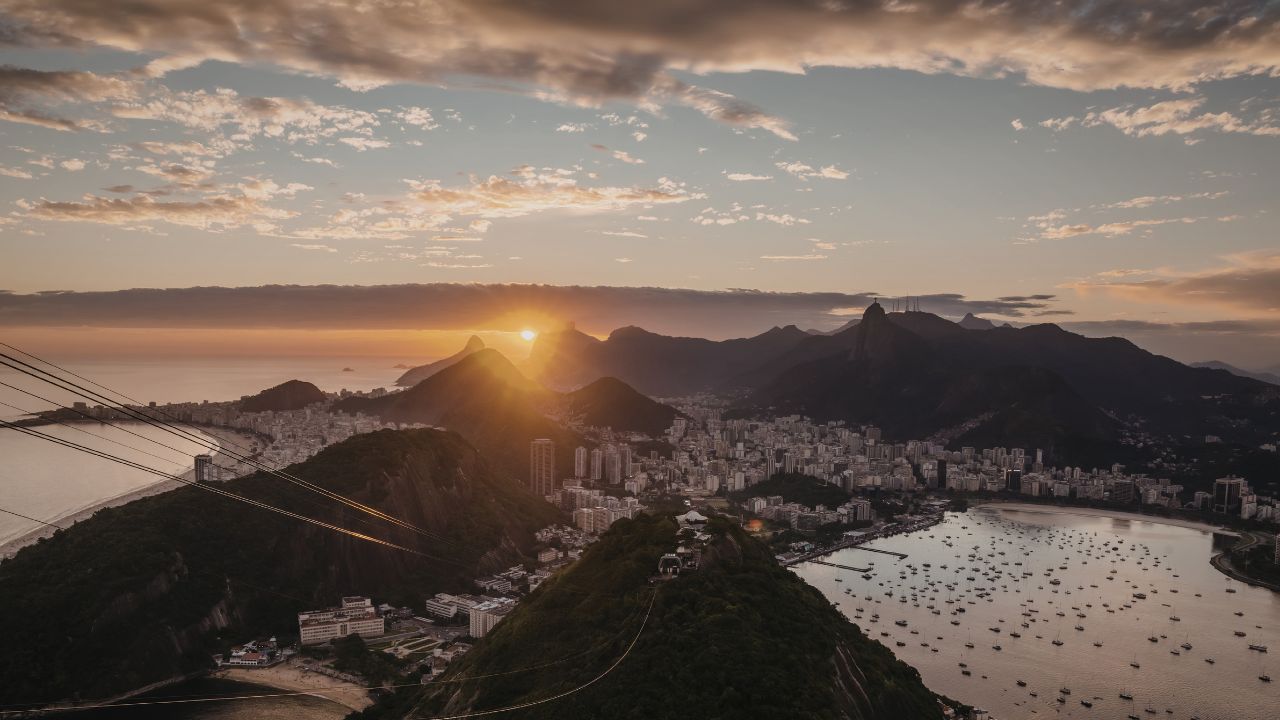
I moved to Rio thinking I’d stay a month. That was a while ago and I’m still here. This is the place I tell people about when they ask where they should go next, and most of them don’t believe me until they show up and experience the energy here for themselves.
They don’t call it the Marvellous city for nothing. However, there’s a few things you need to know if you’re considering living in Rio de Janeiro as a digital nomad.
If you want to experience Rio and stay safe, here’s my honest version of what it’s actually like to live and work remotely in Rio de Janeiro and why I think it’s emerging as one of the best places in the world for digital nomads.
I’ll walk you through the best neighborhoods and which one to pick for the lifestyle you want, what safety really looks like day to day, where to work remotely with fast wifi, where to find a place and a community, and the daily routine that made me fall in love with Rio.
A bit about me, so you know where this is coming from. I work remotely, I’ve lived in a few of the usual nomad cities, and I think Rio is one of the best!
The only Latin American city that I’ve lived in that closely matches the outdoor beach and mountain lifestyle of Rio is Santa Marta in Colombia, which is somewhere I return to regularly as well.
The secret is getting out
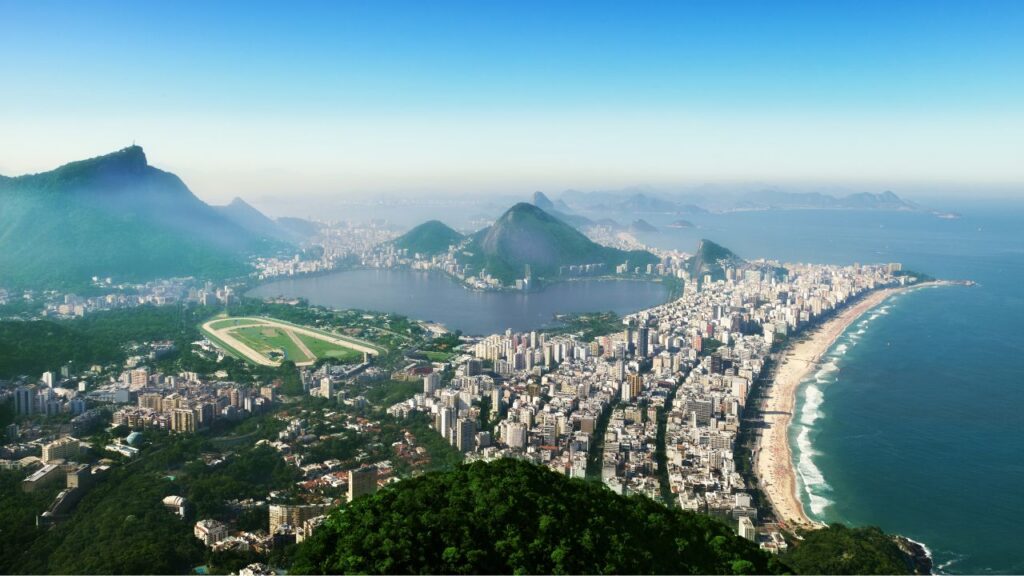
For years Rio sat in a strange spot, everyone knew it was one of the most beautiful and fun cities in the world but it had a reputation for being particularly dangerous and there was a small digital nomad community. The nomad crowd went to Medellín, to Lisbon, to Bali, to Mexico City while Brazil usually got skipped.
That’s changing fast because now word is getting out that Rio has got a vibe unlike anywhere else. The cafés have more laptops in them than they did a year ago. The WhatsApp groups are filling up. People are figuring out that this might be the best tropical city on the planet to live in if your job lets you work from anywhere.
In the last few years, Rio has become much safer, the Internet speeds have improved significantly, airline links have grown and tourism has surged. In 2025, International visitors grew from 1.5 million to 2.1 million, a massive 44.8% increase. Tourism will increase another 17% in 2026 and it continues to grow as the secret is getting out fast.
Part of why Brazil got skipped is the language barrier. Most of the country speaks Portuguese and not much English, so it never had the easy on-ramp that Mexico or Colombia had for Americans. That keeps the tourist and nomad numbers lower than you’d expect for a city this famous.
But I’ve found in the South Zone of Rio de Janeiro, a surprising amount of people actually speak English and if you can already speak Spanish it’s not a big stretch to learn the basics of Portuguese. Plus, I’ve never been to a city with so many active WhatsApp groups, which makes it very easy to meet locals and foreigners who speak English.
A quick word on Medellín
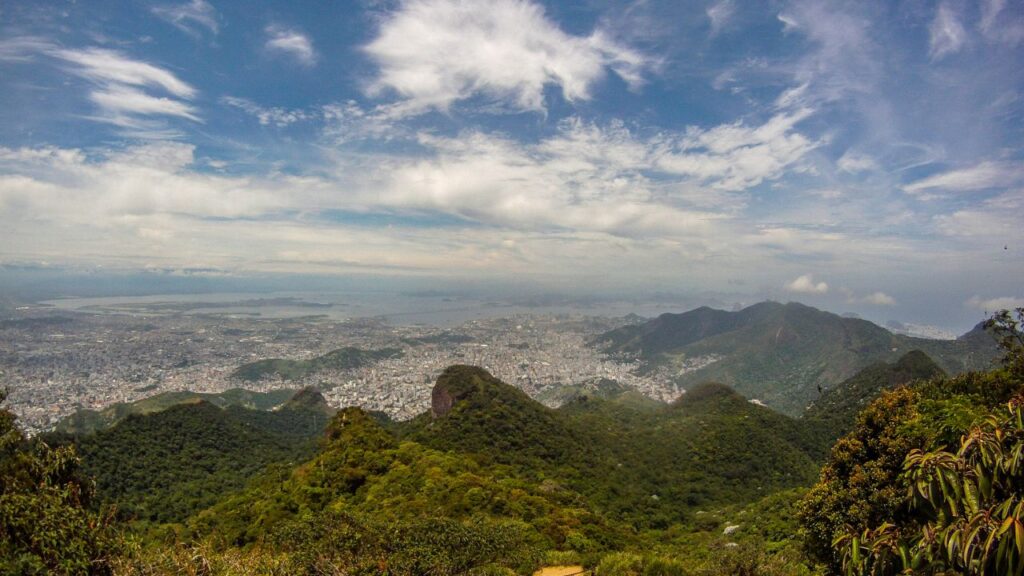
I lived in Medellín before Rio and I really liked it. But I actually feel safer in Rio, and I know that surprises people because the city has developed quite the reputation.
Medellín has South America’s biggest digital nomad scene but it got big, fast, and concentrated into a few small areas, and that concentration brought its own problems. If you stay around Poblado in Medellín, you’ll be surrounded by sex tourists, travel bros and predatory dating scams if you’re single, which is much less a thing in Rio de Janeiro.
By contrast, Rio de Janeiro is enormous and spread out, and the parts where you actually live as a nomad are residential neighborhoods full of regular families, dog walkers, and people going to work. The vibe in Copacabana, Ipanema or Botafogo on a normal Tuesday is calm and doesn’t feel much different than a neighbourhood in Lisbon.
I also found Rio de Janeiro to be much sunnier than Medellín and apart from the hot and humid summers from December to March, the rest of the year the climate of Rio de Janeiro is pretty similar to Medellín, just with a lot less rain. Nearly every day is comfortable in the low-to-mid twenties so it’s easy to live without air conditioning.
I’m not going to tell you Rio has no crime. It does, you’ll likely see things here that will scare you and I’ll get specific about that below. But the day to day feeling, the experience of walking around, doing my errands, going to the beach, working from a café, has felt more relaxed to me here than it did in Medellín.
Take that for what it’s worth. It’s one person’s experience.
The best Rio neighborhoods for living
This is the part people get wrong before they arrive, so I want to be specific. Where you live decides almost everything about your experience in Rio.
One of my Brazilian friends describes Rio de Janeiro as two cities. There is “Rio”, which refers to the South Zone everyone knows below the downtown where it is rich, safe and touristy — and there is “de Janeiro” above downtown, which is neither rich, safe or touristy.
They are two completely different worlds and as a foreigner, it’s best for your safety that you stay in the neighbourhoods in the South Zone.
1. Botafogo
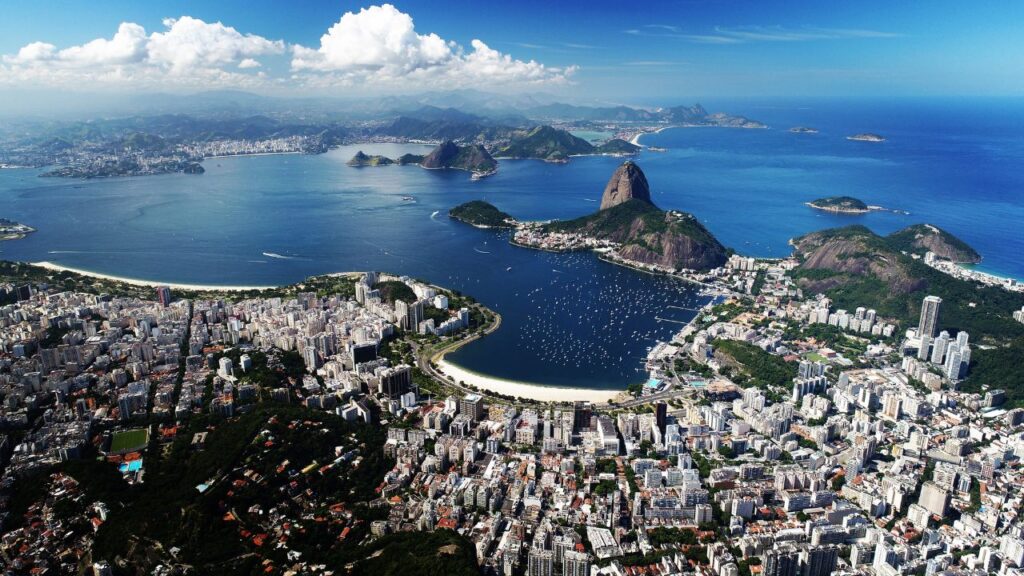
This is where I’d tell most first timers to land. Botafogo sits between the beach neighborhoods and the city center, it has the best food scene in Rio right now, and it’s full of cafés and coworking spaces.
The clean and safe metro runs through it, with easy connection to downtown or the beaches. Rents are much lower than Ipanema and the bay is right there with Sugarloaf framing the water.
It’s not a beach neighborhood in the swimming sense, the bay water isn’t for swimming, but you’re ten or fifteen minutes from Copacabana and you get a more local, less touristy daily life.
If I had to pick one neighborhood for a digital nomad, Botafogo is this one.
2. Copacabana
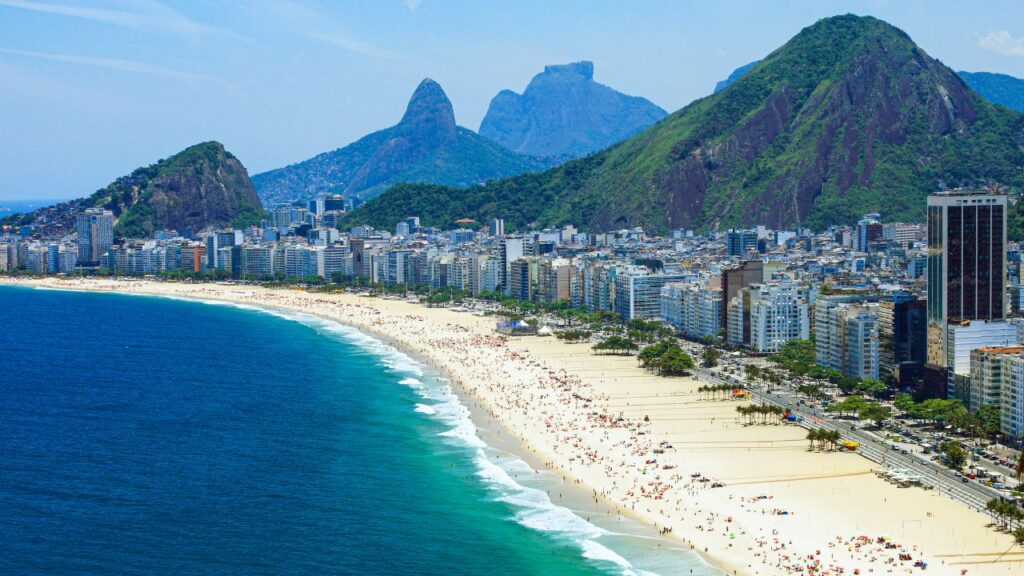
The most touristy neighborhood in the city. Copacabana has everything close by, the metro, endless restaurants, beach access, and a huge range of apartments at a big range of prices.
I stayed on the edge of Leme, which is the safer and quieter part of Copacabana and my place backed onto the mountain so I woke up to birds singing and it almost felt like staying in an ecolodge.
This was my favourite neighbourhood because there is great live music at night and I enjoyed the rhythm of walking the beach early in the morning and returning to catch the sunsets each evening.
Copacabana can feel a bit chaotic and a bit worn in places (most buildings were built in the 50s and 60s), but you can find great value here, especially a few streets back from the beach.
3. Ipanema
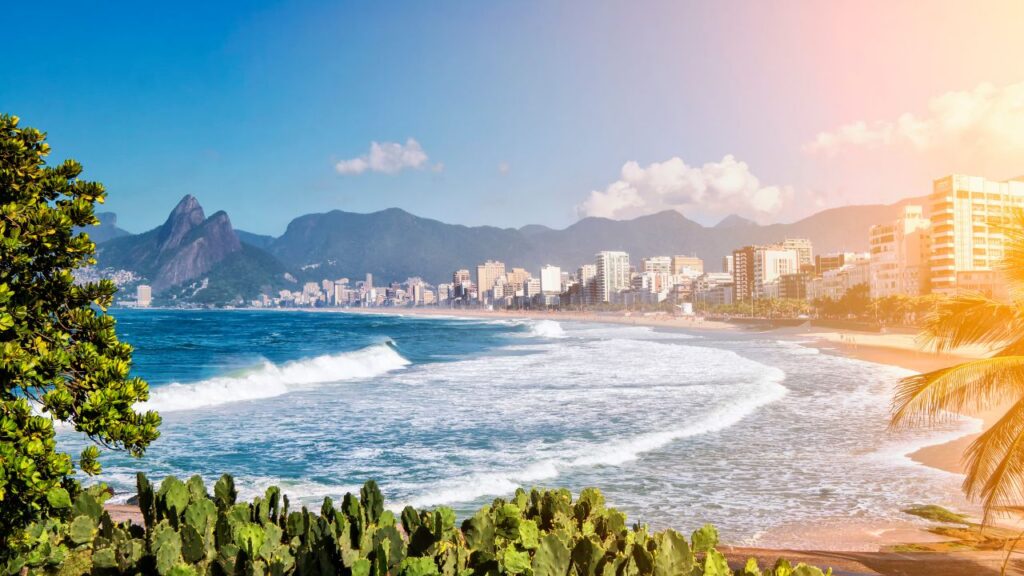
Ipanema is Rio’s most famous beach and it earns its reputation. Ipanema is upscale, walkable, and the beach is genuinely one of the great beaches of any major city.
Posto 9 is the social heart of it but I loved watching the surfers and sunsets on the rocks at Arpoador. There are good restaurants, good cafés, and a real sense of neighborhood once you settle in.
However, it costs a lot more. You’re paying for the location and you feel it in the rent. But the trade is that you can roll out of bed, walk three blocks, and be in the ocean before your first call.
I also found that Ipanema had the best coworking spaces outside of the center of Rio de Janeiro.
4. Leblon
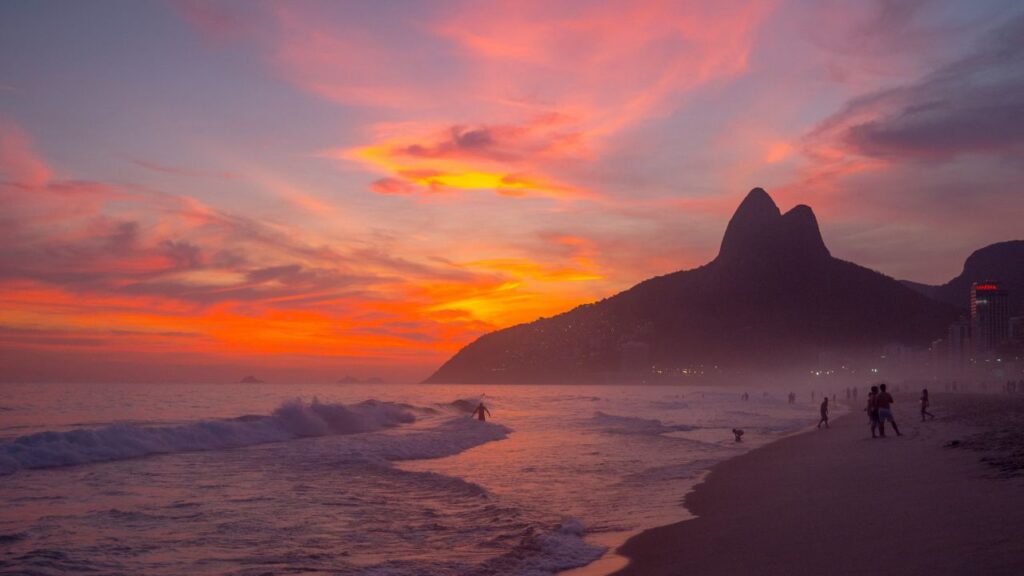
Right next to Ipanema and it is a little quieter and more expensive. Leblon is calm, very residential, extremely walkable, and a little more family oriented.
If you want the Ipanema lifestyle with less noise and you have the budget, this is it. It’s possibly the richest urban neighbourhood in Brazil so expect to pay a lot to stay here.
5. Flamengo and Laranjeiras
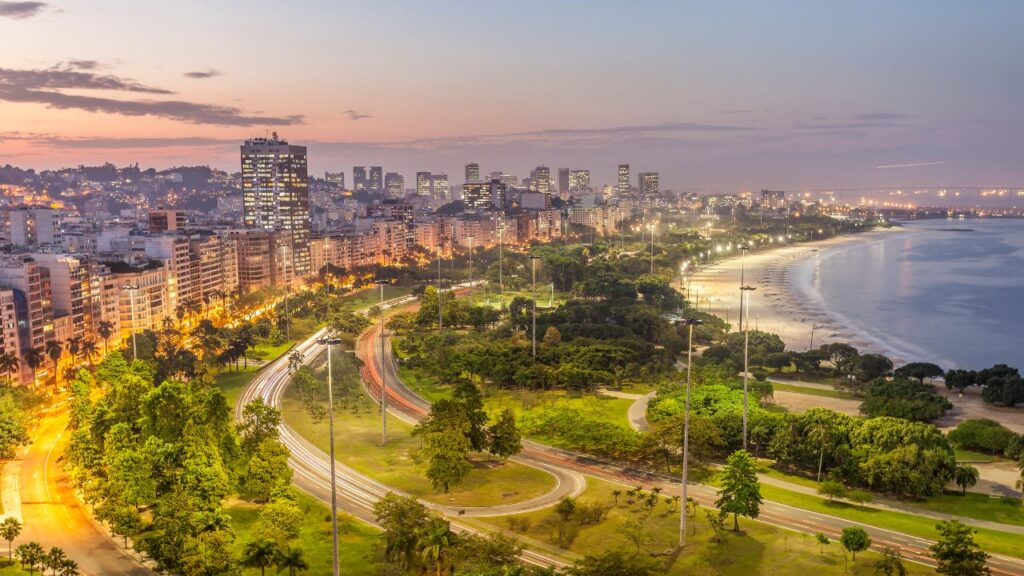
These neighbourhoods are more of a value play. You get easy metro access, you’re close to the center and to Botafogo, and the rents drop noticeably.
Flamengo has the big bayside park, which is one of the best places in the city for running and outdoor workouts. Laranjeiras is leafy and residential and a bit hidden, in a good way.
6. Santa Teresa
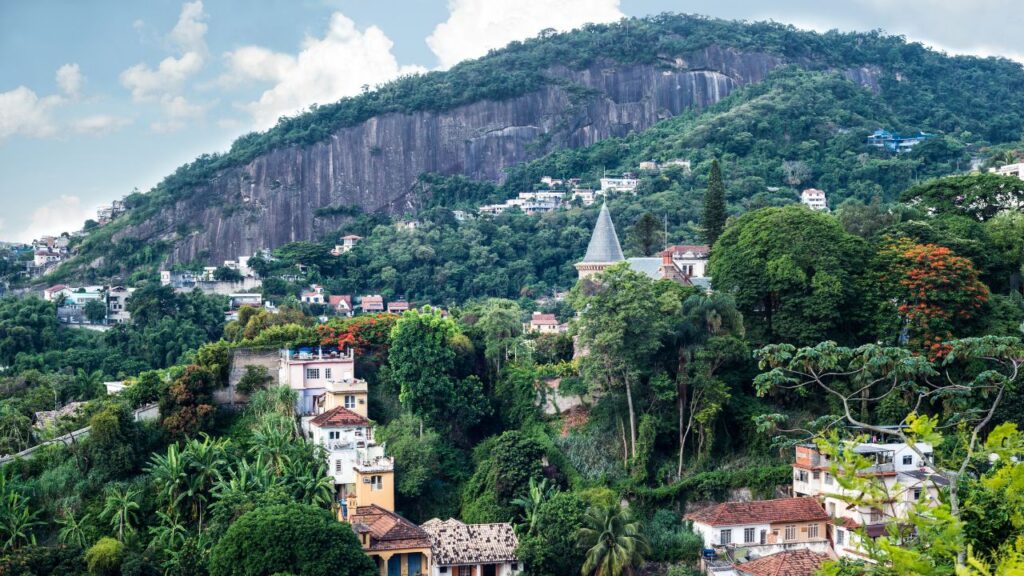
This is the artsy hilltop neighborhood with the famous Lapa stairs at its base. You will find cobblestone streets, old mansions, studios, a slower pace.
People who love it really love it. The catch is the hills and the distance from the beach, so it’s better if you want character and quiet over convenience.
7. Barra da Tijuca
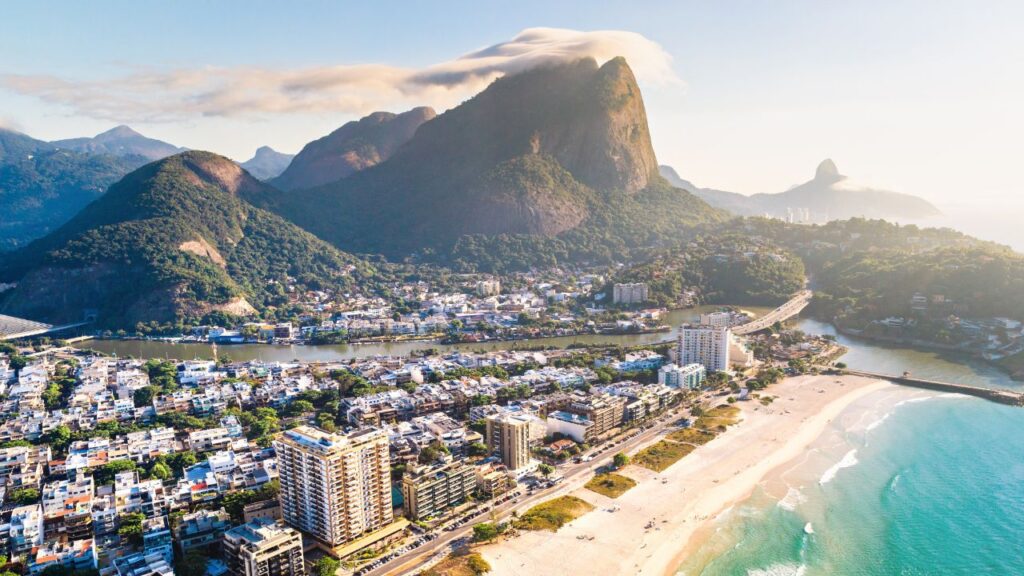
Way out west, modern, full of high rises, more like Miami than old Rio. It’s spread out and you’ll want a car or rely heavily on rideshare. Some people love the newness and the long flat beach. For me it’s too far from the energy of the South Zone, but for a longer settled stay it works, and a lot of people choose it.
One thing I’ll say plainly. The favelas, the hilltop communities, sometimes show up in listings promising a view and an authentic experience. Don’t book there as a newcomer. Stick to the neighborhoods above.
8. Macumba
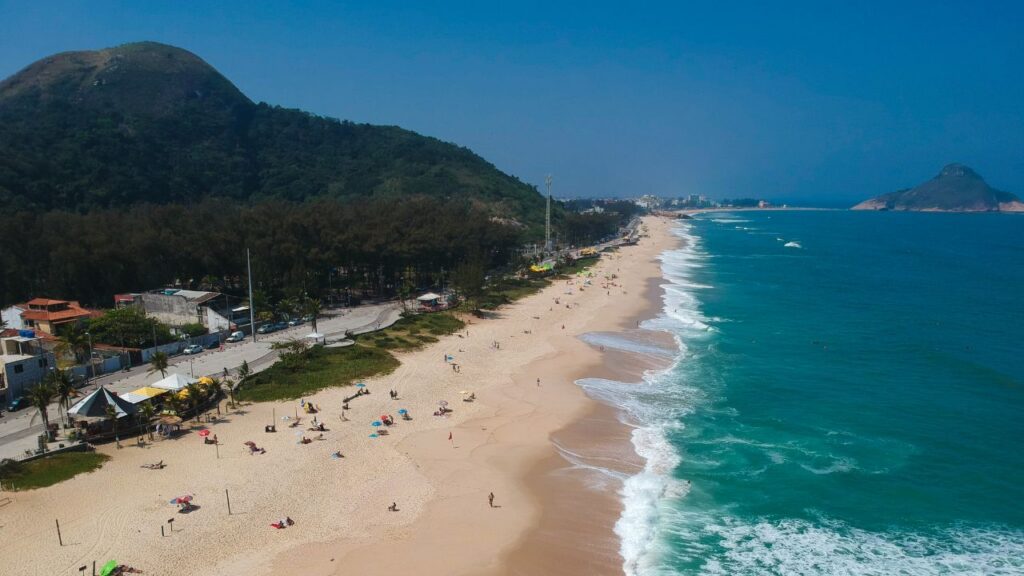
If you want to wake up and surf in the mornings, then this is the neighbourhood for you. While Leme in Copacabana and Arpoador in Ipanema have good surfing, Macumba is where professional surfers go in Rio.
If I knew more people out here 1 hour from Copacabana I would have stayed out here longer. There are some good surfer hostels and a decent cafe scene but this is a place to stay for the full nature experience as it’s surrounded by exceptional beaches and hiking trails in the mountains.
9. Itacoatiara
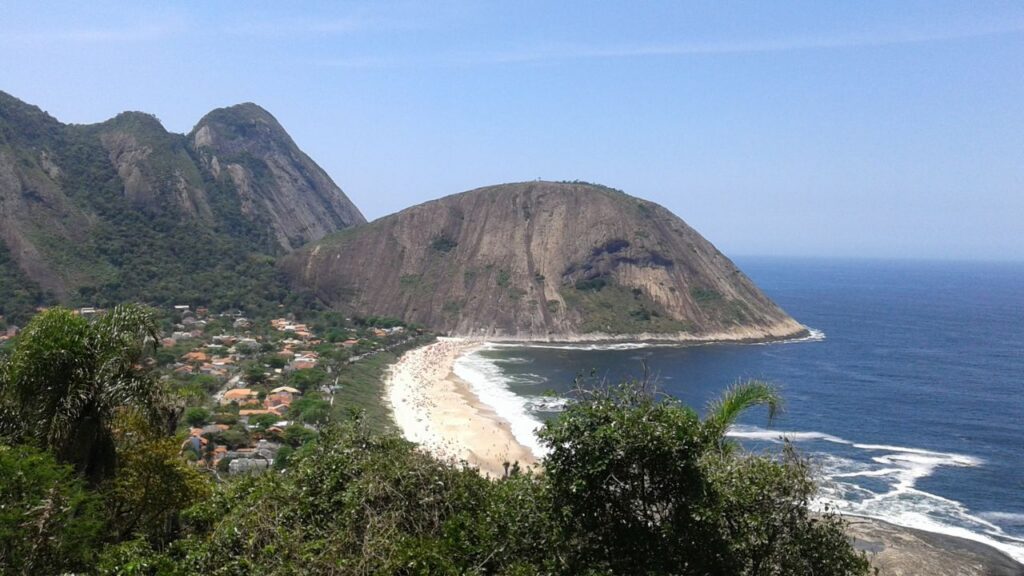
This is another small neighbourhood just outside of Rio that I really loved visiting. This is probably a better spot for families but the beach and surfing here is absolutely incredible.
To get here, you need to cross the bridge to Niteroi and it takes about 45-minutes by Uber from Copacabana. If you would like a beach resort town vibe without being far from the city, Itacoatiara is a little piece of paradise.
How to stay safe in Rio

In terms of safety, Rio rewards a bit of street sense and punishes carelessness, and once you internalize a few habits it stops being something you think about.
The habits are simple. Don’t walk around with your phone out. Use rideshare at night instead of walking long distances, especially anywhere quiet or empty. Don’t wear the nice watch or leave any valuables on the beach. Keep your bag in your lap, not on the back of the chair. Read the room, and if a street feels dead and dark, take a different one or call an Uber.
That’s most of it. None of that is unique to Rio. It’s the same situational awareness you need to navigate any big city safely, just applied a little more consistently.
Daytime in the neighborhoods I named is relaxed. I walk to the beach, walk to cafés, walk to dinner. The areas are busy with normal life and people genuinely look out for each other. Nights are fine too in the busy spots, you just lean on rideshare to bridge the empty gaps.
The thing that helped me most was building a routine in a small radius. Once you know your blocks, your work café, your beach posto, your gym, your walk home, the city shrinks to a comfortable size and the background anxiety disappears.
That being said, I’ve seen some scary things here. While picking up a friend in a favela, both me and the Uber driver freaked out when a warlord-looking guy on the back of motorbike waved his M-16 in the air. I also heard scattered gunshots in the distance as a gang war raged in the favela on the mountain above the neighbourhood where I was staying.
Like Colombia, the vast majority of crime and violence involves gangs or cartels fighting each other and robbing people involved in buying drugs, hookers and those who make themselves an easy target by getting drunk and walking the streets late at night.
My daily routine as a digital nomad
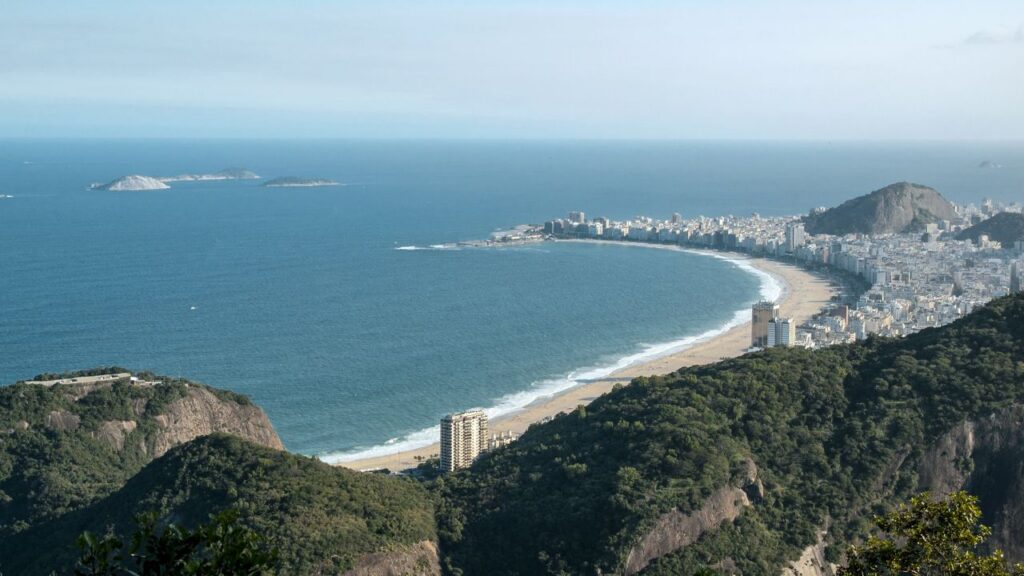
The tropical lifestyle here is better than almost anywhere else I’ve been in the world. This is why I stayed in Rio. I’m from Vancouver, Canada where we get maybe 6-8 weeks a year of excellent weather but in Rio de Janeiro it’s more like 8 months.
Most mornings I’m at the beach in Copacabana before I start work for a morning walk and a swim. Starting the day in the ocean changes everything about how the rest of it goes.
I work from home or a café through the middle of the day, depending on calls. Around lunch I’ll get an açaí or go to one of the per kilo spots where you pay by the weight of your plate, which is a great cheap way to eat well.
I make it a discipline to go for a walk during the golden hour every day and catch the sunset. This helps me follow a ritual to unplug in the evenings and this means I get way better sleep. Arpoador, the giant rock between Ipanema and Copacabana, is the classic spot, and there’s a surreal tradition where the whole crowd claps when the sun drops into the sea.
Living by the beach in Rio isn’t a luxury thing here, it’s just the default shape of life. The beach is the city’s living room. People meet there, exercise there, work out their problems there, and end their day there.
As the local Cariocas say, “At the beach, everyone is the same”. The reality is the beach is the most democratic space in Brazil, a country with insane levels of corruption that ranks as the third most unequal large country in the world as measured by Gini coefficient (only South Africa and Colombia have greater equality).
Staying fit by hiking and outdoor recreation
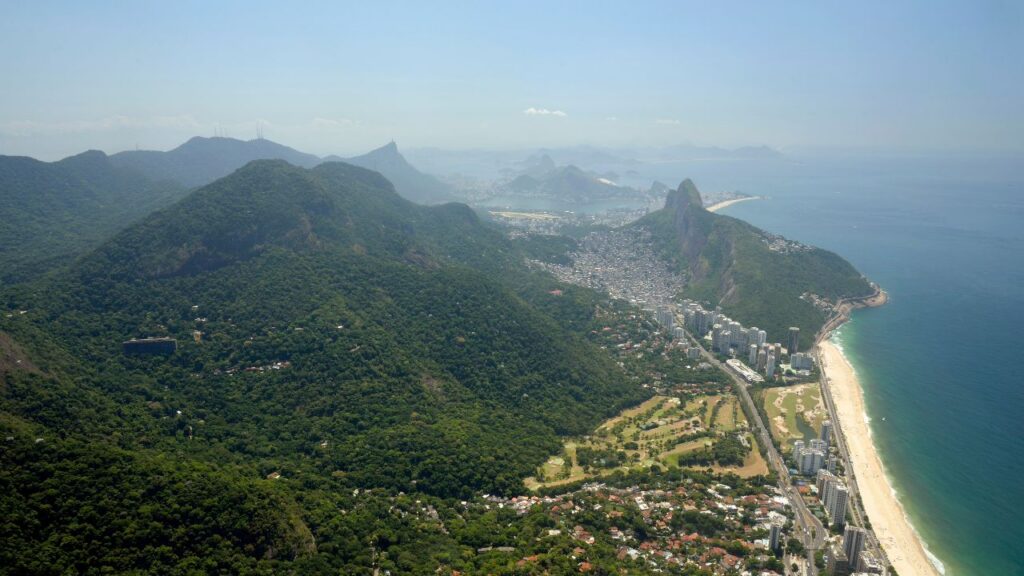
Here’s something that genuinely surprised me. Rio is a great hiking city, in fact it got rated the best city in the world for hiking with access to over 334 hiking trails.
There’s actually rainforest inside the city limits, real jungle with monkeys and toucans, and trails that put you on top of the world in under an hour in the world’s largest urban forest known as the Tijuca forest.
I hike a couple of times a week, sometimes more. The trail up Morro Dois Irmãos gives you the best view in the city for very little effort. Pedra da Gávea is the big serious one, a long sweaty climb to a flat rock high above the ocean. Pedra Bonita is the easy famous one where the hang gliders launch. The Tijuca forest has waterfalls, peaks and trails that will keep you busy for a long time.
There’s also smaller parts throughout the city that good hiking trails. Living in Copacabana, I hike regularly in Chacrinha, the mountain behind the neighbourhood with beautiful viewpoints, thick jungle and ancient trees. I also regularly run or walk up to Mirante do Leme where there are spectacular views of Copacabana Beach and Sugarloaf Mountain.
So a normal week can easily have a lot of both ocean in it and mountains in it, and both are fifteen minutes from your door. The only other city I’ve found that makes this possible so easily is the El Rodadero neighbourhood of Santa Marta.
Rio has beach, jungle, and mountain all stacked on top of each other, all walkable or a short ride away. That combination is the thing that makes Rio different from every other tropical city I’ve experience.
Where to actually work with fast wifi
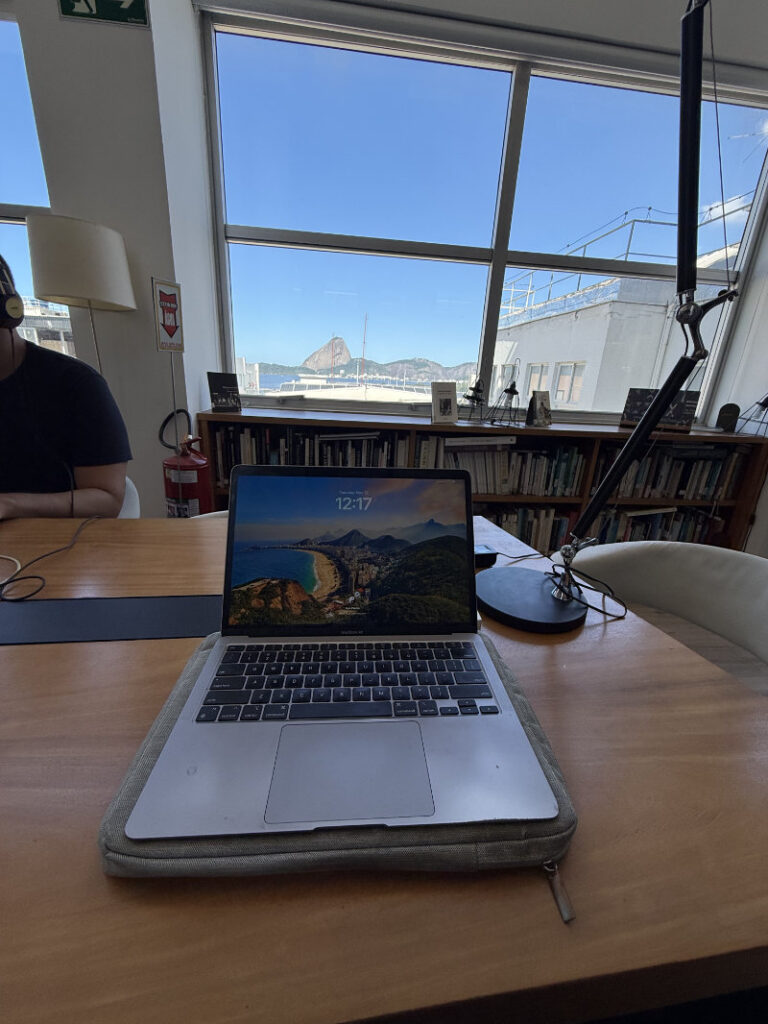
The internet question used to be the knock on Rio. That’s no longer a problem. Get a fiber plan from Vivo or Claro and you’ll have a stable connection in the 300 to 600 Mbps range in any of the main neighborhoods. I take calls from home without thinking about it.
For coworking, the scene has is growing. A few I’d point you to:
COMO Coworking in Botafogo is in a converted old mansion and it’s one of the most social spots in the city for meeting people. Modern inside, good air conditioning, which matters a lot in the Rio heat, and a steady crowd of founders and freelancers.
Arca Hub in Ipanema is the startup one. It’s an innovation hub with dozens of companies under one roof, it runs accelerator programs, and the people behind it organize Rio Innovation Week. If you want to plug into the business side of the city, start here.
The international chains are here too. WeWork and Spaces both have locations, including spots in Centro, Barra de Tijuca and Ipanema, if you want the predictable corporate setup with day passes or monthly desks.
Honestly though, a lot of my best work happens in cafés. Slow Bakery in Botafogo is a favorite, good coffee and good food and a reliable foreign crowd if you want to make friends. Aussie Coffee in Ipanema is another digital nomad magnet but not so great for ergonomics so I avoided it.
BiblioMaison was my favourite spot in the downtown area to work with fast wifi and panoramic views of Sugarloaf. There are lots of cute little cafes in Copacabana but Cafe Cultura was my favourite.
Coliving in Rio and finding a good place
Coliving in Rio is a little different from what you might be used to in the big nomad hubs. There aren’t a ton of huge branded coliving towers like in Medellin but if you want to live between the beach and mountains, there’s Rio de Janeiro Life Coliving.
What you find instead is smaller operator run houses, often in Ipanema, Botafogo, or Santa Teresa, where a handful of nomads share a place with fast wifi, a work table, and a built in social circle. They fill mostly through word of mouth and the WhatsApp groups, which I’ll get to in a second.
I stayed for two weeks at the Nomadico in Santa Teresa, which had a good community with regular group diners and events.
For regular apartments, the move is to arrive, book somewhere short term for two or three weeks, get a feel for the neighborhoods in person, and then sign something longer once you actually know where you want to be. Prices drop a lot when you go monthly instead of nightly, and they drop again when you find places through local listings and the community rather than the big tourist platforms.
Whatever you do, see it before you commit to a long lease, and lean on the community to tell you which buildings and streets are good. People here are generous with that information.
The community of digital nomads is growing
I expected the beaches. I did not expect the community to be this good.
Rio runs on WhatsApp groups. There’s a group for everything. A group for nomads in the South Zone, a group for founders, a group for surfers, a group for hiking, a group for people who want to practice Portuguese, a group for finding apartments, a group for selling your stuff before you leave, a group for attending the Sunday football game.
You get added to two and within a month you’re in fifteen. It can get distracting if you don’t mute the notifications! That’s the social infrastructure of the city. Make sure you get into the groups early and your calendar fills itself.
The startup community in particular has gotten strong in recent years. There’s a real density of founders and engineers here now, a lot of crypto and AI people, and a steady drumbeat of meetups, dinners, and pitch nights.
And then there’s Maravalley community and Web Summit, which is in English. Web Summit Rio is now an annual fixture, running June 8 to 11 in 2026 out at Riocentro, and it pulls in tens of thousands of people, founders, investors, and operators from across Latin America and beyond.
For a few days the whole city tilts toward tech and the energy is electric. It’s a big part of why the startup scene here keeps compounding.
Here are the best WhatsApp groups for digital nomads in Rio de Janeiro:
There’s always something going on in Rio
Living in Rio you will never run out of things to do. The big international acts route through here constantly. Stadium shows, festivals, the kind of lineups that make you check the calendar twice. The city has hosted some of the largest concerts on earth on Copacabana beach, free shows with crowds in the hundreds of thousands stretching down the sand.
Then there’s the everyday culture. Live samba spilling out of bars in Lapa under the arches. Street parties that start in the afternoon and don’t really end until morning. Beach volleyball and footvolley games you can join.
In February there is Carnival, which is its own universe and which I won’t even try to fully describe here, except to say that the bloco street parties in the weeks around it are some of the most fun you can have anywhere in the world.
There’s a looseness to the social life that I love. Plans form fast. Someone messages the group, two hours later there are twenty people at the beach with a speaker and cold drinks. The bar for getting a good night going is very low, which means good nights happen all the time.
For culture, music, and street level fun, I don’t think there’s a city in South America that matches it or even comes close. The music runs deep, the people are open, and the city is built around being outside and together.
The nature getaways are also extraordinary
Even when Rio is perfect, sometimes you want out for a few days. The options within a few hours of the city are also exceptional.
Teresópolis is up in the mountains, cooler, green, with serious hiking in the Serra dos Órgãos national park. I did the 3-day Teresópolis Crossing, which I highly recommend if you need a big dose of ecotherapy.
When the Rio heat gets heavy, you go up the mountain for a weekend and reset. It’s close enough to do on a whim and there are other relaxed mountain towns like Petropolis and Nova Friburgo.
Ilha Grande is a car free island a few hours down the coast. No roads, no traffic, just hiking trails through the forest to some of the most beautiful beaches in the world like Lopes Mendes Beach. You hike or take a boat to get between beaches and in a couple of nights there and you come back a different person.
Búzios is the chic beach town a few hours east where there are lots of small beaches, great restaurants, and a good social scene. It’s where people in Rio goes to spend a long weekend by nicer water.
Paraty is the colonial town down the coast, cobblestone streets that flood with the tide, old churches, and access to dozens of islands and beaches by boat. It’s gorgeous and slow and a complete change of pace.
So your home base is one of the great cities on earth, and your weekend options include mountains, a car free island, a beach town, and a colonial port, all within easy reach. They don’t call it the Marvellous city for nothing.
What it actually costs to live in Rio de Janeiro
Rio is affordable by the standards of any major Western city, though the prices in Ipanema and Leblon will surprise you the wrong way.
Here’s what I spend per month in Copacabana, 5 minutes walk from the beach:
$700 for my apartment
$500 for food and entertainment
$200 for transportation
$25 for my eSim
$300 for other expenses
Total = $1725 USD
Eating out is cheap if you eat where locals eat, the per kilo lunch spots and the corner juice bars. Rent is the main expense and it swings hard by neighborhood.
A few practical notes from living here. Get a local SIM or eSIM on day one. Use Uber or 99, which are both very cheap. Learn enough Portuguese to be polite and to order food, because the English level is low and a little effort goes a very long way with people here. Brazilians are warm and they open up fast when you try.
The weather is good most of the year, with a hot humid summer from December through March and a milder, very pleasant winter mid year. There’s no cold to speak of so you can be in shorts pretty much everyday.
How to stay long-term in Rio
Most people show up on a tourist entry, and for a lot of nationalities that part is free and easy. If you hold an EU, UK, or one of around ninety other passports, you walk in with no paperwork and get 90 days.
If you’re American, Canadian, or Australian, you now need an eVisa first, which Brazil brought in during 2025. You apply online, pay about 80 dollars, and it’s good for multiple entries over several years, though each visit still maxes out at 90 days.
Here’s the part that makes Rio easy to settle into. You can extend that first 90 days by another 90, which gets you to six months. You do it at the Federal Police, the Polícia Federal, and the fee is small, somewhere around $20-$50 USD. Bring your passport, proof you can support yourself, proof of where you’re staying, and an onward ticket. Apply before your first 90 days run out. Some offices will only take the request in the last couple of weeks of your stay, so don’t panic if they tell you to come back closer to the date.
One catch worth knowing. The extension isn’t open to every nationality, because Brazil mirrors whatever your country does for Brazilians. Most Schengen passports can’t extend, with a few exceptions. Americans, Canadians, Australians, and Brits generally can. Check before you count on it.
The hard limit on tourist status is 180 days inside any 12-month window. You can leave the country and come back to reset the 90-day clock on a single entry, a quick hop to Buenos Aires or Montevideo does it, but those days still count toward the yearly 180.
Don’t overstay. The fine is around 100 reais a day, it’s capped, but it goes on your record, and Brazil tracks entries and exits digitally so there’s no hiding it.
Applying for the digital nomad visa
If six months isn’t enough, there’s a proper digital nomad visa. It’s officially called the VITEM XIV, and it lets you live here legally for a year while working remotely for companies or clients outside Brazil.
I read online that you can renew it once, so two years total but I’ve met many people who have been renewing it and similar visas for years with no problem.
The requirements are mostly financial and they’re not steep. You show foreign income of at least 1,500 dollars a month, or 18,000 dollars in savings. You need a contract or letter proving you work for a foreign employer or your own foreign clients.
You need health insurance valid in Brazil, which is cheap here, budget around $50 USD a month. And you need a clean criminal record from your home country, apostilled. A missing apostille is the single most common reason applications get bounced, so sort that one early.
You can apply two ways. From your home country at a Brazilian consulate, which takes roughly four to eight weeks. Or from inside Brazil through the government portal called MigranteWeb, which can be faster but is entirely in Portuguese and a bit of a maze. Either way, budget somewhere around 300 – 500 USD all in once you count fees and translations. You can bring a spouse and kids, you just show a little more income for each of them.
Two things to keep in mind. The nomad visa does not let you take a job with a Brazilian company, it’s only for foreign income. And once you pass 183 days in the country you become a tax resident, so if you’re staying long term, talk to an accountant before that line and not after.
My honest take is that the tourist route plus one extension is plenty for a first long stay, and most people I know start that way. You come, you fall for the place, and then you sort the nomad visa once you’ve decided you’re not leaving. That’s the order I did it in. Rules shift here, so confirm the current ones on the Federal Police site before you book anything.
Come experience the Marvellous city for yourself
The beach every morning, the sunset every evening, the trails on the weekends, the WhatsApp groups that turned into real friends, the founders’ dinners, the samba nights, the easy weekend escapes to the mountains or the islands. It adds up to a daily life I haven’t found anywhere else.
What surprised me most is how little I had to trade away to get it. I’m near the ocean and the jungle at the same time. My work runs fine on the fiber and in the coworking spaces. The digital nomad visa was easier than I expected and the path to staying longer is clear. The food is good, the people are warm, and there’s always something happening if I want it and zero pressure if I don’t.
The reputation scared people off for years and kept it quiet, which honestly made it better. That window is closing as more people catch on. The cafés are busier, the groups are bigger, and the rents in the best neighborhoods are starting to climb.
So I’ll just say what I actually think. This is one of the best places on earth to be a remote worker right now, and it won’t stay this far under the radar for long. If starting your workday in the ocean and ending it watching a whole crowd clap for the sunset sounds like your kind of life, book the trip.
You can figure out the rest once you’re here. That’s what I did.

I believe the future of education starts with helping people find their "zone of genius" so they can develop their uniquely human ability to create meaning, connection and community (that A.I. can't replicate).
I'm also big on completely unplugging from tech to recharge on nature retreats and trekking adventures. That led me to start my most recent company Sacred Treks.
- 15 Creator House Retreats For Founders & Entrepreneurs - November 2, 2026
- The Workshop Funnel: How To Fill, Run And Sell From A Live Workshop - October 28, 2026
- Workshops Vs Webinars: Which Is Better For Selling Your Expertise? - October 28, 2026